Get Full Government Meeting Transcripts, Videos, & Alerts Forever!
Get email alerts on the K 12 Funding topic
No spam. Unsubscribe anytime.
Idaho budget analysts tell JFAC fewer support units are shrinking school funding; bills proposed to change formulas
Summary
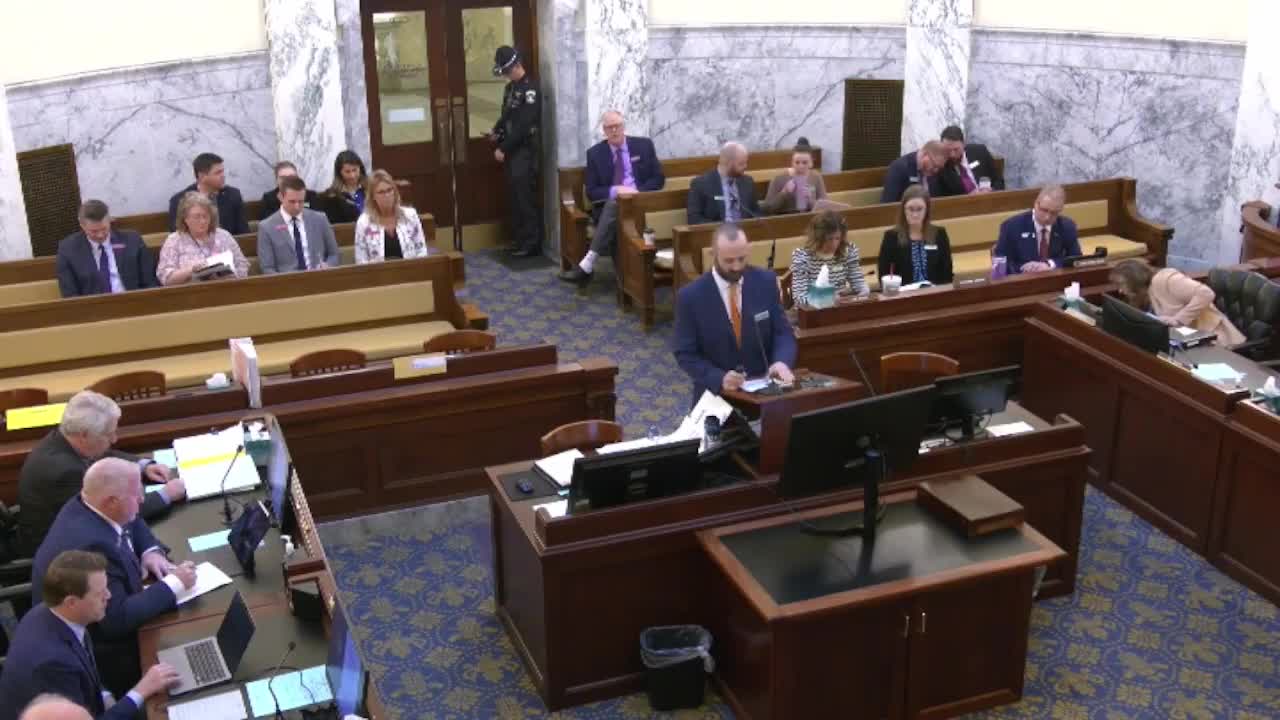
Jared Tetrault, deputy division manager for the Legislative Services Office Budget and Policy Analysis Division, told the Joint Finance‑Appropriations Committee on March 4 that Idaho public schools face a drop in state‑funded support units largely because the state has returned to attendance‑based counts after COVID-era changes.
Jared Tetrault, deputy division manager for the Legislative Services Office Budget and Policy Analysis Division, told the Joint Finance‑Appropriations Committee on March 4 that Idaho public schools face a drop in state‑funded support units largely because the state has returned to attendance‑based counts after COVID-era changes. Tetrault said the change results in about 200 fewer support units and that the state’s funding formulas — not district payroll decisions — drive most distribution changes.
The decline matters because the state allocates most K–12 money by support units; Tetrault said each support unit is assigned an allowance that funds 1.55 full‑time equivalent positions and roughly $147,000 per unit. “Current law requires that attendance be the component for distributions, not enrollment,” Tetrault explained during the presentation, noting attendance percentages have fallen from pre‑COVID levels and remain below the near‑100 percent rates seen during the pandemic.
That shift, combined with other statutory formulas, produced mixed budget movements in the 2025 request: reductions tied to fewer support units and increases tied to teachers moving up the career ladder and other cell‑based salary adjustments. Tetrault said the public schools appropriations in the governor’s book are roughly $2.7 billion in general fund support, about $277 million in dedicated funds and roughly $261 million in federal grants for the current year, and that one‑time federal ARPA/ESSER dollars are winding down.
Why it matters: most K–12 distributions are governed by Idaho Code Title 33 and allocated by statutory formulas. The committee was shown the “big sheet” summary in the budget book that separates original appropriation, agency requests and the governor’s recommendation and highlights statutory distribution rules and the Public Education Stabilization Fund (PSIF), which can be used to reconcile distributions when appropriations and actual costs diverge.
Discussion and proposed legislation: Tetrault and Superintendent Debbie Critchfield described several bills that could alter future distributions. The presentation listed proposals the committee may consider, including a weighted student funding formula, a transportation funding formula and a special‑needs student fund; Tetrault said the transportation funding bill was scheduled for a separate hearing and the special‑needs fund was scheduled in House Education later the same day. Several enhancements the department requested would require statutory changes, Tetrault said.
Committee members pressed for detail on specific drivers of costs. On health insurance, Tetrault clarified that the state allocates health insurance “on a per staff allowance” basis tied to support units rather than by counting individual employees on a district plan; when members asked whether the state could identify how many district workers are not covered by the state plan, Tetrault said the department could report numbers for employees enrolled in the state plan but that districts’ own reporting varies.
ESSER/ARPA and one‑time money: Superintendent Critchfield told the committee she reviewed district uses of ESSER/ARPA funds and warned many districts used one‑time federal funds for personnel, which can create local budget gaps when federal money ends. She said the state declined a federal extension to prolong use of those funds and encouraged districts to plan for those expirations. Tetrault noted roughly $99.9 million shown in the public‑schools book was the last year of COVID/ARPA dollars in the schools budget.
Facilities and the school district facilities fund: Tetrault reviewed the House Bill 292 school district facilities fund and the large, earlier one‑time allocation from House Bill 521 (the $1 billion appropriation). He said the House Bill 292 fund and recent facility additions are driving increases in the facilities category and that if House Bill 374 (a proposal to make the facilities fund a continuous appropriation) becomes law the committee may consider removing those appropriations from the annual House Bill 2.
Transportation routing software and other central‑services enhancements: the department requested statewide contracts for optional student transportation routing software to improve route accuracy and reporting and offered a set of central services items — professional learning community support, the Idaho Reading Indicator adjustments, a data dashboard and a routing‑software option. Superintendent Critchfield said the routing‑software contract would be optional and intended to help smaller districts that cannot afford routing software. Tetrault said the statewide routing software request is contingent upon legislative action and that no RFP had been issued yet.
What the committee asked for next: members requested data on district levy and local revenue shares, the distribution of school facilities dollars by district and detail on how many districts currently use routing software. Tetrault said the fiscal facts and budget book provide facility distribution by district and he committed to follow up on the other requests.
No formal committee votes on policy were recorded during the presentation. The committee’s future action will depend on how sponsoring bills move through the legislature and on supplemental requests to the FY2026 base.