Get Full Government Meeting Transcripts, Videos, & Alerts Forever!
Get email alerts on the Medicaid Tenncare Waiver And Investments topic
No spam. Unsubscribe anytime.
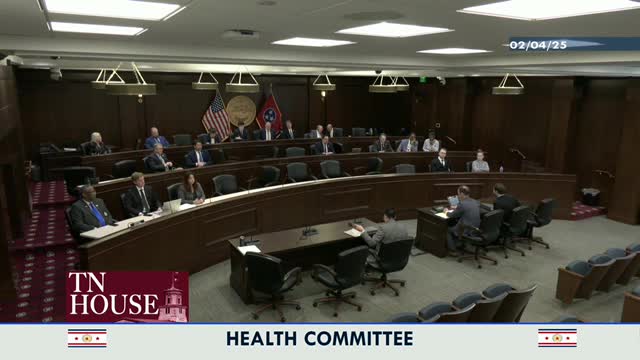
TennCare director reports record shared‑savings investments under TennCare 3 waiver; outlines rural, behavioral health and diaper pilot funding
Summary
TennCare Director Steven Smith told the House Health Full Committee the agency has used shared‑savings under the TennCare 3 waiver to invest in adult dental coverage, rural health, behavioral health, a diaper pilot and disaster relief, and reported program and reserve figures for committee review.
NASHVILLE — TennCare Director Steven Smith told the House Health Full Committee that TennCare’s managed‑care model and Tennessee’s Section 1115 waiver, known as TennCare 3, have produced shared savings the agency is reinvesting in services such as adult dental care, rural health supports and behavioral‑health capacity.
“When it comes to our mission, TennCare is more successful today than at any point in our 30 year history,” Smith told the committee and credited “many people working over decades” for the program’s fiscal and quality gains.
Why it matters: TennCare covers roughly one in five Tennesseans and accounts for a large share of state spending. Smith described how shared savings under the waiver have funded one‑time and multi‑year investments intended to expand access and address workforce shortages, particularly in rural and behavioral‑health services.
Program size and financing Smith described TennCare as a traditional Medicaid program serving about 1,400,000 Tennesseans (about 20% of the state population) with an annual budget “exceed[ing] $18,000,000,000.” He said roughly 65% of funding comes from the federal government and called managed care essential to controlling costs and maintaining quality.
TennCare 3 and shared savings Smith summarized TennCare 3 — the state’s Medicaid demonstration waiver implemented in January 2021 — as a financing change that lets Tennessee retain and reinvest some federal savings from improved program efficiency. He said the waiver produced more than $900,000,000 in shared savings in its first three years.
Investments funded by shared savings - Adult dental: Smith said TennCare added comprehensive adult dental benefits covering about 600,000 adults. - Strong Families: Year‑one investments served roughly 25,000 additional children, pregnant people and parents. - Rural health and workforce: Year‑two funds targeted rural access and workforce development and supported a second round of the Health Care Resiliency grant program administered by the Department of Health; Smith said application windows recently closed. - Behavioral health: Multi‑year investments support community mental‑health centers, behavioral hospitals, children’s hospitals and substance‑use providers; Smith noted a $100,000,000 portion of year‑three shared savings was used to fund the HEAL program to help communities hit by recent storms. - Diaper pilot: TennCare began a pilot to provide diapers for babies under 2; Smith said the pilot provided diapers to more than 40,000 babies in a few months.
Quality and member satisfaction Smith said TennCare’s quality performance has improved: the program outperformed the national average on 56% of common metrics over five years and reported a 96% member satisfaction rate in an annual University of Tennessee survey — the highest on record.
Reserves and fiscal posture In response to a question on reserves, Smith said TennCare’s reserve totaled about $1,500,000,000 last year but noted much of that was already obligated; unobligated reserve funds were about $300,000,000 (roughly 2% of TennCare’s budget), while the historical average reserve has been about 4%.
Questions and next steps Committee members asked about continuation of the waiver (negotiations typically start about two years before a waiver expires), the timeline for shared‑savings decisions and specific budget requests for community health workers and dental programs. Smith said multi‑year recreation of investments and federal negotiation timelines would guide next steps and invited continued legislative partnership on workforce and rural access issues.
Ending Lawmakers scheduled further budget hearings. Smith said TennCare will continue to work with the General Assembly on reinvestment plans tied to shared savings and offered to brief members on workforce and provider‑recruitment strategies.