Get Full Government Meeting Transcripts, Videos, & Alerts Forever!
Get email alerts on the State Public Health Programs topic
No spam. Unsubscribe anytime.
Tennessee Department of Health briefs House committee on services, flags falling vaccination coverage and rural priorities
Summary
Commissioner Ralph Alvarado told the House Health Full Committee the Department of Health operates primary care and dental clinics in rural counties, is focusing on maternal and pediatric programs, and warned that childhood vaccination coverage has declined, increasing risk of re-emerging infectious diseases.
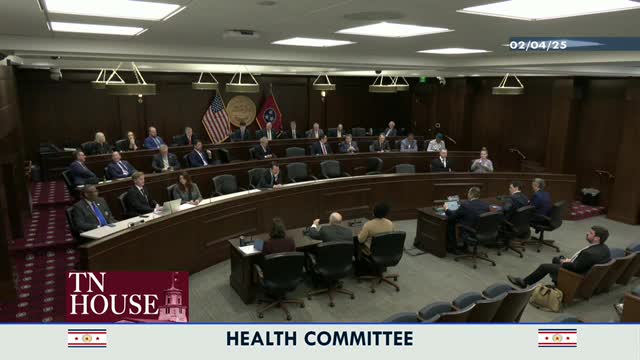
NASHVILLE — Tennessee Department of Health Commissioner Dr. Ralph Alvarado told the House Health Full Committee on Oct. 24, 2025, the department runs primary-care clinics, dental clinics and a broad slate of public-health programs across the state and is prioritizing rural access, maternal-child initiatives and vaccination outreach.
Alvarado opened a 30-minute overview by saying, “I have the privilege to represent the best department in state government, the Tennessee Department of Health,” and told lawmakers the department’s mission is “to protect, promote and improve the health and the well‑being” of Tennesseans. He described the department’s reach and staffing and urged legislative investment to improve statewide health rankings.
Why it matters: Alvarado and department officials described programs that touch millions of residents — primary care at county health departments, WIC, maternal and perinatal initiatives, oral-health expansions, disease surveillance and emergency response — and warned that declining vaccination coverage and rising vaping rates could reverse decades of gains against infectious disease.
Department scope and resources Dr. Alvarado said the department employs about 2,900 positions (about 2,700 full time and 214 part time) and this year’s operating budget is “a little bit over $1,500,000,000.” He stressed that the department manages services in 89 rural counties and coordinates — but does not oversee — six metro health departments that operate under local governments.
Dr. Tim Jones, the department’s chief medical officer, described clinical workload in county health departments: “We have those 57 primary care clinics, and they get about 560,000 visits per year.” Jones also said the state lab performs roughly 1,800,000 infectious‑disease tests annually and the department conducts about 80,000 restaurant inspections each year.
Programs highlighted - Primary and dental care: Alvarado said Tennessee is “the only state in the Union to provide primary care services in our health departments,” noting 56 clinic locations and 33 dental clinics; 12 additional clinics are ready to open when dentists can be recruited. - Maternal and perinatal work: Officials described the Tennessee Initiative for Perinatal Quality Care, a legislatively mandated perinatal advisory committee, the “Count the Kicks” app to reduce stillbirth risk, safe‑sleep education and evidence‑based home visiting programs (Healthy Families America, Nurse‑Family Partnership, Parents as Teachers). - WIC and vital records: The department administers WIC benefits and vital records; staff reported nearly 900,000 certificates issued in 2024 and a recent surge in requests tied to federal REAL ID deadlines. - Behavioral health, overdose and harm reduction: The department continues naloxone distribution and fentanyl‑testing strip distribution through local health departments and described ongoing opioid‑overdose prevention activity. - Public‑health preparedness and environmental health: Officials cited recent deployment of strike teams for natural‑disaster response, the state lab’s bioterrorism testing capacity and roughly 250,000 communicable‑disease reports handled annually.
Vaccination and infectious‑disease concerns Alvarado told the committee Tennessee has dropped in national pediatric vaccination rankings: “We were a top 10 state on pediatric vaccinations in the country. We're now a bottom 10 state.” He said some counties no longer meet the 95% immunization threshold and that Tennessee has seen a small number of measles cases and at least one U.S. polio case recently. “If people are nervous, they want to have discussions, go talk to your provider and your doctor about it,” he said.
Youth vaping and tobacco Officials flagged youth vaping as a leading contributor to future chronic disease: Dr. Alvarado said vaping’s long‑term harms are comparable to smoking and cautioned that “we have an entire generation that's been rehooked on vaping.” The department described a youth‑led prevention program, TN Strong, aimed at reducing tobacco and vaping among adolescents.
Workforce and rural access Deputy officials and program leads described workforce recruitment campaigns (Make Mondays Matter) and the Health Care Resiliency program aimed at rural providers. JW Randolph, deputy commissioner, outlined county health councils — volunteer, cross‑sector groups that produce local health assessments and improvement plans and can apply for implementation funding.
Questions from committee members Members pressed department leaders about what legislative actions would move Tennessee’s health rankings, the department’s vaccine surveillance and whether school absenteeism correlates with vaccine declines. Alvarado suggested tobacco and cancer‑screening policy, obesity and community interventions would have large effects and offered to brief the committee further at budget hearings.
Ending Committee members scheduled follow‑up budget hearings and asked the department to return later in the year with more detailed plans on resources, workforce recruitment and measurable steps to improve vaccination coverage and maternal health outcomes.