Get Full Government Meeting Transcripts, Videos, & Alerts Forever!
Get email alerts on the Industrial Commission Budget topic
No spam. Unsubscribe anytime.
Industrial Commission seeks ongoing staff pay, IRIS support and vehicle replacements amid rising caseloads and reverted funds
Summary
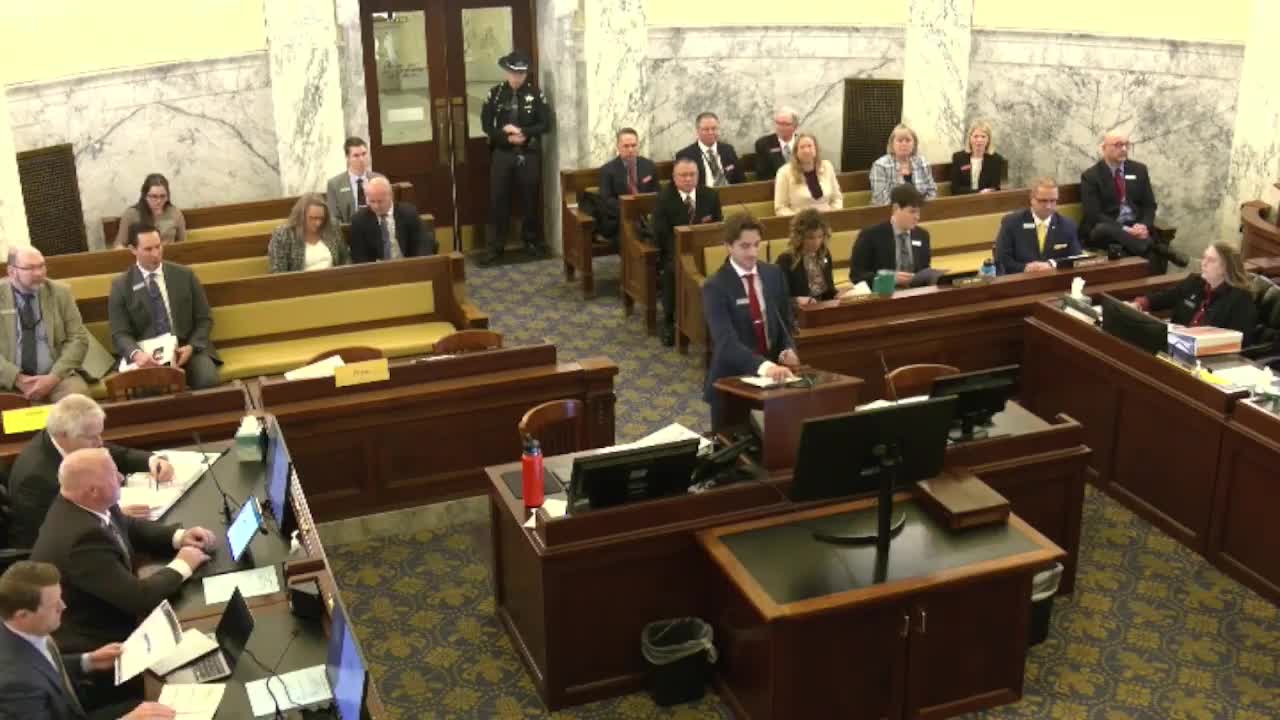
The Joint Finance Preparation Committee on Jan. 23 reviewed the Industrial Commission’s request for fiscal 2026 funding, with the commission asking to fill positions using vacant authorized full‑time positions, to cover maintenance for its IRIS case‑management project and to replace four high‑mileage field vehicles.
The Joint Finance Preparation Committee on Jan. 23 reviewed the Industrial Commission’s request for fiscal 2026 funding, with the commission asking to fill positions using vacant authorized full‑time positions, to cover maintenance for its IRIS case‑management project and to replace four high‑mileage field vehicles.
Why it matters: The Industrial Commission oversees workers’ compensation adjudication, rehabilitation services and the Crime Victims Compensation program. Committee members pressed the commission on recurring reverted appropriations, continuing IRIS (a multi‑year automation project), case backlog and operational capacity to pay crime‑victim claims in a timely manner.
Noah Peterson, budget and policy analyst with the Legislative Services Office, told the committee the Industrial Commission has 130.25 FTP allocated (70.5 in the compensation program, 47.25 in rehabilitation and 12.5 in the crime victims program) and reported 12 vacant positions as of August. Peterson said the agency expended about two‑thirds of its budget on personnel (64.8% in FY24) with operating costs (~20%) and trustee/benefit payments (~15%) making up most of the remainder. He noted the commission reverted $4,555,000 in the prior year; the largest driver was trustee and benefit payments ($3,000,000), of which $2,400,000 came from the crime victims compensation program. Personnel reversion was $644,000; operating reversion $835,000; and capital reversion $55,000.
Peterson summarized the commission’s IRIS project, saying the agency received $12,874,000 of one‑time appropriations between FY21 and FY25 to digitize paper processes. He said the FY25 request included a $3.5 million one‑time appropriation largely tied to IRIS and that the FY26 package contains 10 enhancement requests totaling $298,200 ongoing and $554,200 one‑time (no net new FTPs). He identified a $288,000 one‑time request described as maintenance/contract support for IRIS because the Office of Information Technology Services is not yet providing steady support.
George Gutierrez, director of the Industrial Commission, told the committee the IRIS modernization increased the volume and number of data sources available for employer compliance and case work. "We are now identifying nearly 60% more cases," he said, and that increased identification of noncompliance is driving more legal and administrative work.
Gutierrez described several specific FY26 requests: $66,500 ongoing to fund a senior financial technician to reduce payment turnaround for the Crime Victims Compensation program (the commission’s target is 30 days; at one point there were 872 outstanding payments and an estimated 12‑week turnaround); $32,300 ongoing to fund a rehabilitation field consultant in the Twin Falls/Burley area (the area handles about 35% more cases than the state five‑year average); $111,600 ongoing to add a referee to reduce time to decision (average decision time rose from 90 to 110 days after a retirement reduced referee count in 2020); $25,500 ongoing to reclassify five adjudication associates; and $62,300 to fund a technical records specialist in employer compliance. The agency also requested $104,200 for IT replacement items (laptops/monitors) and four small SUVs to replace high‑mileage field vehicles (model years roughly 2006–2011; mileages reported between ~82,000 and ~98,000).
Committee members questioned why IRIS implementation increased staffing needs. Senator Tina Cook asked why a system expected to simplify work had required higher skills. Director Gutierrez explained that IRIS reduced paper transfers and created an electronic record, but some prior work that fell to referees now requires legal‑assistant review to ensure a complete record before hearings; in employer compliance, IRIS brought more data points and led to a higher investigative yield, pushing more cases into the legal workflow.
Representative Petzke and others asked whether reverted funds could be used to fill requested positions. Gutierrez said most reversions were trustee and benefit payments set aside to pay claims (not discretionary operating funds) and that the commission lacks unilateral authority to reallocate trustee/benefit money without statutory or legislative action.
On IRIS maintenance, Peterson and committee members pressed for detail about the $288,000 contract support ask. Peterson said OITS (the Office of Information Technology Services, sometimes referenced as ITS) had been expected to provide ongoing support but cannot at this time and that the commission would provide a more detailed breakdown on contractors’ work and costs on request. Representative Tanner specifically asked for a written breakdown of all IRIS expenditures, functionality and anticipated longevity; Director Gutierrez agreed to provide a written report.
On the crime victims backlog, Gutierrez said staff temporarily shifted fiscal resources to clear roughly 800+ outstanding crime‑victim payments; doing so delayed other fiscal work (vendor and lodging payments) and created operational strain, which the requested senior financial technician would reduce.
Vehicle replacements also drew questions. Representative Mitchell asked for the fleet total and vehicle list; Peterson said he did not have the total fleet count at the hearing but identified the four vehicles proposed for replacement (three older Malibus and one 2011 truck) and offered to provide a full fleet inventory to the committee. Director Gutierrez said the field vehicles are used by rehabilitation consultants and employer compliance investigators working in remote weather‑exposed areas and that safety concerns and recurring mechanical failures justified replacements.
The governor’s recommendation modified several requests: the governor recommended a 5% CEC increase to commissioner pay (a placeholder requiring statutory change) and did not recommend the IRIS contingency fund request. Peterson closed by noting supplemental adjustments and a small FY25 reallocation of $47,000 across dedicated funds to align one‑time appropriations to statutorily designated purposes.
The committee asked the commission to provide: a more detailed IRIS cost and functionality breakdown; a vehicle inventory and replacement justification; clarifications about which reverted funds are available for reallocation and the statutory path (if any) for moving trustee/benefit dollars; and specific hiring cost estimates or salary targets needed to fill the outstanding positions.
Looking ahead: the department plans to use vacant FTP to staff several requested positions rather than adding new headcount; the IRIS project will continue to require contracted maintenance until ITS builds capacity; and the commission seeks support to keep adjudication timeliness and victim payments from slipping.
Ending note: Director Gutierrez thanked the committee and asked for support for the 2026 budget requests. He repeated that the requested items align with the commission’s strategic initiatives to improve responsiveness, efficiency and stewardship.