Get Full Government Meeting Transcripts, Videos, & Alerts Forever!
Get email alerts on the Boise State Budget Dei Lawsuit topic
No spam. Unsubscribe anytime.
Boise State president outlines student-success gains, LAUNCH growth and says lawsuit defense used non-taxpayer funds
Summary
Boise State University President Marlene Tromp told the Joint Finance-Appropriations Committee that LAUNCH enrollment has grown to about 1,300 students, campus student-support functions have been reorganized to emphasize completion, and the university used non-state funds (about $1.5 million) to defend a recent lawsuit.
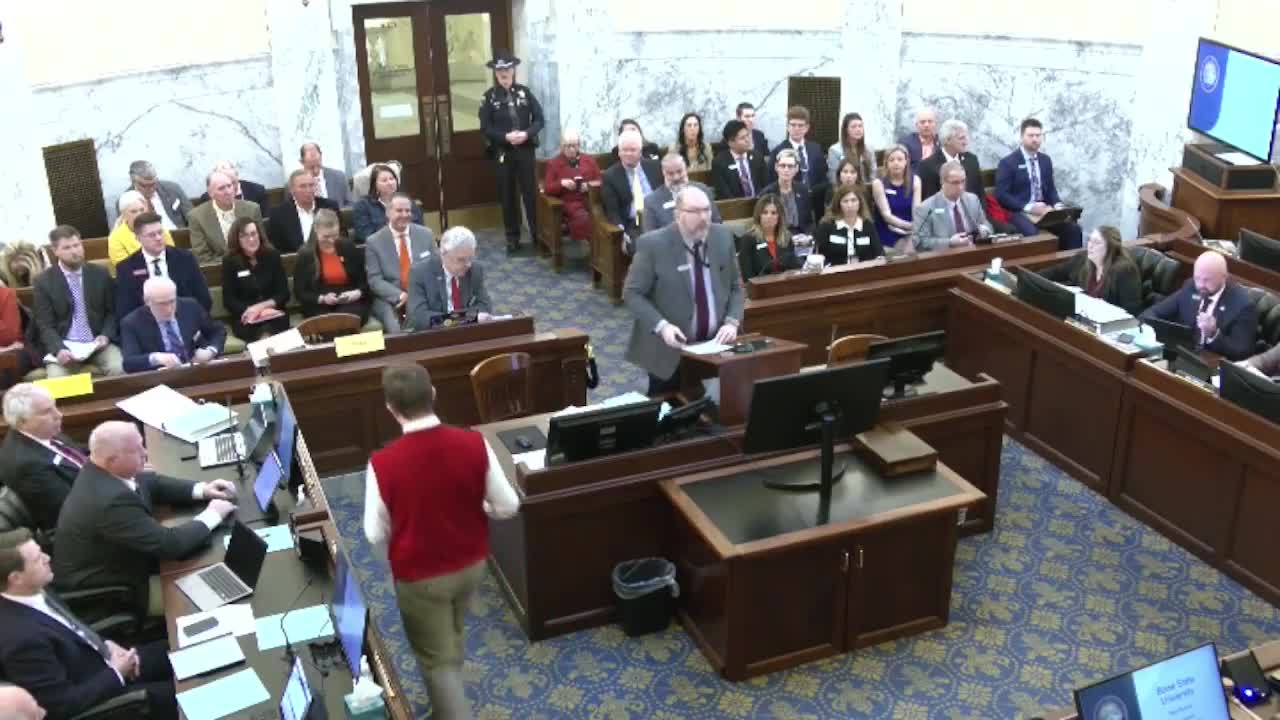
Boise State University President Marlene Tromp told the Joint Finance-Appropriations Committee on Jan. 29 that the university has increased LAUNCH program enrollment, reconfigured campus resource centers to emphasize student success, and used non-state funds in defense of a recent lawsuit.
Tromp (correcting published references to her name in the hearing record) said Boise State currently has about 1,300 students enrolled in LAUNCH and that roughly 600 of those students use LAUNCH as their only financial support. She credited the program with expanding access to in-demand fields including nursing, radiologic sciences, computer science and engineering.
Student-success and center reorganizations: Tromp described a multiyear effort to transform campus student-support structures away from narrowly focused centers to broader student-success functions. She told the committee that the institution had previously operated multiple centers (she said “initially we had 8 staff” across relevant programs) and that staff reductions and reorganization followed research into national models for student-success centers. Tromp said the reduction in staff numbers tied to that transformation was five, and that campus resources for veterans and other special populations remained in place. She also noted Boise State’s adoption by faculty and student government of the Chicago principles on free expression.
Lawsuit defense spending: Senator Carlson asked whether state funds were used in the Big Coffee-related lawsuit. Tromp said the university “used only non taxpayer funds to support the defense of that lawsuit” and reported an expenditure “about 1,500,000.0.” She told the committee she does not anticipate significant additional appeal costs at this time and said university employees who testified either were acting as counsel or used personal time to attend trial.
Academic freedom programming and campus civility: Tromp highlighted the Institute for Advancing American Values and programming such as Idaho Listens as examples of campus efforts to encourage civil discourse. She said those programs and related curricular decisions are intended to ensure students “make up their own minds” and to expose them to a wide range of perspectives. Tromp noted the university’s UF 100/200 sequence includes many sections and that students may select section topics; she emphasized that no student is required to take a specific gender-focused section.
Budgets, grants and risk: Kevin Campbell presented Boise State’s fiscal overview prior to Tromp’s remarks. Slides showed BSU’s personnel costs comprising about 81.8% of expenditures, operating costs about 16.5%, and capital outlay 1.7%. Campbell noted Boise State’s FY2023 CEC and other recent appropriations history and that Boise State’s FY2026 requests include operational capacity enhancement and an enrollment workload adjustment; the enrollment workload adjustment figure presented was $195,700. Tromp and committee members discussed federal directives affecting grants and Tromp said the university immediately reviewed potential impacts and was working with state fiscal staff and national associations; she also said Pell Grant funding appeared not to be affected according to the best available information reported to the committee.
Workforce and partnerships: Members asked Tromp about workforce needs connected to the state’s semiconductor buildout. Tromp said Boise State has invested in engineering and natural sciences capacity, cited a specialized research instrument used for semiconductor-related work (an XTRON device), and described partnerships with community colleges to train technicians. She listed targeted uses for state higher-education capacity funds if awarded: nursing (an estimated 40 additional graduates annually if funded), continued cybersecurity supports for small businesses (the university’s Cyberdome), and growth in computer science and engineering programs.
What the committee asked for: Legislators requested written assurances and documentation that courses and programs comply with Idaho Code sections cited by committee members (Idaho Code 33-138 and 33-139 were referenced in committee). Tromp agreed to provide requested budgetary breakdowns (for the lawsuit defense, including travel and other expenses) and to supply documentation showing compliance with the cited state laws.
Ending note: Tromp emphasized Boise State’s recent gains in graduation rates, the university’s balanced budget, and the low median student-debt outcomes she reported for graduates.