Get Full Government Meeting Transcripts, Videos, & Alerts Forever!
Get email alerts on the Appropriation Law topic
No spam. Unsubscribe anytime.
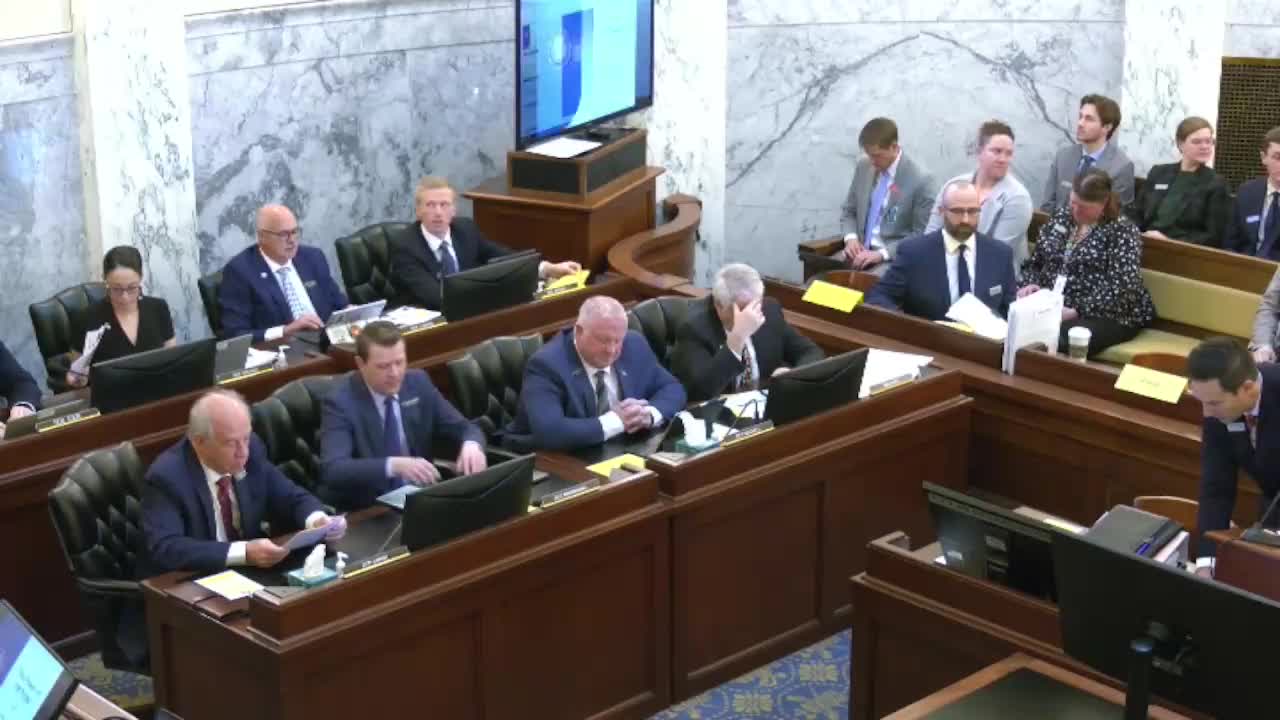
Legal counsel briefs JFAC on constitutional limits and mechanics of appropriations
Summary
Legislative legal counsel reviewed the constitutional origin of the legislature's appropriation power, statutory requirements for appropriation bills, and how conditions, limitations and item veto rules apply to appropriations.
Elizabeth Bowen, legislative legal counsel in the Legislative Services Office, told the Joint Finance-Appropriations Committee that the legislatures appropriation power derives from constitutional principles and is subject to specific statutory and constitutional constraints.
Bowen summarized the constitutional framework underlying the legislature's "power of the purse," noting that the Idaho Constitution vests the legislative power in the two chambers and that Article 7, Section 13 provides that money may be withdrawn from the state treasury only pursuant to a legislative appropriation. She emphasized that appropriation statutes are full laws and that appropriations are subject to constitutional requirements such as a balanced-budget rule (Article 7, Section 11) and unity of subject and title for bills.
Bowen explained several practical limits and rules: appropriations must specify sums and purposes, may be subject to the governor's item veto only on dollar amounts (not conditions), and are available for a single fiscal year unless the appropriation bill states otherwise. She described the four account categories the legislature uses for appropriations: personnel costs, operating expenditures, capital outlay and trustee and benefit payments, and explained that transfers among account categories are limited without legislative approval.
She referenced a state Supreme Court case (Santa Rosa v. Andress) holding that a governor cannot veto a condition attached to an appropriation; a condition directing how appropriated money should be spent is legally binding and must be observed. Bowen also summarized statutory duties for JFAC under Idaho Code (including authority to examine agency records, administer oaths and issue subpoenas if necessary) and the requirement that agencies submit detailed budget requests and federal-funding impact statements.
Ending: Bowen offered to answer questions and emphasized the legislature's plenary appropriation authority subject to constitutional limits and statutory procedures.