Get Full Government Meeting Transcripts, Videos, & Alerts Forever!
Get email alerts on the Licensing And Certification topic
No spam. Unsubscribe anytime.
DHW seeks exemption to transfer personnel funds for contract nurses to meet inspection requirements
Summary
The Department of Health and Welfare asked JFAC to exempt its licensing and certification division from a transfer restriction so it can move personnel dollars to operating accounts and pay contract nurses needed to complete facility surveys; the governor recommended the exemption.
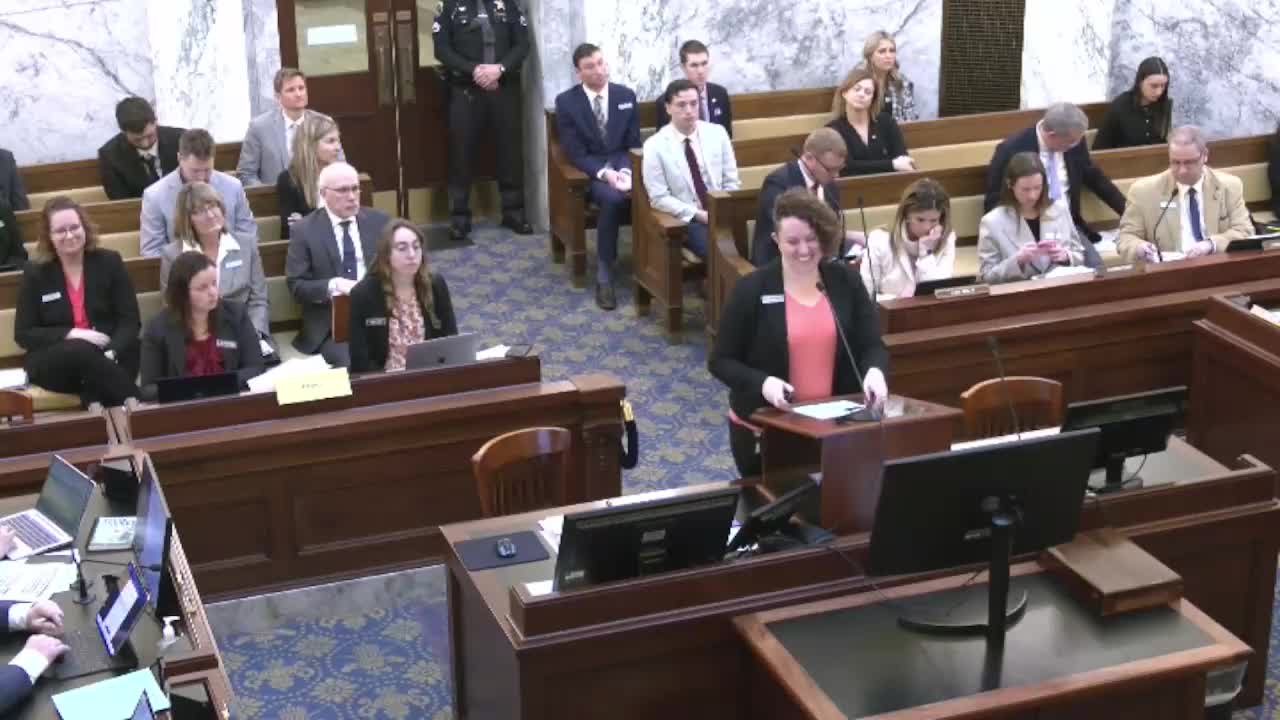
The Idaho Department of Health and Welfare asked the Joint Finance and Appropriations Committee on Jan. 13 for an exemption from a transfer restriction so Licensing and Certification can transfer personnel dollars to operating expenditures and hire contract nurses to complete required inspections.
Alex Williamson, budget and policy analyst with the Legislative Services Office, explained that the division has historically used contracted nurses to perform surveys and inspection work and that the division is requesting an exemption to Section 8 of Senate Bill 1268 (2024), which restricts transfers from personnel-cost expense classes to other expense classes for Health and Welfare. The division asked for an exemption rather than a fixed dollar transfer so it could move funds “as needed.” The governor recommended both the supplemental exemption and a similar 2026 enhancement.
Alex Adams, director of the Idaho Department of Health and Welfare, told the committee that licensing and certification has relied on contract support, particularly during the pandemic when vacancy rates rose in the long-term care inspection team. He said the agency pays roughly $35 an hour for staff inspectors but pays $90 to $95 an hour for contract nurses. Adams said the division has a statutory inspection obligation — for example, a 15.9-month requirement to inspect skilled nursing facilities — and that contract labor remains necessary until in‑house staffing levels increase.
Committee members asked for more detail about previous transfers and how the funds were used. Senator Cook said past transfers allowed the agency to hire contractors without committee oversight, which JFAC tightened; the agency provided a historical example: a $400,000 transfer in the prior year, of which the director said about $300,000 was spent and roughly $100,000 reverted. Williamson said she would follow up with exact spend/reversion figures.
Senator Woodward asked whether the request meant the division lacked enough permanent staff to meet inspection timelines or was using one‑time contract hires to complete obligations; Williamson and Adams said the division has long used contractors because it has not previously had sufficient full-time personnel to perform all required surveys on an ongoing basis. Adams said turnover has decreased in recent years and that the department would prefer in-house staffing but needs the short-term flexibility to meet federal and state inspection deadlines.
The committee did not vote on the exemption during this portion of the hearing; the item will be considered as part of the scheduled program maintenance and enhancement decisions later in the session.