Get Full Government Meeting Transcripts, Videos, & Alerts Forever!
Get email alerts on the San Carlos Power Divestment topic
No spam. Unsubscribe anytime.
House committee backs memorial urging federal action on San Carlos irrigation power reliability
Summary
House Concurrent Memorial 2009, urging federal steps to address electric reliability and divestment issues for the San Carlos irrigation project, received a due‑pass recommendation after members said the change would improve power reliability for tribal and nearby communities.
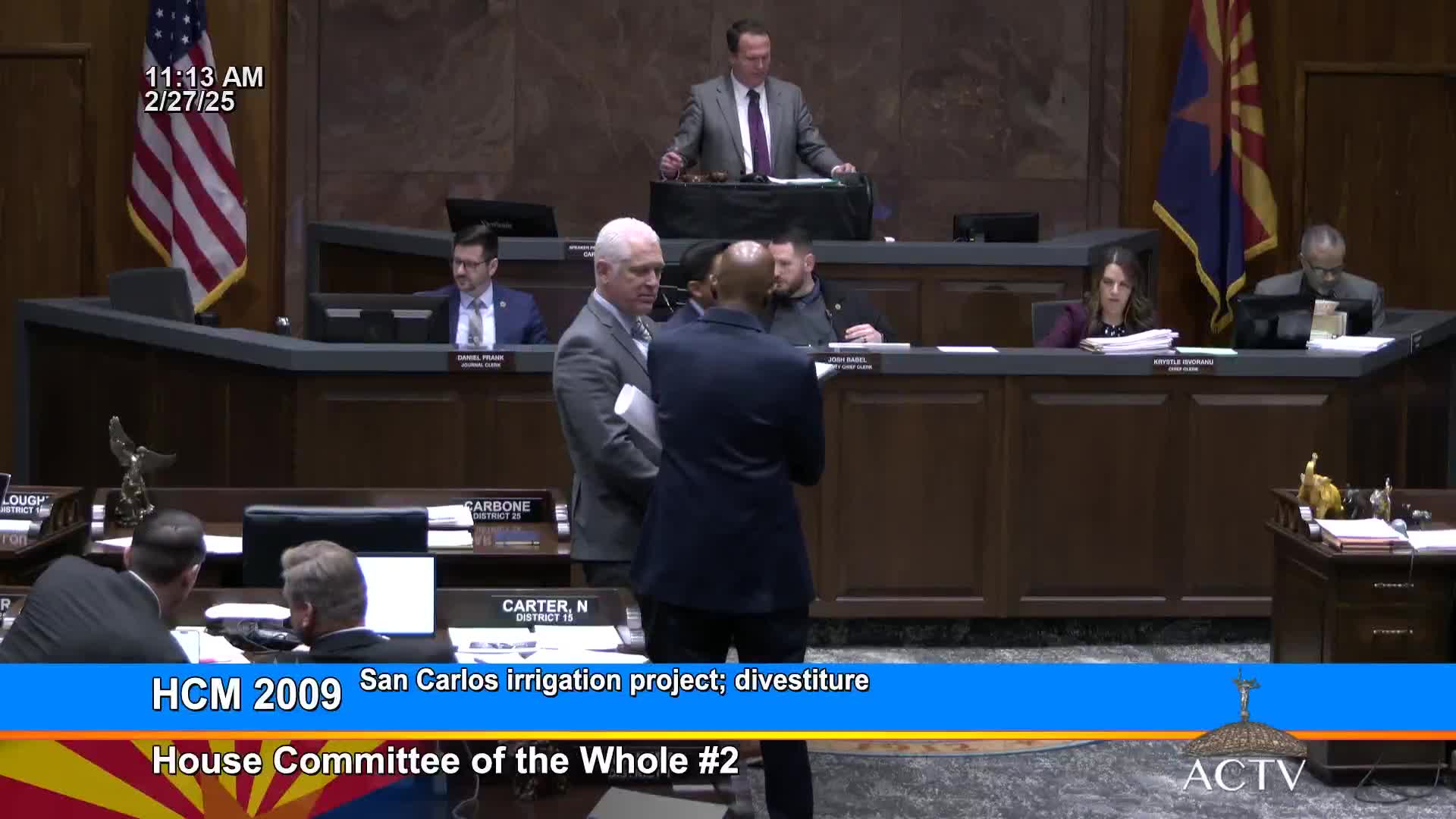
House Concurrent Memorial 2009, a nonbinding memorial urging federal action related to the San Carlos irrigation project’s electric power arrangements, received a due‑pass recommendation from the House National Resources, Energy and Water Committee on Feb. 27.
Representative Martinez described the measure as a request to Congress to begin a process to divest the San Carlos irrigation project’s electrical infrastructure from current federal administration and to transition the system to entities better positioned to deliver reliable service. Martinez said the Bureau of Indian Affairs currently provides power that the sponsor characterized as outdated and unreliable.
Representative Neil Carter supported the memorial and described it as a coordinated local effort that would improve reliability for reservations and nearby communities such as Casa Grande, Coolidge and Florence. He noted stakeholder meetings in Florence and said the change would likely require congressional action because of federal ownership and the Bureau of Indian Affairs’ role.
The committee recommended concurrence (a due‑pass recommendation) and the memorial was reported up and subsequently included among committee reports adopted by the full House.
Ending: Sponsors said the goal is better, more modern power and reliability for tribal and surrounding communities; because the memorial requests federal action, any implementation depends on congressional steps and federal agencies, not state authority.