Get Full Government Meeting Transcripts, Videos, & Alerts Forever!
Get email alerts on the Mobile Drivers License topic
No spam. Unsubscribe anytime.
Committee declines to introduce bill on mobile driver's licenses after security and data concerns
Summary
Representative Nicholson presented RS 32‑144, a bill about mobile driver's licenses; committee members raised concerns about fraud, cloud storage costs and possible overseas data transfer, and a motion to introduce the bill failed on a voice vote.
Representative Nicholson returned to the House Transportation Committee with RS 32‑144, a bill addressing mobile driver's licenses and how they would be used for identification.
During discussion Representative Richardson Mitchell said he had "some serious issues with this" and raised concerns about how easily the mobile IDs could be faked, law enforcement usability, and the fiscal note. "This fiscal note doesn't make sense because now you're paying a third party carrier for their cloud storage, which is gonna cost more than $10 a year," he said.
Representative Mitchell also asked whether the bill prevents information from being shared overseas. The transcript records the sponsor responding that an AMBA system is, to his understanding, for the United States and Canada and that "as far as our information being transferred overseas, no, it is not being transferred overseas." The transcript does not record additional legal language or contractual protections ensuring that outcome.
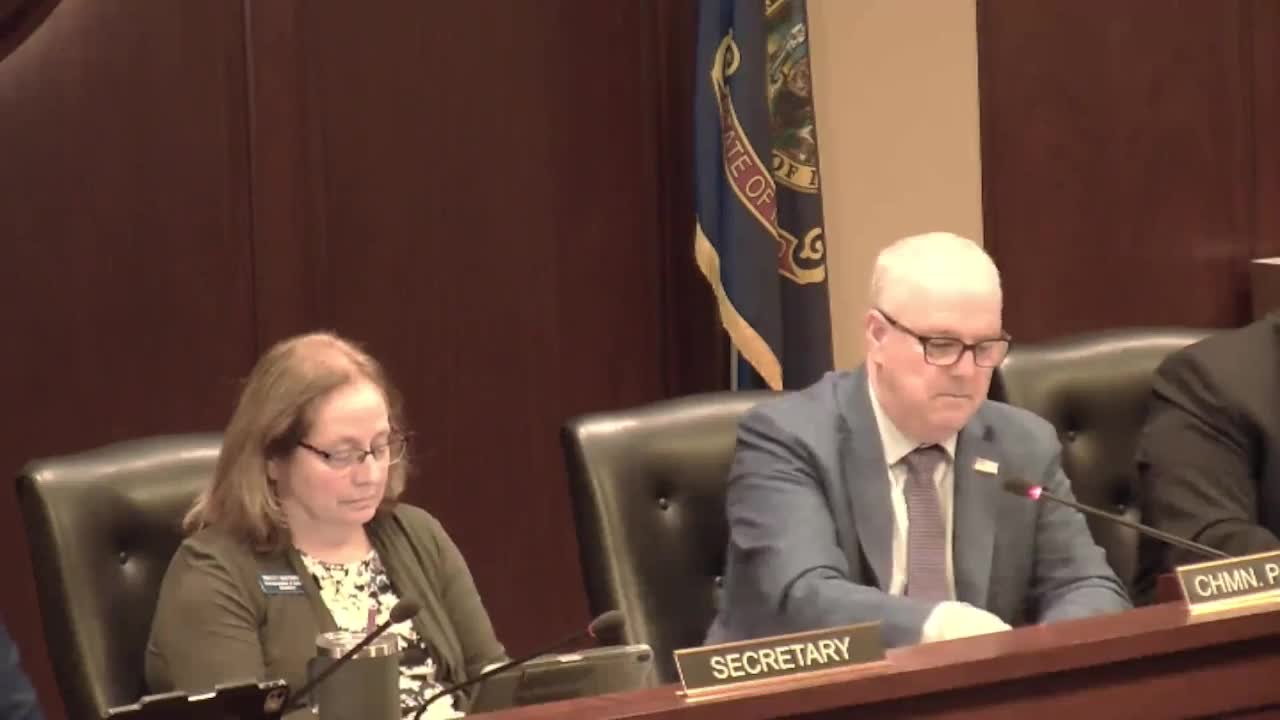
Representative Pesky moved to introduce RS 32‑144. The chair called for the voice vote; the transcript records both 'Aye' and then reports 'Motion fails.' The committee transcript does not include a roll‑call tally or further detail on the vote breakdown.
Why it matters: members questioned whether current systems adequately protect personal data, how states administer identification systems, and the fiscal implications of using third‑party cloud storage. The committee did not introduce the bill, so no public hearing was scheduled in this record.