Get Full Government Meeting Transcripts, Videos, & Alerts Forever!
Get email alerts on the Higher Education Dei topic
No spam. Unsubscribe anytime.
Senate working‑group DEI proposal sent to print; senator voices free‑speech concerns
Summary
Senators voted to print RS 32103, a recommendation from a working group that would limit DEI offices, diversity training, bias‑reporting systems and DEI‑based personnel or admissions practices at Idaho institutions of higher education; at least one senator said he would support printing but has ‘‘very serious concerns.’’
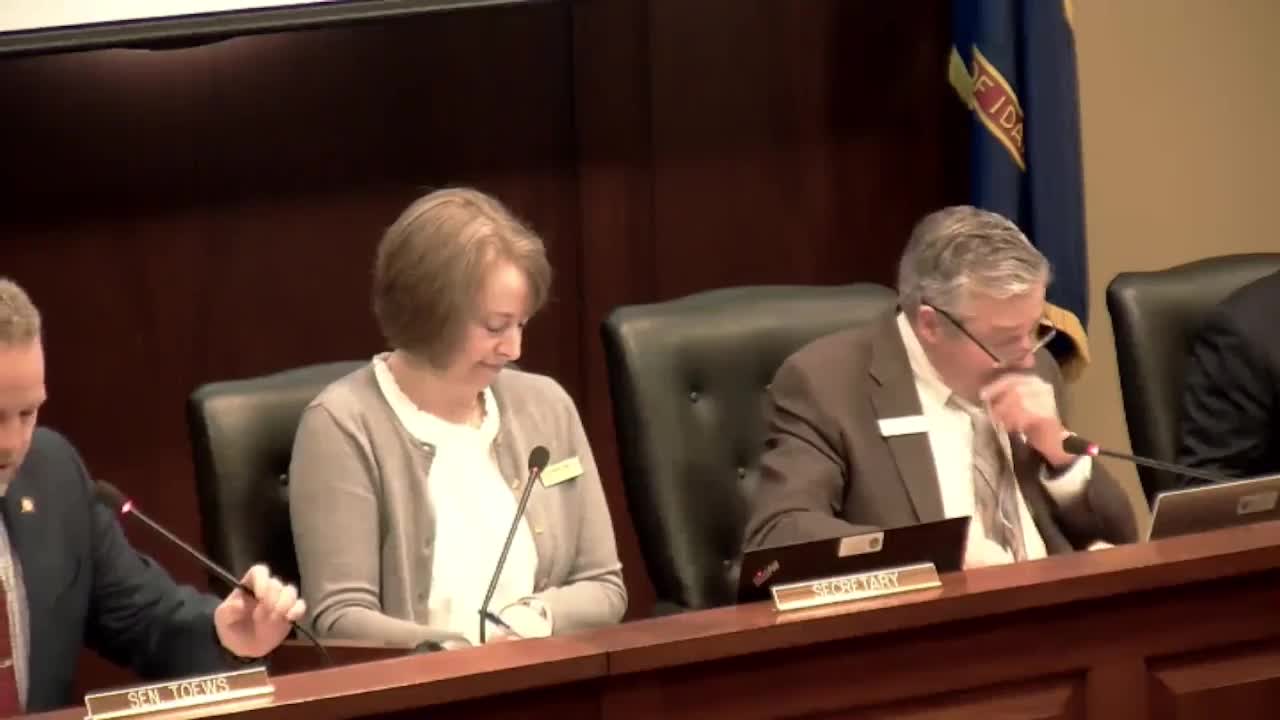
The Senate State Affairs Committee voted to print RS 32103, a recommendation from a working group on diversity, equity and inclusion that would restrict certain DEI activities at Idaho institutions of higher education.
Senator Toews described the measure as "a pretty, mild and light touch on the ballot initiative statute" and later as a product intended to "protect freedom of inquiry and the pursuit of knowledge" by "freeing students and faculty from compulsory ideological training." He said the working group met four times and reached a 6–1 vote in favor of the recommendation.
Under the language explained to the committee, RS 32103 would prohibit DEI‑based discrimination in admissions and hiring, bar DEI‑related employee incentives, eliminate DEI offices and officer positions, and restrict diversity training and bias reporting systems. The sponsor also told senators that students could not be compelled to enroll in courses designed with DEI principles unless those concepts are central to the student’s chosen field of study.
Senator Reid said he would vote to print the measure out of "common courtesy" but raised constitutional and policy concerns about the scope of the language. He said the bill’s definition of "bias reporting systems" could prevent campuses from investigating or addressing discriminatory or harassing speech. "Most of our speech, just about all of our speech is protected by law, and this would prevent an investigation of hate speech on campus of a lighter level," Reid said, adding that the bill could be used "as a weapon." Reid said he nonetheless would support printing so the bill could receive a full hearing.
A motion by Senator Anthon (moved) and a second by Senator Harris to introduce RS 32103 passed on a voice vote.
RS 32103 will be printed for a formal hearing. Committee members asked for further discussion at the hearing to resolve concerns about the bill’s scope and the impact on campus harassment reporting and academic programs.