Get Full Government Meeting Transcripts, Videos, & Alerts Forever!
Get email alerts on the State Budget topic
No spam. Unsubscribe anytime.
Legislative staff outline FY2025–26 budget picture, warn of choices between tax relief and services
Summary
Legislative Services Office briefed the Joint Finance Committee on the governor's FY2025 and FY2026 revenue forecasts, structural balance and projected general fund expenditures, highlighting a roughly $700 million projected structural surplus and the tradeoffs lawmakers will face between tax relief and ongoing program funding.
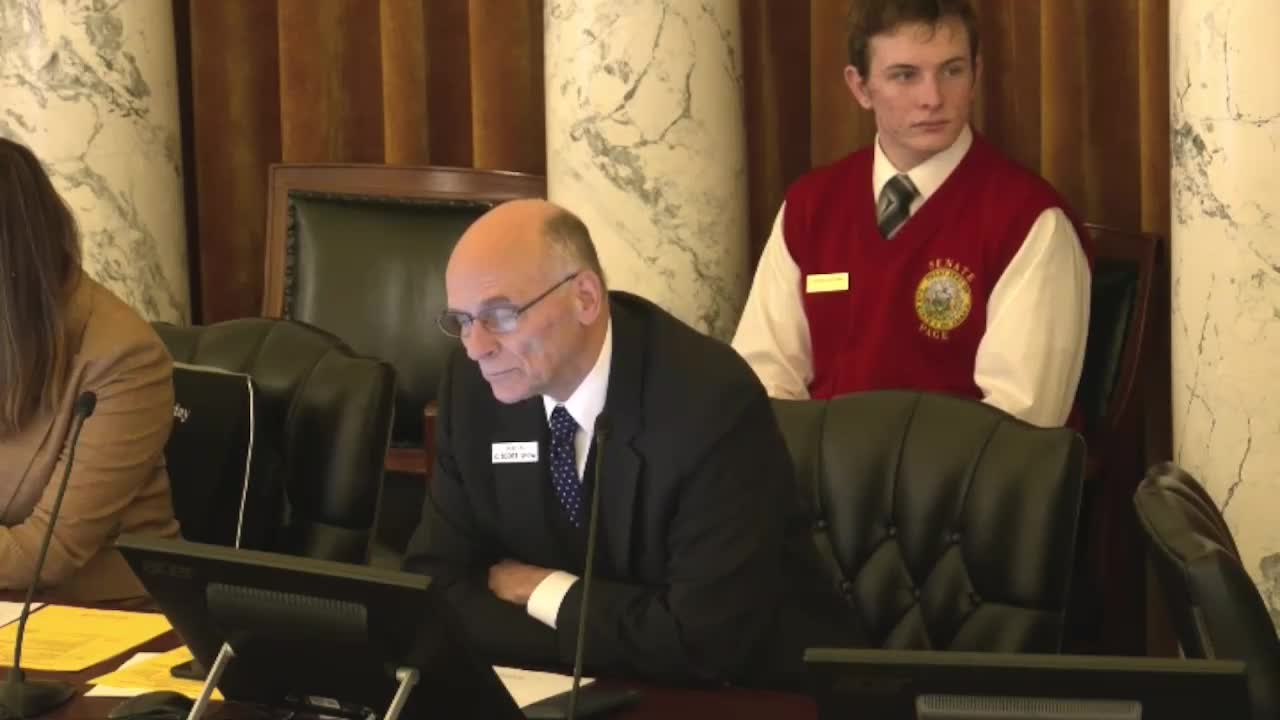
Keith Bybee, division manager of Budget Policy Analysis for the Legislative Services Office, told the Joint Finance Committee that the governor's recommendations put Idaho in a strong near‑term cash position but present policy choices for the Legislature.
"The good news about all of this is the legislature has really managed its finances to put yourself in a position to make changes that are reflective of the policy," Bybee said, summarizing why the state has a multiyear structural surplus under the current forecast.
Bybee walked members through historical revenue growth, noting an unusual spike during the COVID years when general fund revenues rose from roughly $4 billion to more than $6.2 billion over two years. He said Idaho's new baseline will not return to pre‑2020 growth rates because population gains have raised the state's revenue base; he identified $5.7 billion as the 2024 actual collections baseline used for projections.
The Legislative Services Office used the governor's numbers for FY2025 and FY2026 in its presentation. On that basis, Bybee showed a projected ongoing gap between revenues and expenditures that nonetheless leaves a roughly $700 million structural surplus in each of the next two fiscal years under the governor's forecast. For FY2025 he projected an ending cash balance of about $338 million under the governor's plan; for FY2026 the governor's recommended total budget is about $5.65 billion with a projected ending balance of roughly $227 million.
Bybee highlighted that the governor's recommendation uses some one‑time cash while preserving ongoing resources. He emphasized the central policy tradeoff members will confront: whether to devote structural surplus to tax relief, ongoing program increases, or a mix of both. "So that will be the challenge for this year," he said.
Committee members asked for clarifications about revenue scenarios and forecasting methods. Bybee and other analysts explained the baseline (median) forecast and how the office and the Division of Financial Management describe "pessimistic," "baseline" and "optimistic" scenarios when communicating probability ranges.
The presentation included the typical next steps: hearing agency maintenance and enhancement requests, reviewing program maintenance adjustments (benefit changes, contract inflation, statewide cost allocation and employee compensation), and translating those decisions into appropriation bills. Bybee and staff reminded committee members that much of the detailed budget material — including agency request and governor recommendation comparisons — is on the committee SharePoint for members.
The committee did not take formal action during the presentation; members were reminded that their choices over the coming weeks will determine whether structural surplus funds are applied to tax relief, ongoing government services, transfers to savings accounts, or other priorities.