Get Full Government Meeting Transcripts, Videos, & Alerts Forever!
Get email alerts on the State Liquor Division Budget topic
No spam. Unsubscribe anytime.
Idaho Liquor Division details distributions, staffing pressures and IT, ADA upgrade requests
Summary
Officials from the Idaho State Liquor Division told the Joint Finance-Appropriations Committee the agency distributed about $118.3 million in FY2024, cited high turnover among temporary store clerks, and requested a mix of ongoing and one-time funding for pay adjustments, IT security, and store replacement items for FY2026.
The Idaho State Liquor Division told the Joint Finance-Appropriations Committee on Wednesday that it distributed roughly $118.3 million to state and local recipients in fiscal 2024 and is seeking modest ongoing and one-time appropriations for staffing, technology security and store replacement items in fiscal 2026.
Kellen McGurkin, a budget and policy analyst with the Legislative Services Office, told the committee the division’s statutory distributions (per Idaho Code) totaled about $118.3 million in FY2024 and described how those distributions are calculated under Idaho Code §23-404. He said a 2% surcharge on all liquor sales produced roughly $6.7 million for the court services fund and that, after operating costs and fund-balance requirements, available funds are split, with roughly one half going to cities, counties and magistrate courts (about $56.3 million) and the other half subject to fixed distributions and transfers to the general fund and other statutory recipients.
The context matters because the division is a dedicated-fund agency that must cover retail operations, merchandise costs and statutory distributions from the same revenue stream. McGurkin noted the division reported $319.1 million in total sales for FY2024 and that operating costs accounted for about 63% of sales versus a reported net income of roughly 36% (about $116.6 million). He also flagged a decline in free fund balances from about $38 million in FY2022 to approximately $14 million in FY2024.
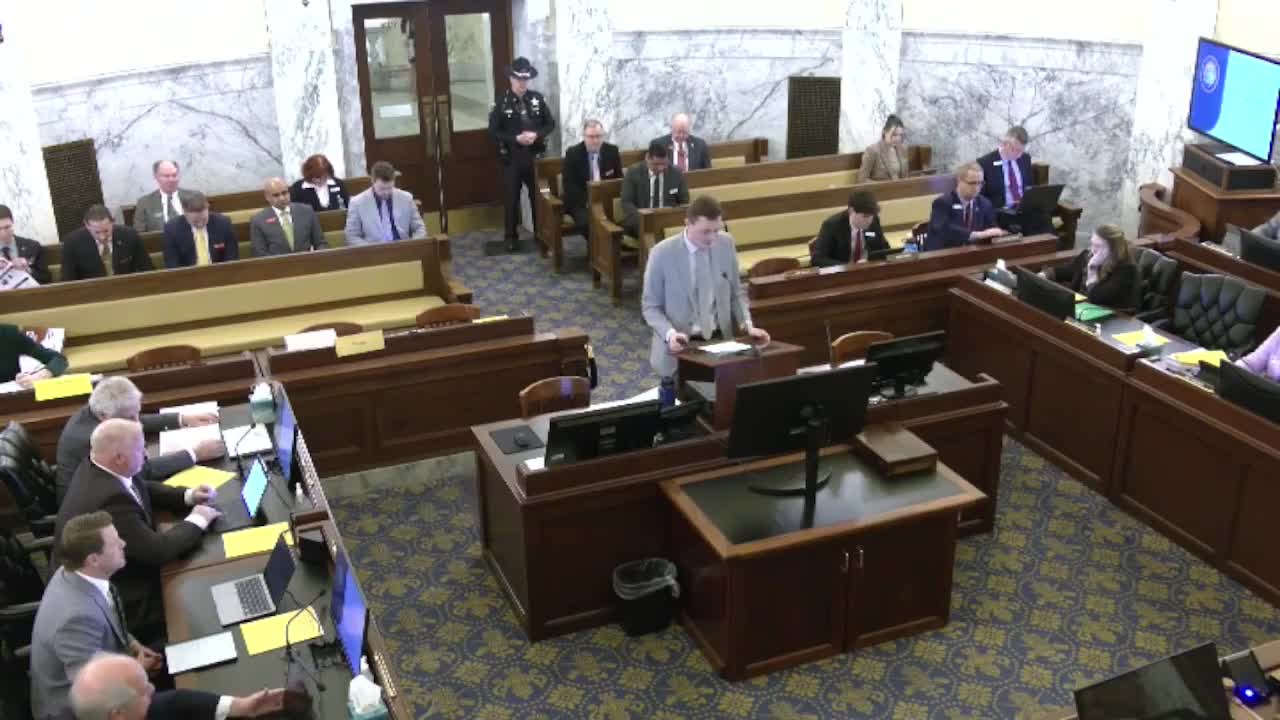
Andrew Arulanandam, director of the Idaho State Liquor Division, summarized operational pressures for the committee and introduced staff including Chief Deputy Tony Grama. Arulanandam said turnover among temporary retail staff was a major issue; he told the committee the agency recorded turnover near 140% per year prior to pay increases and later reported turnover closer to 84% after earlier raises. "We were experiencing turnover of 140% per year," he said. "Thanks to that appropriation by this committee, we've been able to bring that down to roughly 84%." He cautioned that pay increases are only one factor in turnover.
The division requested $131,400 in ongoing dedicated funds for FY2026, including $57,400 to raise temporary retail staff hourly pay from $15.00 to $15.45 and $72,000 to cover new shrink-wrap requirements in a freight contract. The division also requested a number of one-time appropriations: $1.2 million for replacement items (shelving, lighting, flooring and signage), $200,000 for 70 network firewalls and 70 managed switches to complete a network modernization led by the Office of Information Technology Services (OITS), $100,000 to upgrade the website to meet Web Content Accessibility Guidelines (WCAG) and Americans with Disabilities Act compliance, and $980,300 for retail improvements and motorized equipment replacement. The director said the firewall/switch investment would pair with prior Cradlepoint router purchases and could reduce monthly costs versus a hardwired network solution.
Committee members pressed the division on the size and scope of the website upgrade request. Senator Cook asked, "Is it really going to cost a hundred grand to fix a menu or am I missing something, are there other stuff on that website that needs to be fixed?" Arulanandam replied, "There are indeed other items. I don't have the exact list. We did consult with an expert and he gave us a list of items that we would need to upgrade to be in full compliance. The other thing that we've learned is there are attorneys across the country who scour these websites and use it as a means to sue agencies and entities that aren't ADA compliant." He described the requested $100,000 as a prudent one-time investment to reduce legal risk and bring the site into compliance.
Analysts also reviewed staffing and personnel figures: the division’s FTP cap is 257.25, the five‑year average staff-filled percentage is about 93%, and the agency employs roughly 185 part-time store clerks (not included in the FTP count) and supplies product to 106 contract liquor stores. The division reported appropriated expenditures of $28.1 million in FY2024, with personnel representing about 66% of that amount and capital outlay and operating expenses accounting for the remainder; the high capital figure partly reflects store lease remodels.
The division’s presentation and requests were framed as business decisions tied to revenue generation for the state. Arulanandam told the committee that liquor sales nationwide face demographic headwinds and that the division sought incremental pay steps and operational improvements rather than larger, speculative increases. He concluded by thanking the committee and offering to answer follow-up questions.
The agency’s packet is available in the Legislative Budget Book under the Office of the Governor, and the division’s slide set (as presented) contains detailed line items and the statutory distribution table referenced during the hearing.