Get Full Government Meeting Transcripts, Videos, & Alerts Forever!
Get email alerts on the Special Assessment Districts topic
No spam. Unsubscribe anytime.
House committee advances bill letting hotel groups form voluntary assessment districts after constitutional debate
Summary
Lawmakers in the Arizona House Commerce Committee voted to advance HB2873, which would authorize voluntary assessment districts for tourism promotion and related activities; opponents warned it could grant private entities taxing-like powers and run afoul of the state constitution.
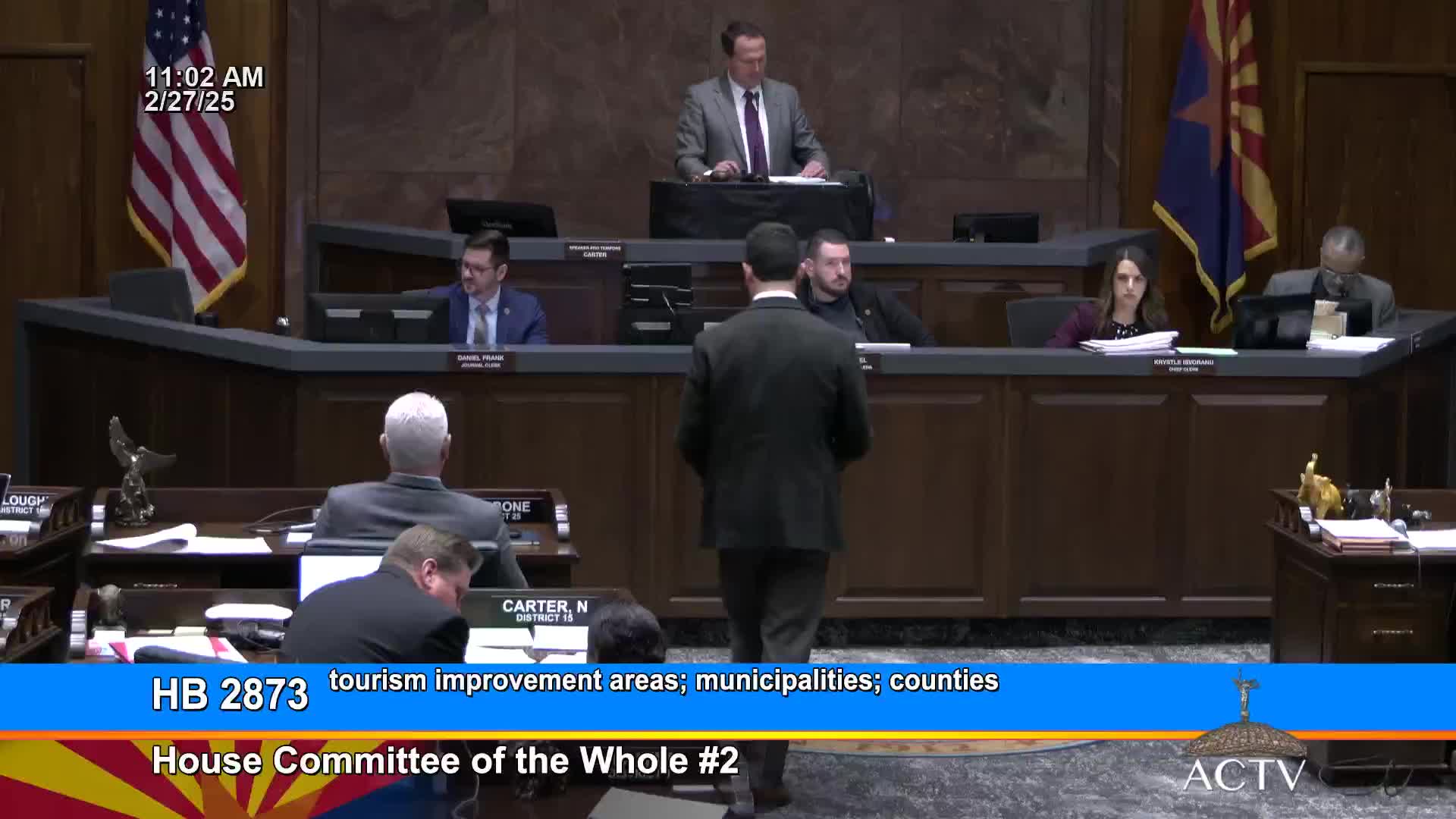
The Arizona House Commerce Committee on Feb. 27 advanced House Bill 28 73 as amended, a proposal that would let groups of lodging businesses form voluntary assessment districts to fund marketing and services for tourism.
Supporters said the measure creates a voluntary tool for local businesses to invest in promotion and that formation requires a supermajority and offers opt‑outs for certain property classes. Opponents raised constitutional and equity concerns, arguing the measure could grant private actors taxing power without the same public accountability required of governments.
Representative Andrew Wilmoth, the bill sponsor in committee, told colleagues the measure clarifies how districts will operate, adds Department of Revenue guidance and emphasizes that forming a district is voluntary. “This is a wonderful thing that many states have done,” Wilmoth said, adding that 24 states have similar authorities and that advocates expect “a return on investment of 6 to 1.” He said hotels in places such as Flagstaff told him the tool would help marketing and occupancy.
Representative Culleton (transcript spelling: Culleton) opposed the amendment on constitutional grounds. He cited Article 15, Section 2 of the Arizona Constitution and the state’s gift clause, saying the bill “grants tax money to private industry participants” and can force competitors to help fund their rivals’ marketing. Culleton warned it amounts to “taxation without representation” because residents do not elect the governing board of a private nonprofit that could collect assessments under the bill.
Committee discussion also included questions about how owners could be excluded from a district and what thresholds would apply to formation. Sponsor Wilmoth said the proposal requires two‑thirds of businesses in a zone to agree to form a district and that smaller businesses (for example, hotels below certain size thresholds) can opt out.
The committee adopted a sponsor floor amendment that the chair described as clarifying language for the Department of Revenue and reinforcing voluntariness. The Commerce Committee then recommended HB28 73 as amended receive a due‑pass recommendation; the committee report was later adopted and the bill was referred to engrossing.
The bill drew a lengthy debate in committee and several members asked procedural and policy questions; however, the committee majority voted to advance it. Final floor votes and any subsequent Senate action were not recorded in the committee transcript excerpts reviewed here.
Votes and next steps: The Commerce Committee adopted the sponsor floor amendment and then voted to recommend HB28 73 as amended. The committee report was adopted by the full House and the bill was referred to engrossing for further processing.
Ending: HB28 73 leaves unresolved legal questions raised at the committee hearing about private assessment authority and the gift clause; bill supporters said formation is voluntary and already used in other states while detractors said the measure risks transferring taxing authority to private actors without public electoral control.