Get Full Government Meeting Transcripts, Videos, & Alerts Forever!
Get email alerts on the Public Defense Appellate topic
No spam. Unsubscribe anytime.
Idaho Appellate Public Defender Seeks Deputy Position to Reduce Contract Costs
Summary
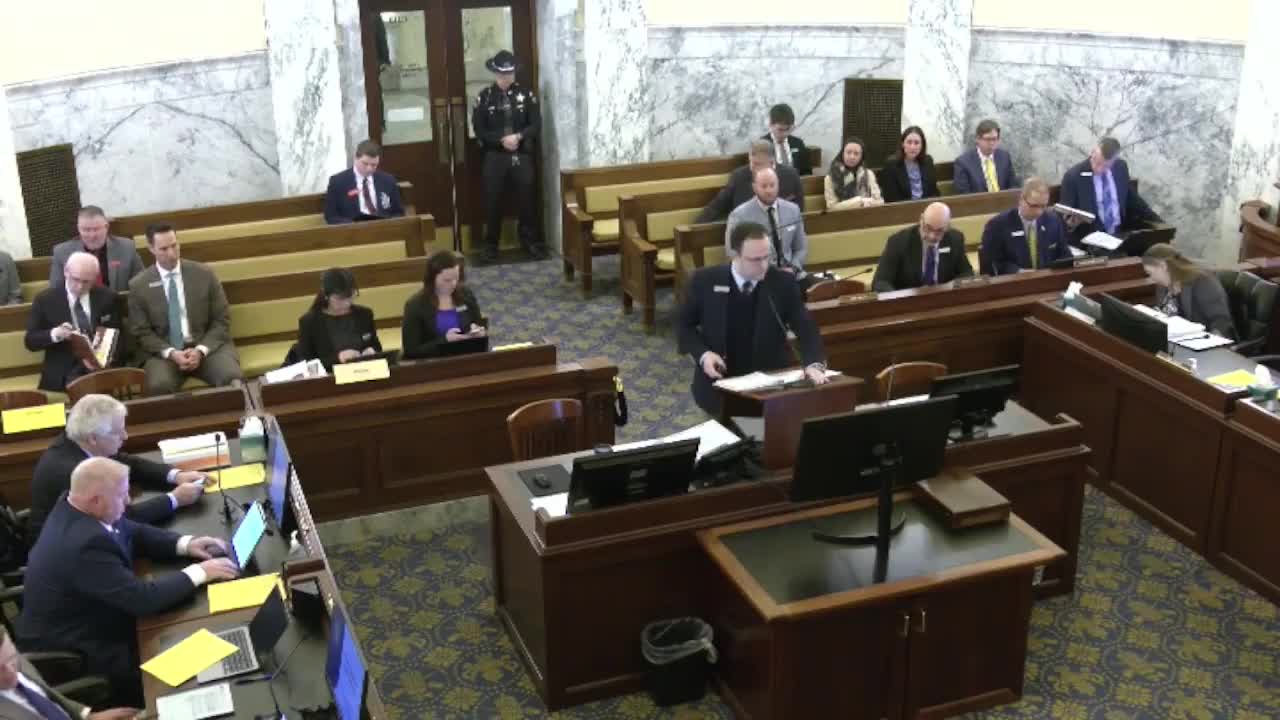
At a Joint Finance-Appropriations Committee hearing, analysts and the State Appellate Public Defender described rising appellate caseloads, recent turnover and a request to add a deputy appellate public defender to reduce reliance on outside contracted attorneys.
The Idaho Joint Finance-Appropriations Committee heard on the appellate public defender budget, where Legislative Services analyst Christopher Lahoset outlined staffing, recent appropriations and a new staffing request aimed at reducing contract costs.
The office has an authorized 26 full-time positions and, as of the analyst's report, had no vacancies as of Dec. 15. The office reported an average personnel appropriation over the last five years just under $2,800,000 and that roughly 95% of the personnel appropriation is being used for personnel expenses. Lahoset told the committee the office is requesting an additional deputy state appellate public defender position and associated funding; the analyst summarized the agency's estimate that contracting overflow cases costs about $254,000 per year while hiring a deputy at a $140,000 salary would produce net savings.
The agency's director, Eric Leighton, told the committee that the appellate office has seen a substantial post‑pandemic caseload increase and that recent turnover made the year "challenging." "It has been a challenging year," Leighton said, and he explained the office had taken longer than usual to fill vacancies after a prior organizational change and departures to the new State Public Defender office. He said the office is currently fully staffed but that staff turnover continued, with at least one upcoming departure.
Committee members asked about how the additional attorney would be assigned and whether contracting would continue. Leighton said the new position would be the thirteenth attorney in the appellate unit and that the office typically distributes cases based on attorney experience; he said the office expects a total appellate caseload near 650 cases in the current fiscal year and that assignments are tailored to attorney experience. The director also explained the office must contract for conflict cases by law and that the office has a modest budget earmarked for conflicts (about $200,000) and sometimes uses contracting for overflow cases. He told the committee that contracting is more expensive and can cross fiscal years, and that roughly 14 cases had been sent to contract counsel in the prior 18 months.
Lahoset also reviewed historical budgeting: earlier one‑time supplementals were approved to cover a large influx of cases, some of which were re‑appropriated into later years and are not part of the base budget. The analyst noted prior supplemental authority (roughly $1.3 million) authorized in 2023 to anticipate high case volumes and that some of those funds remain available.
The committee did not take a vote at the hearing; members sought clarification about how the new position would affect current staff duties and whether hiring would indeed lower costs compared with contracting. Leighton said the position would take a share of the noncapital felony, misdemeanor and juvenile appellate caseload and that new hires are used both to handle client work and as on‑the‑job training.
The hearing record includes the analyst's materials on authorized positions, five‑year appropriation histories, and a breakdown of FY24 expenditures showing about 85% of spending on personnel and 14% on operating expenses. The office and analysts stood for committee questions and indicated readiness to provide further detail if the panel requests it.