Get Full Government Meeting Transcripts, Videos, & Alerts Forever!
Get email alerts on the State Benefits topic
No spam. Unsubscribe anytime.
State benefits account for roughly one quarter of personnel costs; governor proposes higher health appropriation per FTP
Summary
Legislative analysts outlined the components of Idaho’s employee benefits package—health insurance, PERSI, Social Security/Medicare and other items—and said benefits make up about 25% of personnel expenditures; the governor’s recommendation includes a higher per‑FTP health appropriation than actuarial minimums.
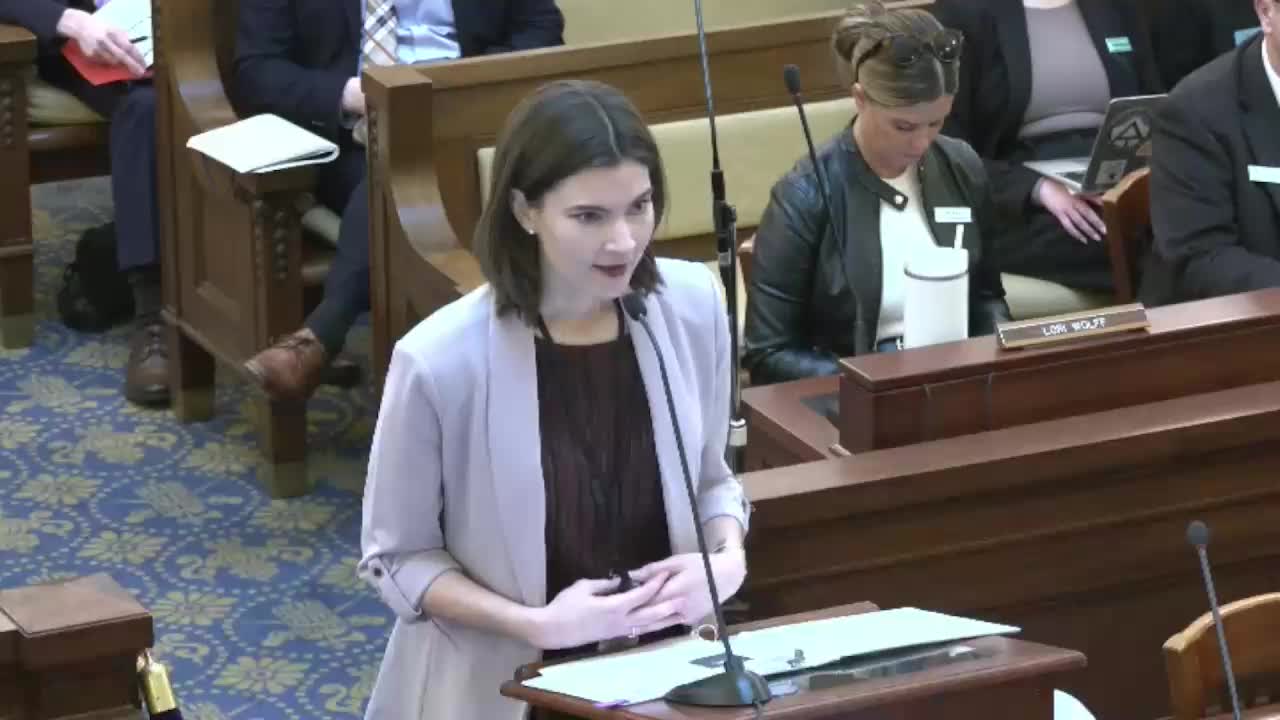
Frances Lippitt, a budget and policy analyst at the Legislative Services Office, told the Joint Finance‑Appropriations Committee that benefits comprise a substantial share of state personnel costs and merit separate legislative review.
“Benefits generally account for about a quarter of the state's overall personal cost expenditures,” Lippitt said during her Oct. 23 presentation. She summarized the main elements of the benefits package — health and dental insurance, the Public Employee Retirement System of Idaho (PERSI), Social Security and Medicare, workers' compensation, and basic life insurance — and explained how the state budgets for those items.
Lippitt noted that health insurance is budgeted as a per‑full‑time‑position (FTP) dollar appropriation. The governor’s recommendation increases the appropriation per FTP from the actuarial floor in order to cover more of the plan’s potential claims without drawing down reserves. Using the actuarial target, the fiscal 2026 per‑FTP appropriation would be $13,960, but the governor recommended $14,300 per FTP — a more conservative figure intended to fund the plan at a higher probability level. Lippitt said that change represents about $56.6 million in additional appropriations in the governor’s recommendation.
PERSI employer contribution rates and other variable benefit rates were reviewed. Lippitt recited the current employer rates she used for FY2025: 11.96% for general members, 14.65% for public safety employees, and 13.47% for teachers. Combined with other variable items the state budgets roughly 23% of an employee’s salary for variable benefits; combined with health insurance the effective benefit load can vary substantially by pay level.
Lippitt explained how the Joint Committee on Change in Employee Compensation (CEC) fits into the budget process: the CEC takes testimony and recommends salary structure changes and benefit policy to the JFAC. She advised members that certain benefit features are decided through that process, and urged them to consider both per‑FTP appropriations and longer‑term actuarial assumptions when weighing compensation packages.
Why it matters: benefits decisions drive recurring costs, affect competitiveness for state employment, and interact with program maintenance costs across agencies. The committee did not take action but will consider the CEC recommendations as it moves into program maintenance hearings.