Get Full Government Meeting Transcripts, Videos, & Alerts Forever!
Get email alerts on the Deficiency Warrants Supplementals topic
No spam. Unsubscribe anytime.
JFAC briefed on deficiency warrants and supplementals; committee told definition, uses and constitutional emergency clause
Summary
Kellen McGurkin explained deficiency warrants, supplementals and rescissions, highlighting statutory limits, typical uses (fire suppression, pest control), rising use and the constitutional emergency clause that makes some adjustments immediate when needed.
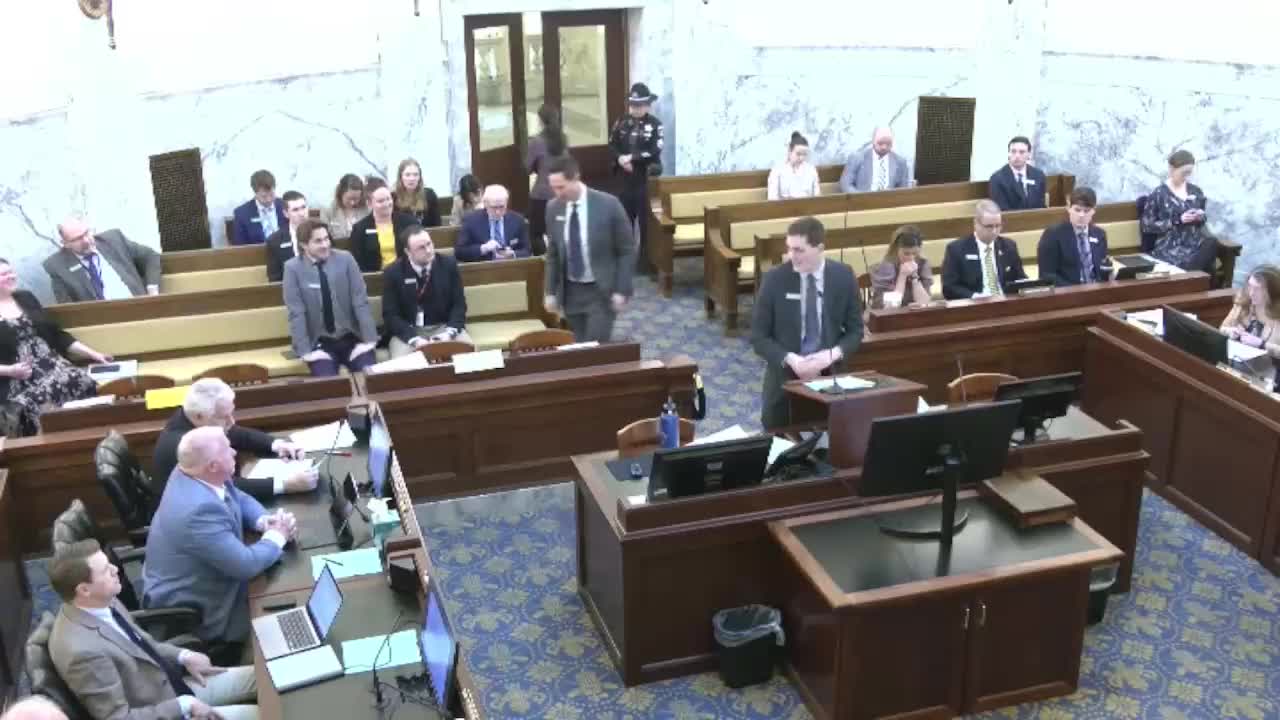
Kellen McGurkin, a budget and policy analyst with the Legislative Services Office, told the Joint Finance and Appropriation Committee on Jan. 7 that deficiency warrants permit specified agencies to spend against the general fund for limited, statutorily authorized purposes without a prior appropriation and that supplementals are ordinary appropriations that change the current fiscal year budget.
"Deficiency warrants allow select agencies to spend monies against the general fund for select purposes as authorized in statute without a prior appropriation," McGurkin said. He compared them to a credit-card authority that agencies later clear by coming to the committee for an appropriation to zero out the outstanding balance.
McGurkin said typical uses authorized by statute include dam safety, fire suppression and pest control. Those expenditures generally are first authorized by either the Board of Examiners (governor, secretary of state and comptroller equivalents) or the Board of Land Commissioners and then the agency seeks legislative appropriation to reconcile the account. He provided a five-year trend showing an increase in deficiency-warrant requests, with pest control accounting for much of the growth.
He explained supplemental appropriations differ from deficiency warrants: supplementals are adjustments to the current fiscal year’s appropriation and operate like typical appropriations, while rescissions are reductions to the current-year appropriation. For the current session the governor’s recommended supplemental total was $604,842,000 across all funds, including $98,776,000 on the general fund, McGurkin said; those totals include a proposed $60,000,000 transfer from the general fund to the fire deficiency fund.
McGurkin reviewed the Idaho Constitution’s emergency-clause principle: except in cases of emergency, laws do not take effect until the end of the fiscal year unless an emergency is declared in the bill preamble. The committee must consider whether requests need emergency language to take effect immediately.
Committee members asked procedural questions. Senator Cook asked whether an urgent building repair (a leaking roof) would qualify as an emergency; McGurkin said that agencies and the division of purchasing must also address procurement constraints and that the committee would decide whether to approve emergency appropriations. Co-chairs reminded members the committee should reserve supplementals for genuine urgent needs rather than recurring shortfalls and that the committee has previously withheld funding or passed legislation when recurring problems persisted.
McGurkin closed by pointing the committee to a consolidated list of deficiency-warrant and supplemental requests in the legislative budget book and invited members to consult that list as individual agency hearings proceed.