Get Full Government Meeting Transcripts, Videos, & Alerts Forever!
Get email alerts on the Independent Living Council Budget topic
No spam. Unsubscribe anytime.
State Independent Living Council details fund balances, asks committee to consider shift of personnel costs to general fund
Summary
Legislative analysts and the Idaho State Independent Living Council described the agency’s small staff, dedicated fund revenue fluctuations and a governor recommendation to shift a portion of personnel appropriation from a dedicated fund to the general fund.
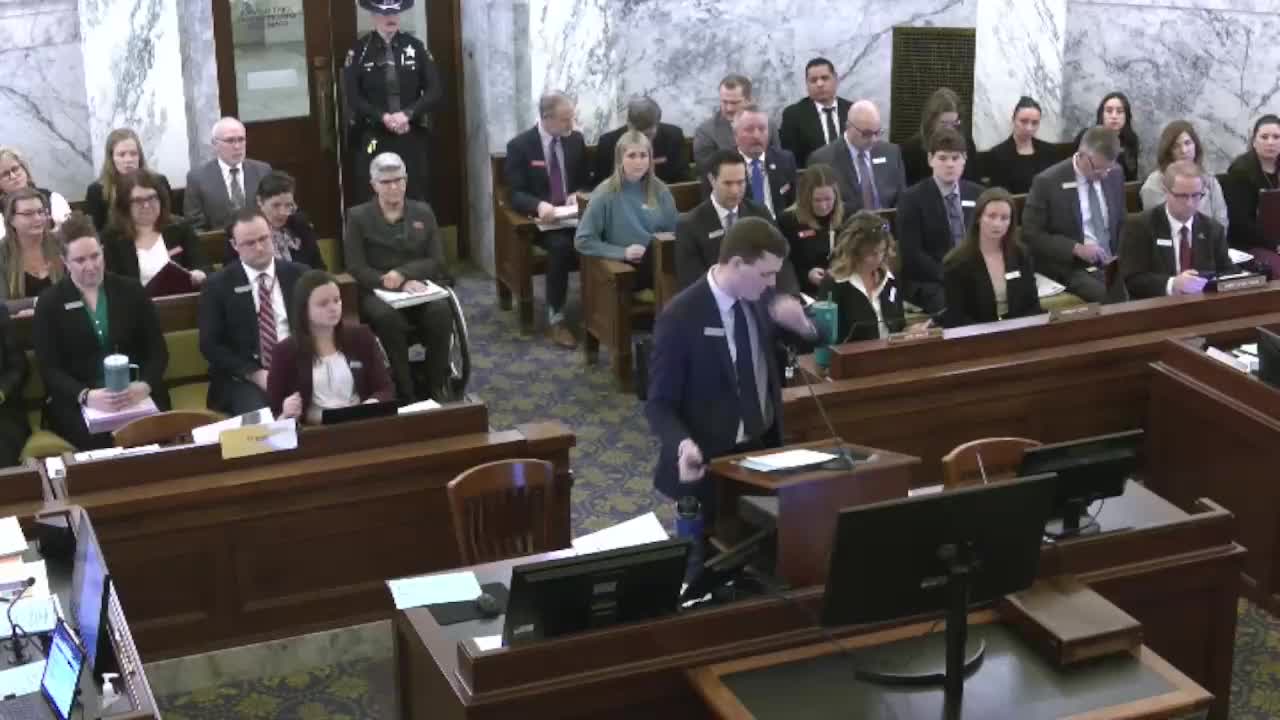
Legislative Services Office staff and the executive director of the Idaho State Independent Living Council (SILC) briefed the Joint Finance‑Appropriations Committee on Jan. 15 about the council’s budget, staffing and fund balances.
Kellen McGurkin, a budget and policy analyst, said SILC operates with four full‑time positions, including Executive Director Mel Levitan, and that personnel costs make up about 69–70% of the agency’s expenditures in recent years. McGurkin told the committee the agency maintains a dedicated fund that receives federal grant revenues passed through the Idaho Division of Vocational Rehabilitation.
McGurkin said SILC’s dedicated fund typically holds an ending balance close to $280,000 — roughly six and a half months of operating expenses — to protect against interruptions in federal grant receipts. He noted occasional apparent “overspend” on a fiscal‑year report can reflect mismatches between federal grant periods and the state fiscal year rather than sustained deficits.
SILC has seen small federal funding changes: McGurkin said Title I Rehabilitation Act funding increased by about $30,000 in FY2023 — the first increase for that source in about a decade. He also explained the governor’s recommendation for fiscal 2026 would shift $11,700 in appropriation from SILC’s dedicated fund to the general fund; that change would let the general fund pick up roughly half of statewide health‑benefit and change‑in‑employee‑compensation (CEC) increases that would otherwise be charged to the dedicated fund.
Executive Director Mel Levitan thanked the committee, noted the agency has had low staff turnover since 2020 and credited a $10,000 increase last year that paid for external auditing; Levitan said the council has completed audits for 2022–24 with no findings after that work.
Senator Cook asked whether the agency had truly “overspent” its dedicated fund in some years; McGurkin clarified that timing differences in grant receipts can make expenditures appear larger than revenues in a single fiscal year even when the agency operates within available cash over time.
Committee members did not vote during the hearing; legislators asked clarifying questions about revenue timing, dedicated fund balances and the rationale for shifting a small portion of appropriation to the general fund.