Get Full Government Meeting Transcripts, Videos, & Alerts Forever!
Get email alerts on the Legislative Audits Uncorrected Findings topic
No spam. Unsubscribe anytime.
Legislative auditors report many findings remain open; pandemic-era federal rules drove single-audit rise
Summary
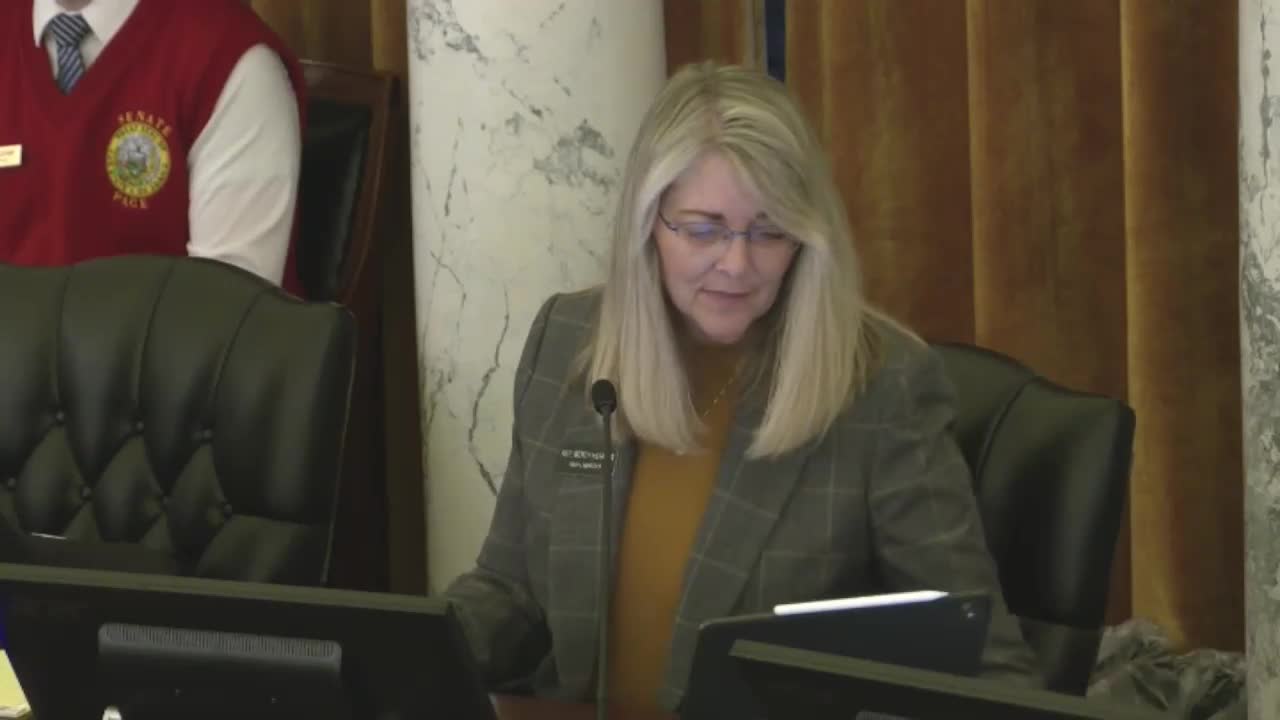
April Renfro, director of Legislative Audits at the Legislative Services Office, told the Joint Finance and Appropriation Committee on Jan. 7 that most uncorrected audit findings are recent and that single-audit findings rose in 2023 as pandemic-era federal funding went to agencies not used to federal compliance.
April Renfro, director of Legislative Audits at the Legislative Services Office, told the Joint Finance and Appropriation Committee on Jan. 7 that many audit findings remain open but that most are recent and awaiting follow-up procedures.
Renfro said the office issues several kinds of engagements: the annual comprehensive financial report audit (ACFR), the statewide single audit (for federal awards), and accountability reports (for state agencies). She told the committee the office currently staffs about 30 financial and IT auditors and that co-chairs of the JFAC release audit reports under Idaho code 67-435.
The office compiles an annual report of uncorrected findings. "Seventy percent of our uncorrected findings are from the current reporting period," Renfro said, meaning those findings have not yet had the committee’s required follow-up procedures. She said only about 30% are longer-standing uncorrected findings.
Renfro and committee members framed the increase in single-audit findings in 2023 as largely driven by pandemic-era federal funding going to entities that do not regularly receive federal grants. "There were a lot of different requirements and the funds went to agencies that don't often receive federal funds, so sometimes they weren't aware of all the compliance requirements," she said. Federal audit standards also require a higher level of internal control testing than the ACFR, she added, which can generate more internal-control findings even where dollar errors are not found.
The auditors highlighted categories of common findings: internal-control weaknesses, noncompliance with statutes or rules, and substantive reporting errors. Renfro described several problem types that raise the office’s concern: findings uncorrected for long periods, agency disagreement with auditors’ conclusions, significant qualitative impacts (for example, on care for children in foster care), and systemic IT-control weaknesses.
The committee discussed specific problem areas in the audits Renfro reviewed. She described a long-running travel-policy issue with the Department of Fish and Game where travel vouchers, receipts and mileage documentation were missing; follow-up visits had shown partial fixes or difficulties tying changes to the new LUMA finance system. She also summarized two accountability findings tied to foster-care placements in the Department of Health & Welfare: inadequate documentation for qualified residential treatment program placements and missing periodic case consultations. For one foster-care finding, testing showed 84% of sampled placements lacked the court notice documenting placement details and 42% lacked required 30-day case consultations.
Renfro warned that delays in the state controller’s delivery of draft financial statements have slowed the auditors’ work. She told the committee the ACFR draft arrived Dec. 30, a day before the statutory deadline for the auditors to issue their opinion, making it unlikely the office will meet its usual deadlines for the ACFR and the single-audit packaging. "We have provided the state controller with an estimate of March for us to complete that audit," she said, and she flagged the need to notify federal cognizant agencies about single-audit timing.
Committee members pressed for remedies when agencies disagree with findings. Renfro and the co-chairs described options ranging from additional follow-up visits to withholding funding; one co-chair said the legislature has in past sessions used withholding or statutory change when a recurring problem persisted.
The auditors provided the committee with a public, searchable open-findings report and said they will send members the uncorrected findings list. Renfro urged work-group chairs and members to review findings tied to agencies in their budget portfolios so the Legislature can factor outstanding issues into appropriation decisions.
The presentation concluded with questions about timing and resources. Renfro said the office plans roughly 28 reports a year, visits many agencies at least once every three years, and uses 90-day, first-annual and second-annual follow-ups for accountability reports. She said most findings resolve after follow-up but that a small share require additional legislative or investigative action.
The committee took the briefing for its record and moved to other scheduled presentations.