Get Full Government Meeting Transcripts, Videos, & Alerts Forever!
Get email alerts on the State Budget Overview topic
No spam. Unsubscribe anytime.
Legislative analysts: Idaho sits on hundreds of millions in structural balance as 2026 budget request grows
Summary
Legislative Services Office analysts told the Joint Finance-Appropriations Committee that state revenues remain above pre‑COVID trend lines, leaving a multi‑hundred‑million dollar structural balance that lawmakers will have to allocate among tax relief, program maintenance and one‑time spending in the 2026 budget.
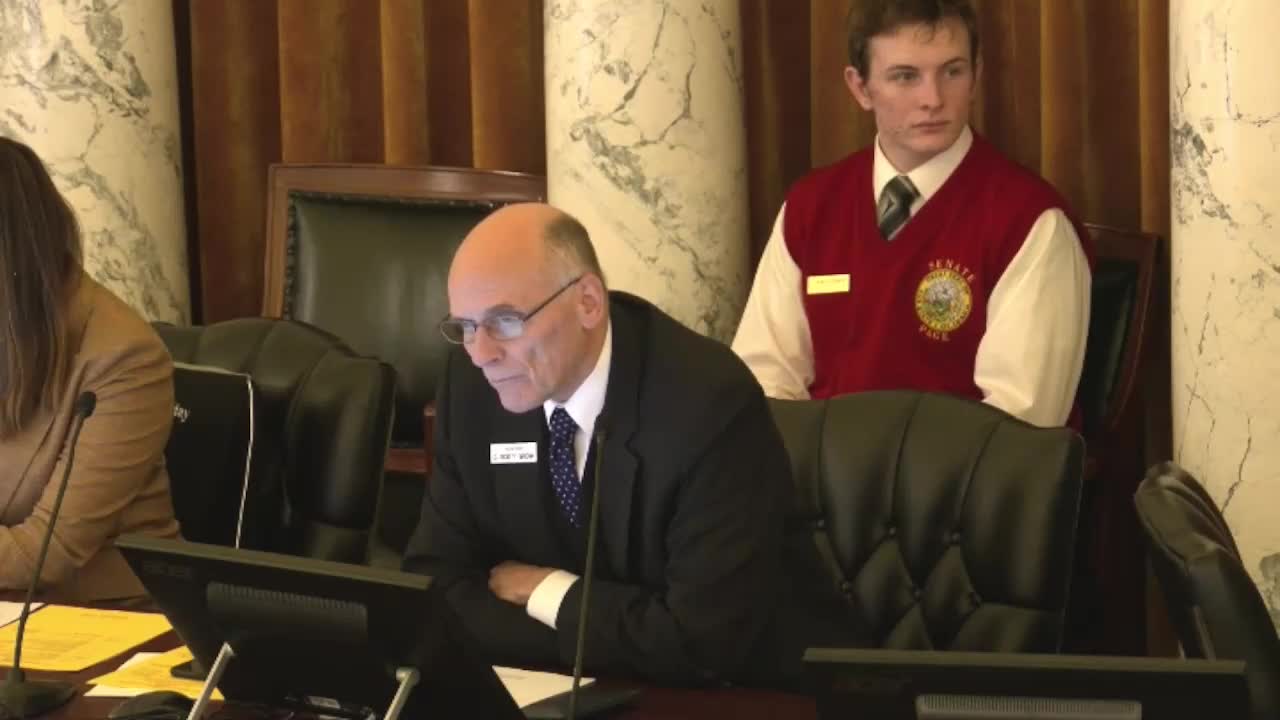
Keith Bybee, division manager for budget policy analysis at the Legislative Services Office, told the Joint Finance‑Appropriations Committee on Oct. 23 that Idaho’s revenue picture for the current biennium leaves the state with a multi‑hundred‑million dollar structural balance and choices for 2026 spending.
Bybee said the governor’s recommendation projects general fund revenues of about $5.9 billion for fiscal 2026 against projected expenditures near $6.26 billion for the budget window he presented, leaving roughly a $700 million structural difference between ongoing revenues and ongoing obligations. “Today my presentation is going to cover, FY 2025 and FY 2026 budget overview,” Bybee said as he opened his slide deck.
The nut of the presentation: while the state’s revenue trajectory jumped sharply during the pandemic-era years, Bybee said Idaho’s higher population and income levels mean it is unlikely to return to the pre‑2020 trend line. He presented a graphic showing that Idaho general fund collections rose from about $4.0 billion before 2020 to more than $6.2 billion during the COVID period, and that the new baseline of collections is closer to the roughly $5.7 billion collected in 2024.
Bybee walked the committee through the front‑end cash reconciliation tables in the Legislative Budget Book (pages 6–7), comparing current law, agency requests and the governor’s recommendations. He reviewed how the reconciliation accounts for reappropriations, executive carryforward (encumbrances carried into the next fiscal year), transfers out to other funds, and planned supplemental appropriations. He said the governor’s budget proposed a projected ending cash balance of about $338 million for FY2025 and a roughly $227 million ending balance for FY2026 after recommended enhancements.
Committee members pressed staff for details on several line items during the presentation. Bybee identified several transfer items appearing in the governor’s recommendation, including transfers for transportation projects, a proposed $60 million transfer for fire suppression deficiency warrants, and a closeout of earlier bond levy equalization funds (see related article on transfers and savings). He also noted that the governor’s 2026 recommendation uses some one‑time cash (about $160 million) while most of the broader increase is reflected in ongoing revenue assumptions.
Bybee and members discussed how the revenue forecast is constructed and the state’s use of baseline/pessimistic/optimistic scenarios. He explained the baseline (median) forecast represents a 50/50 probability that revenues will fall above or below the forecast; a more conservative (pessimistic) forecast sits lower on the outcome distribution. Representative Furness, Senator Wintrow and others asked how interest earnings and tax anticipation notes (TANs) interact with general fund cash; Bybee deferred some specifics to a later presentation by the treasurer’s office and Legislative Services staff that addressed interest and portfolio earnings.
Why it matters: the committee will use the governor’s recommendation and the cash reconciliation as the starting point for program maintenance and enhancement decisions next week. Bybee warned that while current resources create options—tax relief, program investments, or savings—those choices are the central policy decisions the legislature must make.
The presentation materials Bybee referenced are in the Legislative Budget Book and the JFAC SharePoint folder. He and his staff said they will follow up with requested detail on items such as the governor’s emergency fund history and interest earning schedules.
For now, the committee moved on to the next presenters and prepared to begin agency presentations and program maintenance work in the coming days.