Get Full Government Meeting Transcripts, Videos, & Alerts Forever!
Get email alerts on the Emergency Medical Services topic
No spam. Unsubscribe anytime.
Committee introduces bills to shift EMS oversight to Military Division and to allow interstate EMS assistance
Summary
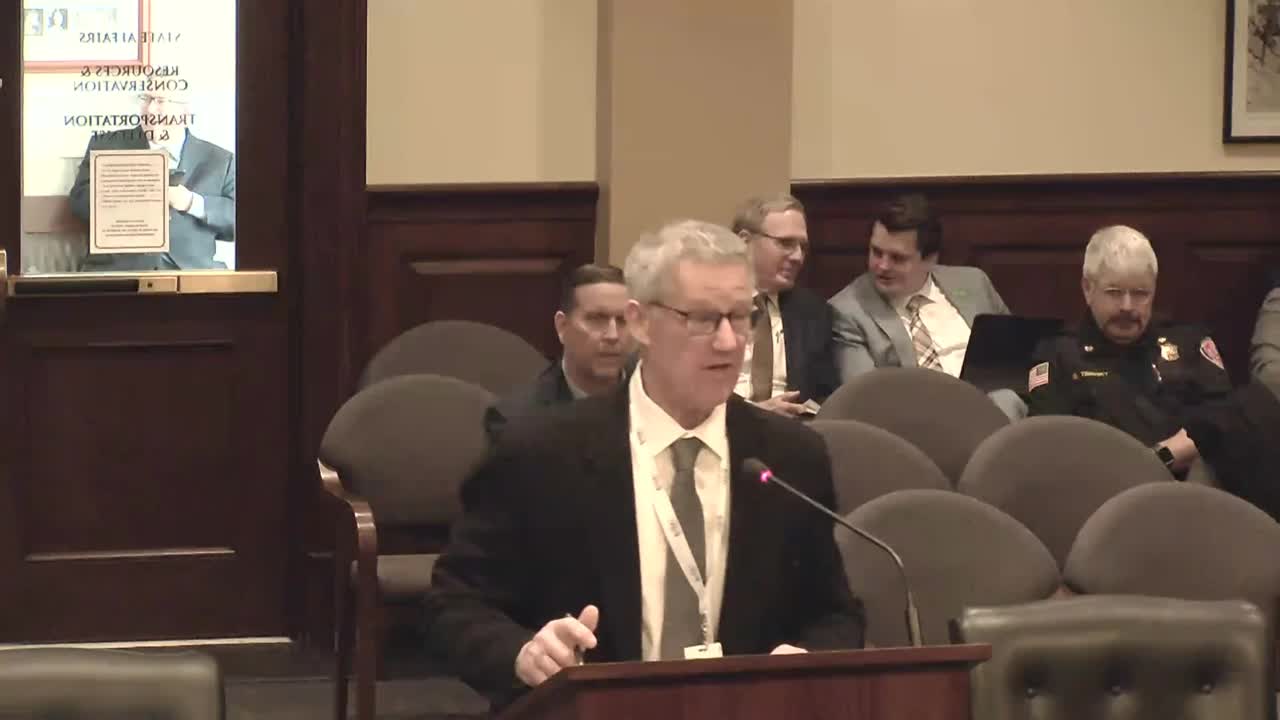
Representative Mark Sauter told the Transportation Committee RS 32075 would move most EMS resources from the Department of Health and Welfare to the Idaho Military Division, and RS 32081 would adopt an interstate compact to allow reciprocal cross-border EMS assistance.
Representative Mark Sauter told the Transportation Committee he had two related requests on emergency medical services: RS 32075 would move most EMS resources from the Department of Health and Welfare to the Idaho Military Division to co-locate them with the Office of Emergency Management, and RS 32081 would adopt the interstate compact that permits EMS providers from neighboring states to respond in Idaho and for Idaho crews to respond across state lines.
"Essentially, what it does is it moves our EMS resources from the Department of Health and Welfare to our Military Division to be co located with the Office of Emergency Management," Sauter said, describing RS 32075 as an operational restructuring intended to improve statewide coordination. He said the change would leave one item — the Public Health Preparedness and Response grant — with Health and Welfare and would reduce the total number of FTEs by two.
Sauter said RS 32075 would also "sunset all EMS rules and require any necessary Veil to be proposed for including in statute by the 20 27 legislative session" (transcript phrasing). He said the proposal would reduce the number of dedicated funds used to finance EMS from four to three and cited the driver’s license fee and vehicle registration fee as part of current funding sources.
On RS 32081, Sauter described the proposal as a compact to allow EMS resources from neighboring states to provide service when they are the nearest resource and to allow Idaho crews to provide cross-border aid in similar circumstances. "This is what I call EMS 2 and this really is just the compact which is the agreement that our EMS resources can provide service in our neighboring states as well as those neighboring states can provide service for us," he said, noting a prior Bear Lake incident where out-of-state resources were required.
Committee members asked operational and budget questions. Representative Harris asked whether the bill would make EMS an essential service as a previous Senate bill had sought; Sauter said it would not make EMS an essential service but was focused on operations and did not carry the budget elements of prior legislation. Commissioner Nicholson asked who had been consulted in drafting the proposal; Sauter said he had worked with the EMS division at Health and Welfare, the Military Division, EMS personnel who operate statewide and fire districts.
Commissioner Nicholson moved to introduce RS 32075 and later moved to introduce RS 32081; both motions were approved by voice vote. Representative Shepherd said he expected many questions at the bill hearing, including costs and the implications of providing or receiving cross-border EMS services. The committee approved both introductions; numerical vote tallies were not specified in the transcript.