Get Full Government Meeting Transcripts, Videos, & Alerts Forever!
Get email alerts on the Health Insurance Breast Cancer Screening topic
No spam. Unsubscribe anytime.
Idaho committee backs bill to require private coverage of supplemental breast imaging for high‑risk patients
Summary
The House Health and Welfare Committee voted to send House Bill 134 to the floor with a due‑pass recommendation after hours of testimony from physicians, survivors and health‑plan representatives urging coverage of MRIs, contrast mammography and ultrasound for high‑risk women.
The Idaho House Health and Welfare Committee voted to send House Bill 134 to the floor with a due‑pass recommendation after testimony calling for private insurers to cover supplemental breast imaging for women at heightened risk of breast cancer.
Supporters, including the bill’s sponsors and multiple physicians and survivors, told the committee on Presidents Day that magnetic resonance imaging (MRI), contrast‑enhanced mammography and targeted ultrasound are medically necessary adjuncts for patients with dense breast tissue, certain genetic mutations or prior radiation exposure and that lack of coverage creates financial barriers to early detection.
Representative John Healy, who introduced the bill, said early detection is critical and that “annual mammograms...aren’t always enough” for high‑risk patients. He turned the presentation to Representative Brooke Green, who said the legislation “classifies these supplemental screenings as necessary extensions of preventative care” and would align coverage so patients would not face large out‑of‑pocket costs for follow‑up imaging.
Breast surgeon Dr. Menon and breast radiologist Dr. Barbara White told the committee that adjunct screening materially increases detection for some women. “Mammography screening alone detects 70 percent to 80 percent of breast cancers. Adjunct screening increases that detection to 95 percent,” Dr. White said. Dr. Menon said the state’s low screening rates contribute to later diagnoses: “In Idaho, because our screening rates are so low, 1 in 3 women is diagnosed at a stage 3 or 4.”
Witnesses described the cost barriers patients face. Dr. Menon said a diagnostic mammogram can cost about $800 out of pocket and “an MRI is about $3,000 out of pocket.” Representative Green and multiple survivors recounted cases where supplemental imaging produced earlier diagnoses; Misty Tolman, a survivor, said an MRI found a tumor “the size of a garden pea.” Health‑plan representative Amy Manning said her self‑insured trust saw treatment costs decline after covering more screenings: “Our cost in treating cancer is down $2,000,000 from last year.”
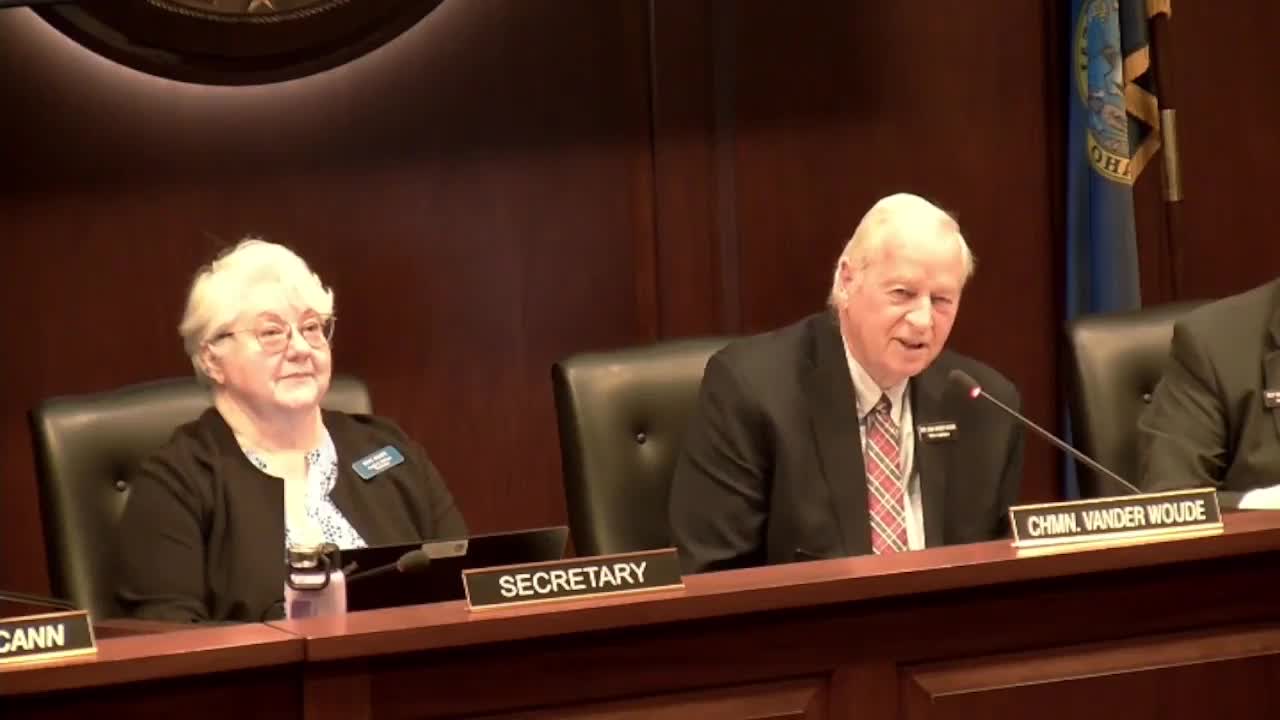
Committee members debated fiscal concerns and public‑health benefits. Representative Kahler said he opposed mandates that expand government requirements on private health care. Other committee members said treatment costs for late‑stage cancer are so large that preventative coverage can be fiscally conservative. Representative Redmond moved to send the bill to the floor with a due‑pass recommendation; the motion carried with two nays, and the committee recorded that House Bill 134 will go to the full House.
The bill as described in testimony would require Idaho health insurance plans — excluding Medicaid and self‑insured employer plans as written in the draft presented to the committee — to cover supplemental breast cancer screening for persons identified by clinicians as high risk due to genetics (including BRCA1/2), prior radiation, very dense breast tissue or relevant family history. Proponents said the requirement is targeted to those clinically indicated for adjunct imaging and not a blanket expansion of routine screening benefits.
The committee hearing included physicians, registered mammography technologists, survivors and a representative of a municipal self‑insured trust. Testimony emphasized both clinical and economic arguments: clinicians argued earlier detection reduces the need for more extensive—and more expensive—treatment, while patients and clinicians described delays and financial hardship when adjunct imaging is not covered.
House Bill 134 now moves to the House floor for further consideration. The committee record establishes the due‑pass recommendation and notes two recorded nays; the full House will consider the measure and any changes to eligibility, coverage definitions or exclusions.