Get Full Government Meeting Transcripts, Videos, & Alerts Forever!
Get email alerts on the Administrative Procedure Contested Cases topic
No spam. Unsubscribe anytime.
House Judiciary committee advances bill to modernize contested‑case procedures
Summary
The House Judiciary and Rules Committee voted unanimously to send House Bill 9 to general orders after testimony that the measure would update Idaho's contested‑case provisions, remove obsolete references and add time limits for emergency agency actions.
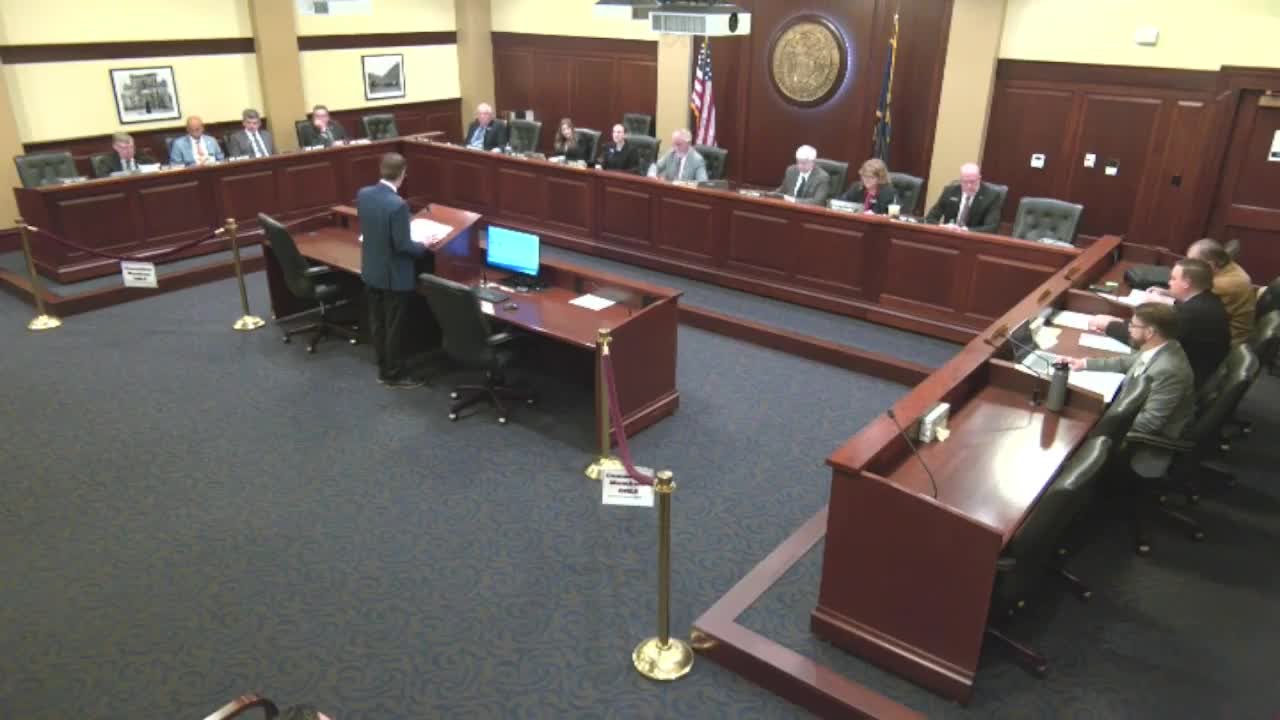
The House Judiciary and Rules Committee voted unanimously by voice vote to send House Bill 9 to general orders after a presentation from the Office of Administrative Hearings and the bill's sponsor.
House Bill 9 would update references to the recently adopted Idaho Rules of Administrative Procedure, modernize contested‑case provisions in the Idaho Administrative Procedure Act and add procedural limits, including a 120‑day deadline for resolving certain emergency agency orders, presenters told the committee. Representative Bruce of District 23 introduced the measure and asked that the committee permit amendments on general orders.
Brian Nichols, chief administrative officer for the Office of Administrative Hearings, told the committee the bill is primarily a cleanup and modernization effort. "Administrative law is not for sissies," Nichols said, quoting a Justice Scalia line he uses to summarize the work of administrative law. Nichols said the bill, which he described as about 23 pages, removes obsolete references to the former Idaho Rules of Administrative Procedure maintained by the Attorney General and updates statutory language to reflect that the Office of Administrative Hearings now handles some contested cases previously managed elsewhere.
Nichols explained several substantive updates in the bill. He said the measure would remove statutory references to the old appellate practice of "exceptions," a defunct procedure Idaho's appellate rules abolished in 1977, and replace that framework with a modern review process allowing the presiding officer and the agency to review an issued decision. He described a proposed narrowing of the situations in which a party can be defaulted: defaults would be limited to "case‑critical" proceedings such as prehearing conferences and the evidentiary hearing rather than any missed appearance. Nichols also said the bill would impose a 120‑day timeline for resolving disputes arising from certain emergency agency orders so that licensees and others are not left without a timely opportunity to contest an emergency action.
Representative Heather Scott asked about caseload and procedure. Nichols said the Office recently published a year‑end report and that the office had reorganized into two divisions after taking on Department of Health and Welfare contested cases. He said the general government division handles roughly in the low hundreds of contested cases per year (he described that division's typical caseload as "about 140" cases in a prior run figure), while the health and social services side is on track for about 700 cases annually following the transfer. Nichols said approximately 8% of general government cases are in person, usually when outside the Treasure Valley, and most hearings are conducted by videoconference or teleconference depending on parties' needs.
Nichols summarized the office's goals: "Our guiding star is due process," he said, adding that the office weighs access, fairness and efficiency in structuring contested‑case procedures. He and Representative Bruce told the committee they had circulated the draft broadly and were prepared to propose and accept amendments on general orders after meeting with agencies that submitted comments following introduction.
After the presentation, Representative Heather Scott moved to send House Bill 9 to general orders. The committee chair put the question; members voiced their approval and the motion carried unanimously.
Votes at a glance: - Approval of minutes from Wednesday, Feb. 5, 2025: motion to approve made by Representative Hostelli; voice vote carried unanimously. - House Bill 9 (contested‑case/A.P.A. cleanup): motion to send to general orders made from the floor by Representative Heather Scott; voice vote carried unanimously. - Introduction of a package of RS items (including RS 32163 C1, RS 32168, RS 32279, RS 32164 and RS 32308): moved by Representative Garner; voice vote carried with Representative Mathias recorded as "no." - Introduction of a second package of RS items (including RS 32305, RS 32305 C1, RS 32288, RS 32289, RS 32335): motion made by Representative Alfieri; voice vote carried with recorded nays including Representative Gannon and Representative Mathias noted on the record for parts of the package and Representative Gannon specifically recorded as opposed to the Article V convention referenced during that exchange.
The committee chair closed the meeting after the RS introductions and announced the meeting adjournment and safe travels for members.
The record shows presenters and several committee members discussed technical and procedural changes; no final changes to statutory text were adopted in committee at this meeting, and the committee voted only to move House Bill 9 to general orders so amendments could be offered at a later stage.