Get Full Government Meeting Transcripts, Videos, & Alerts Forever!
Get email alerts on the State Budget Revenue topic
No spam. Unsubscribe anytime.
Revenue panel recommends lower general‑fund forecasts than governor; JFAC accepts report
Summary
The Joint Finance Appropriations Committee on unanimous consent accepted the Economic Outlook and Revenue Assessment Committee report, which recommends lower general‑fund revenue estimates than Gov. Little for fiscal 2025 and 2026 and urges caution on appropriations above the committee’s figures.
The Joint Finance‑Appropriations Committee on unanimous consent accepted the report of the Economic Outlook and Revenue Assessment Committee (EROC), which recommended lower general‑fund revenue forecasts than those proposed by Gov. Brad Little for the upcoming two fiscal years.
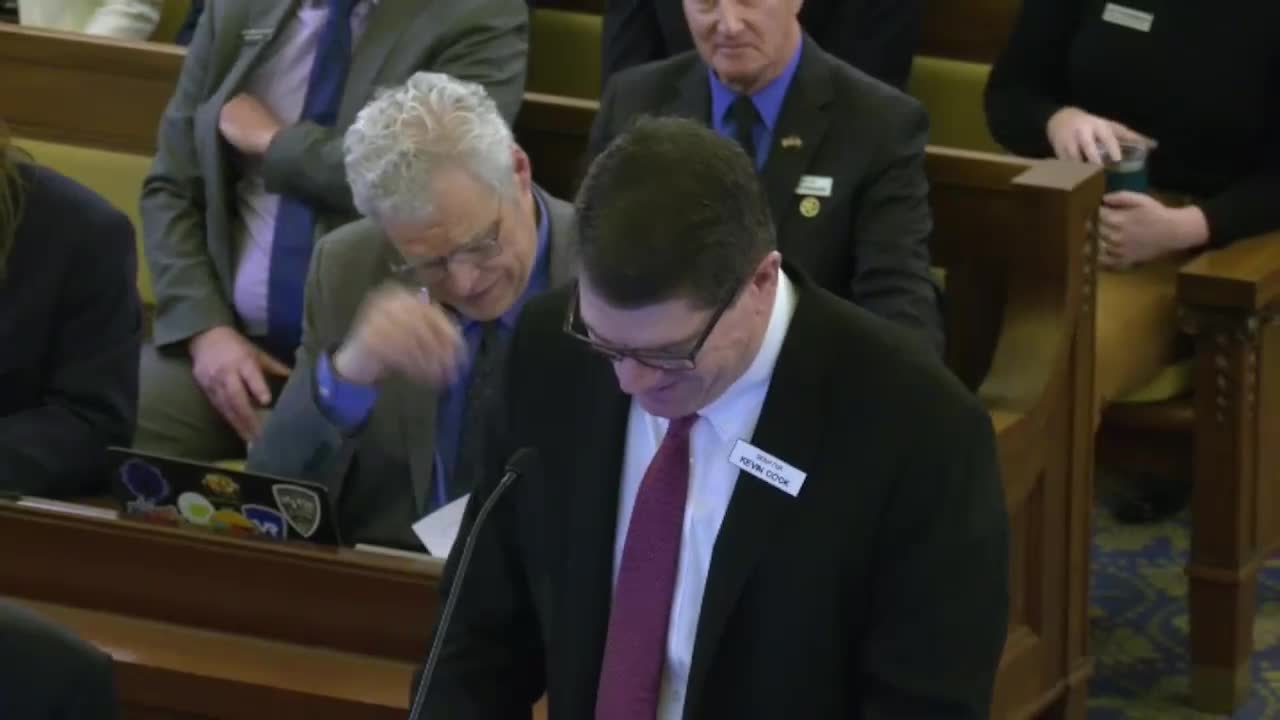
Senator Kevin Cook, co‑chair of EROC, told the committee the panel had completed an assessment of the governor’s general‑fund projections and reviewed testimony from economists and business leaders. "Idaho's Constitution Article 7, Section 11 requires balancing the state's appropriations and expenditures within its revenues," Cook said. He presented the committee's median projections and the panel’s final recommendations.
The committee recommended general‑fund revenues available for appropriation of $5,990,000,000 for fiscal year 2025 and $6,400,000,000 for fiscal year 2026. Those figures are below the governor’s projections; Cook summarized the comparison in the report and advised caution: "We recommend cautious in making appropriations above the committee's revenue recommendation." Representative Jeff Ehlers, the other EROC co‑chair, thanked members for their work in forming the assessment.
EROC reported that the committee’s median projection for fiscal 2025 was about 2.7% below the governor’s number; the median for fiscal 2026 was roughly 5.9% below the governor’s recommendation. Cook said the committee factored in uncertainty tied to Federal Reserve policy and the presidential election cycle when finalizing its numbers.
Co‑chairs of JFAC moved to accept the report and sought unanimous consent. Senator Woodward seconded; the committee registered no objection and the report was accepted.
Why it matters: the revenue baseline the legislature adopts frames how much JFAC can appropriate across agencies for the next two fiscal years. A lower adopted revenue estimate constrains discretionary spending decisions and can affect the size of maintenance and enhancement budgets JFAC approves.
The report and its acceptance set the revenue assumptions JFAC will use as it moves into program maintenance hearings and later enhancement decisions.
The committee recorded the acceptance by unanimous consent; there was no roll‑call vote reported.