Get Full Government Meeting Transcripts, Videos, & Alerts Forever!
Get email alerts on the Clean Energy Jobs Prevailing Wage topic
No spam. Unsubscribe anytime.
Panel sends prevailing-wage bill for clean-energy projects to appropriations; supporters cite IRA alignment
Summary
HB 2,356, requiring prevailing wages and apprenticeship hours on public-service clean-energy projects, was reported and referred to sub-appropriations after supporters said it aligns Virginia projects with federal Inflation Reduction Act incentives.
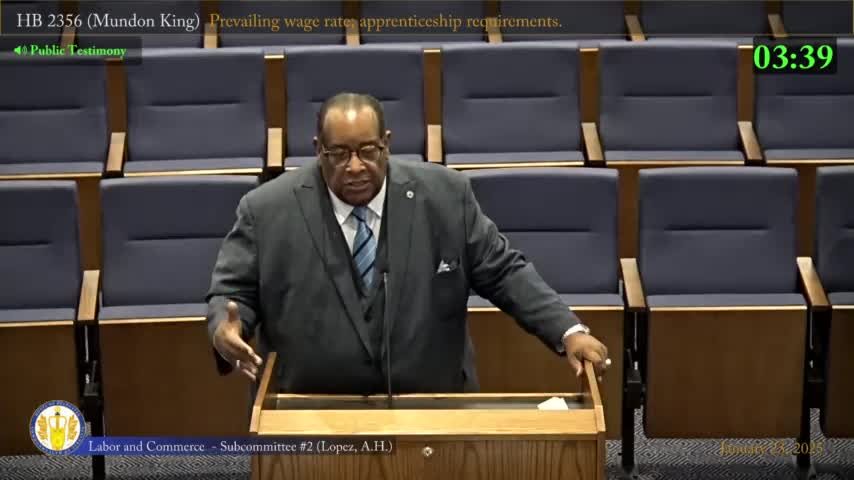
Delegate Mundane King presented HB 2,356, which would require public service companies and third-party developers working on certain public clean-energy projects to pay prevailing wages and meet apprenticeship-hour requirements (including at least 15% of total hours performed by registered apprentices on RPS projects). The bill’s substitute was adopted in committee and, after testimony from unions and environmental groups supporting alignment with federal Inflation Reduction Act (IRA) requirements, the subcommittee voted 5–2 to report the bill and refer it to appropriations.
Supporters argued the bill positions Virginia projects to capture enhanced federal tax credits under the IRA by mirroring federal wage and apprenticeship standards and creates career pathways and safer workplaces. Testimony in favor included labor unions (Laborers International, IBEW Local 666), the Southern Environmental Law Center, Virginia League of Conservation Voters, and local elected officials. Opponents were not recorded at the hearing; the sponsor said the bill would promote workforce development and economic equity.
Committee action: The bill was reported and referred to appropriations (vote 5–2).
Why it matters: Requiring prevailing wages and registered-apprenticeship participation could allow projects to qualify for higher federal incentives and shape job quality in Virginia’s clean-energy buildout. It also imposes compliance and cost requirements that local governments and contractors will factor into project bids.