Get Full Government Meeting Transcripts, Videos, & Alerts Forever!
Get email alerts on the State Budget topic
No spam. Unsubscribe anytime.
Governor's budget projects roughly $700 million structural surplus; committee hears details on revenues, transfers and benefits
Summary
The Joint Finance‑Appropriations Committee received the governor's FY2025–FY2026 budget overview from Legislative Services Office staff, who showed a multi‑year structural surplus of roughly $700 million in the current forecast and outlined proposed transfers, program maintenance and benefit assumptions.
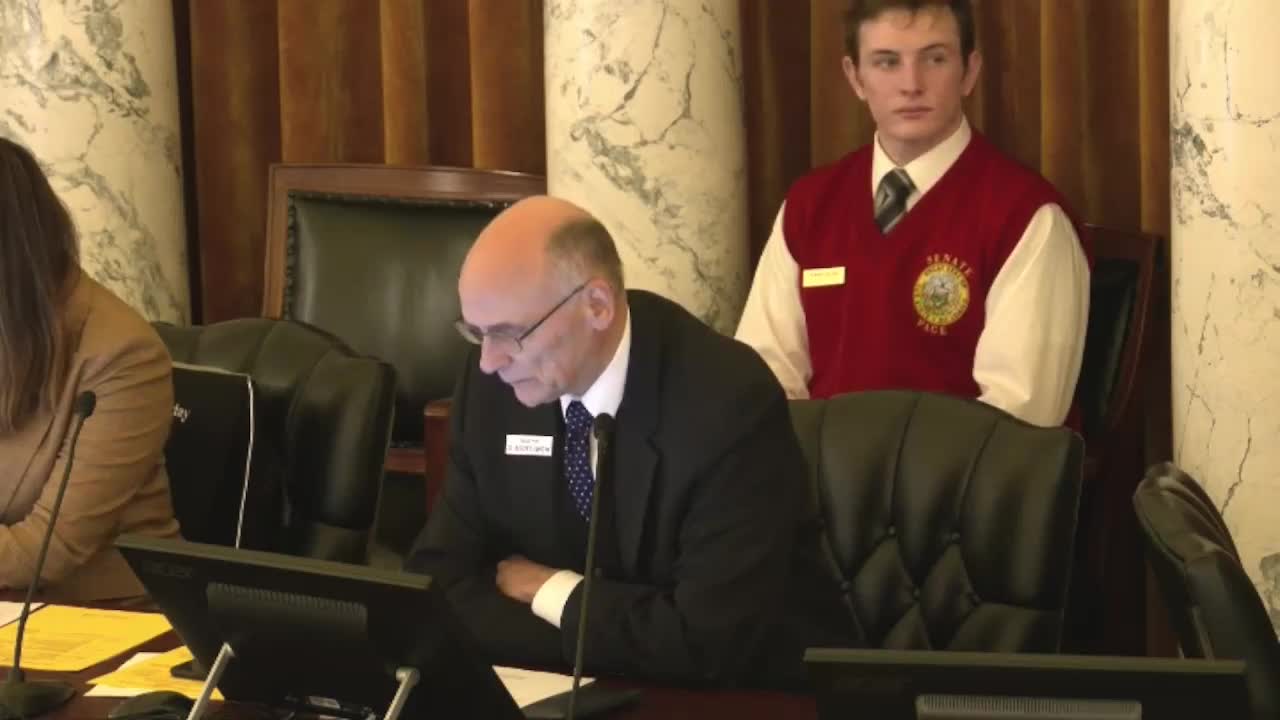
The Joint Finance‑Appropriations Committee (JFAC) heard an overview of the state general fund on the budget forecast and the governor's recommendations, with Legislative Services Office division manager Keith Bybee presenting the numbers and assumptions.
Bybee said the governor's baseline revenue forecast and recommended budget keep a multi‑year structural delta — revenues above projected expenditures — of about $700,000,000 over the coming business cycle. “If a budget is a statement of your values, your previous legislatures have done you a big favor,” Bybee told the committee, adding that the current situation creates both flexibility and difficult policy choices for lawmakers.
The presentation summarized three main points: recent revenue history, cash reconciliation for FY2025, and the FY2026 budget picture. Bybee told members the state recorded about $5,700,000,000 in general fund collections in 2024 and that the governor's baseline forecast used in the recommendation is roughly $5,900,000,000 for the next year. He said total cash including balances and forecasted revenues reached about $6,260,000,000 on one reporting line used in the presentation.
Why it matters: That structural surplus is the policy space lawmakers must divide among priorities such as tax relief, program growth and one‑time investments. Bybee flagged transfers to other funds as a major driver of how much general fund cash is available for policy choices.
Key transfers and adjustments cited in the presentation include roughly $578,900,000 in proposed transfers out (transportation and other uses) partially offset by a one‑time transfer of about $62,800,000 from the closed bond‑levy equalization account. Bybee described reappropriations and executive carry forward as $16,000,000 and $44,400,000 respectively — mechanical accounting entries that move previously obligated but unspent authority into the current year.
Spending and program assumptions: The governor's program maintenance total on the general fund was presented around $5,400,000,000 (a roughly 3.4% increase over FY2025 original appropriations). Enhancements in the recommendation totaled about $242,000,000. The total recommended general‑fund appropriations shown were about $5,650,000,000 (a 7.4% year‑over‑year increase in the materials shown).
Benefits and retirement assumptions that affect the budget were also detailed. Budget analyst Frances Lippitt told the committee the governor recommended budgeting $14,300 per full‑time position (per FTP) for health insurance — an actuarially based, more conservative figure than the minimum 10% reserve target — representing an additional $56,600,000 in the proposal. Lippitt also summarized employer retirement contribution rates for PERSI included in materials: 11.96% for general members, 14.65% for public safety, and 13.47% for teachers.
Questions raised: Committee members asked about the bond levy equalization closeout tied to House Bill 521 and whether returning the roughly $62,800,000 to the general fund affects school bond repayment. Bybee explained HB521 closed the older bond levy equalization program and created a new statewide bonding structure for school facilities; he characterized the cash transfer as the statutory closeout of that old fund.
Several members asked for follow up on specific items referenced in the presentation: how the governor's emergency fund has been used historically, and agency‑level interest earnings tied to cash balances. Bybee and other LSO staff said they would provide follow‑up reports.
Ending: Bybee closed by reminding members the numbers presented are the governor's recommendation and that the legislature will make appropriation choices. The committee is scheduled to begin agency hearings and work groups where members can adjust program maintenance, enhancements and transfers.