Get Full Government Meeting Transcripts, Videos, & Alerts Forever!
Get email alerts on the Administrative Procedures topic
No spam. Unsubscribe anytime.
Committee hears bill to allow tax and benefit notices by email; Department of Revenue cites savings, opponents warn of missed notices
Summary
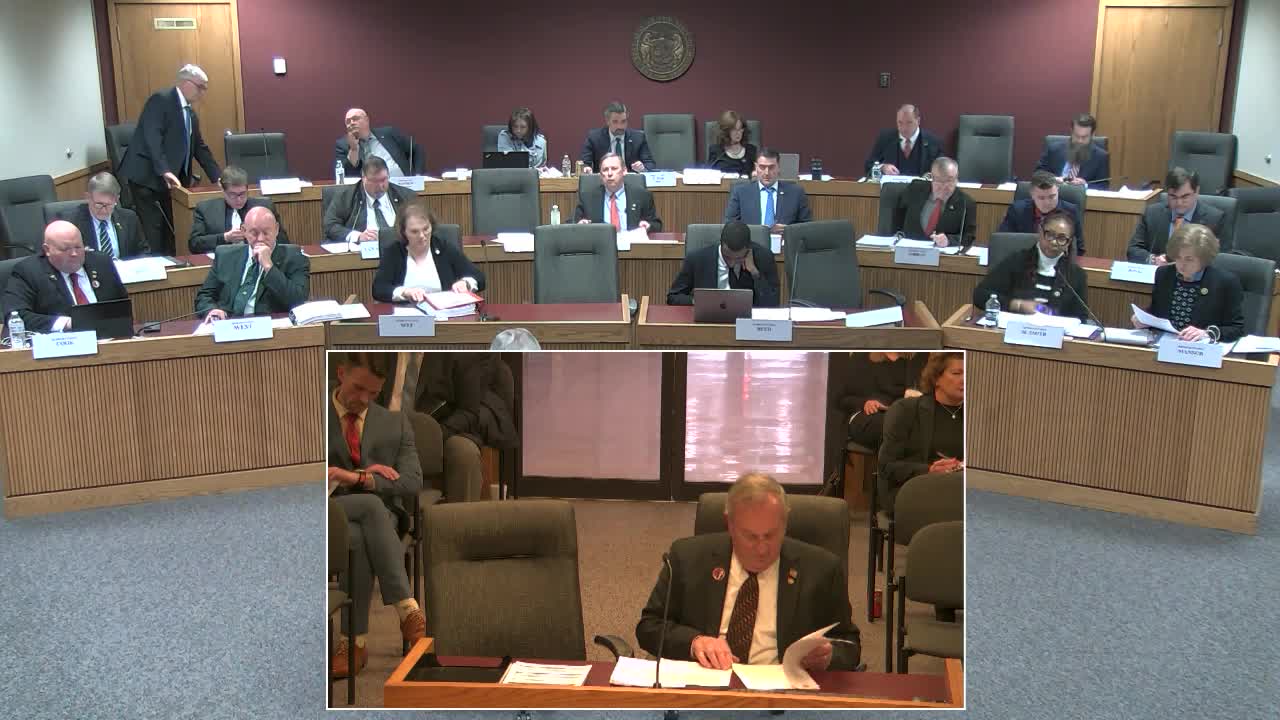
Representative Bill Griffith told the House Committee on Government Efficiency that House Bill 520 would allow the Department of Revenue and other state agencies to send deficiency and benefit notices electronically to recipients who opt in, or by first-class mail instead of certified/registered mail.
Representative Bill Griffith told the House Committee on Government Efficiency he has carried this bill for five years and that House Bill 520 would let certain state notices be delivered electronically, or by first-class mail, instead of by certified or registered mail when the recipient opts in.
Griffith said the bill focuses on the blind pension fund and tax deficiency notices sent by the Department of Revenue. He said certified-mail notices can fail to reach blind recipients because the postal notice posted on a door is unreadable to the person receiving it, and that requiring trips to distant post offices can be a hardship for rural residents. "For many of those, [blind pension] supplements the income that they have from SSI and ... social security," Griffith said, describing the fund as an important income supplement for some constituents.
Zach Wyatt, legislative director for the Missouri Department of Revenue, testified in favor. He said the department has repeatedly sought money to cover growing postage costs — "over $2,500,000 in new money for postage increases" over recent years — and that the department revised its fiscal note upward to show an additional $293,000 in savings tied to the bill. Wyatt described implementation as opt-in: taxpayers filing returns could select an electronic option and provide an email address; those who do not opt in would receive first-class mail instead of certified mail. He said the department believes use of email would be faster for customers and reduce state postage costs.
Committee members asked about reliability. Representative Wolfen asked how the department would verify recipients actually received first-class mail versus certified mail and whether first-class mail could result in missed notices. Wyatt said first-class mail would be delivered as regular mail to the recipient’s mailbox and that the department expects more first-class mail in year one and more email usage in subsequent years as taxpayers opt in via forms.
Arnie C. ACDinoff, identifying himself as State Public Advocate, testified in opposition. He said people receive hundreds of emails daily and that opt-in email risks missed, high-stakes notices that can "turn legitimately somebody's life upside down." He cited a case involving an ethics-commission fine that ballooned after a member said he did not receive a mailed notice, and urged caution. He said he would support converting blind-pension notices to first-class mail but opposed broader replacement of certified mail with email opt-in for high-stakes agency actions.
No committee vote on House Bill 520 was recorded in the transcript. The committee proceeded through questions and public testimony and closed the hearing segment on HB 520 without a recorded formal action.