Get Full Government Meeting Transcripts, Videos, & Alerts Forever!
Get email alerts on the Agricultural Research Extension topic
No spam. Unsubscribe anytime.
University of Idaho agricultural research asks for targeted hires, maintenance funds; dean announces retirement
Summary
University of Idaho College of Agricultural and Life Sciences leaders outlined research and extension activities, asked for targeted faculty and maintenance funding, described ARPA‑funded digital literacy work and a pending FCC grant, and announced the dean's upcoming retirement.
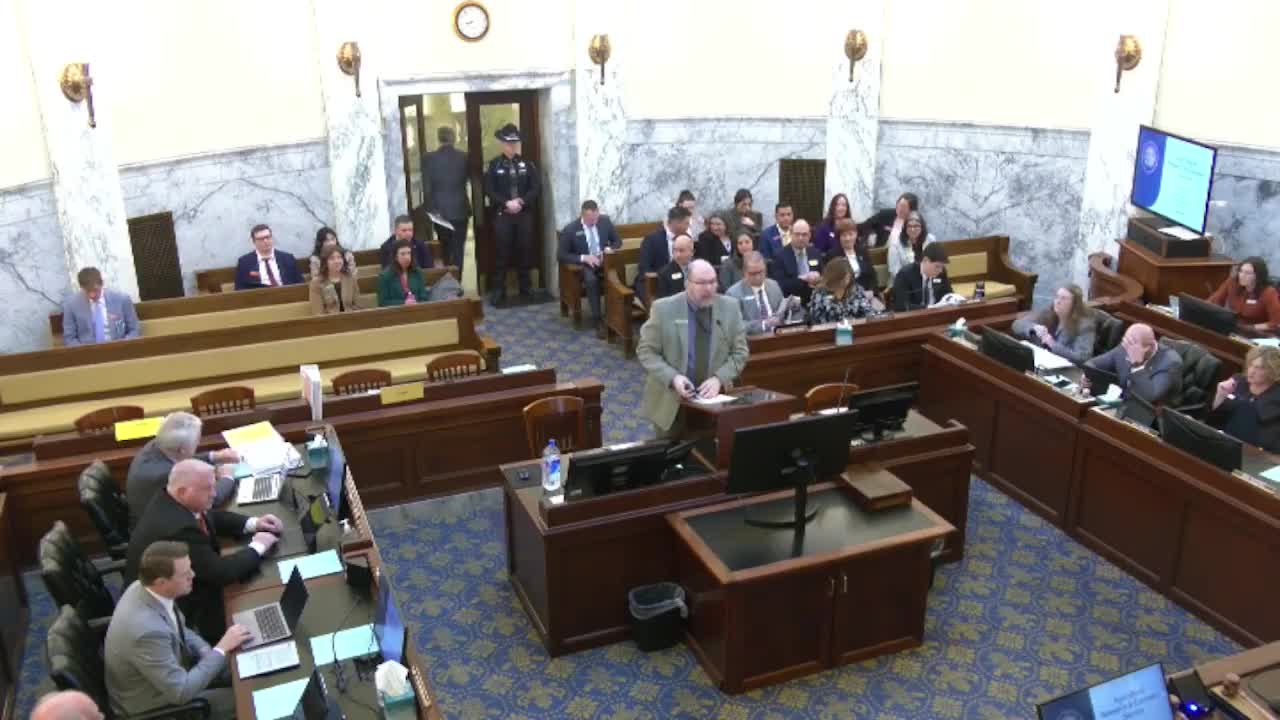
Kevin Campbell, budget and policy analyst with the Legislative Services Office, presented the Agricultural Research and Extension Service (the University of Idaho’s research and extension mission) overview and FY2026 requests to the Joint Finance‑Appropriations Committee Monday.
Michael Perella, dean of the University of Idaho’s College of Agricultural and Life Sciences (CALS), told the committee he will retire in June and summarized the college’s statewide research, extension and infrastructure footprint. The service operates research and extension centers in 42 of Idaho’s 44 counties, maintains more than 14,000 acres for research, and reported roughly 341.33 full‑time positions.
Why it matters: Idaho agriculture contributes a substantial share of the state’s economic output. Lawmakers and the college tied requested investments to maintaining research capacity for crops, livestock and rural community services — including viticulture and small fruits, irrigation, and digital literacy in rural areas.
Fiscal and program details Campbell summarized recent appropriations and FY2026 requests for the service, including:
- Staffing and facilities: The service’s five‑year budget showed roughly $6.2 million growth from FY2021 to FY2025, with personnel composing about 81% of expenditures. Capital outlay and operating costs accounted for the remainder (capital spending at research facilities accounted for about 9.1% in the referenced year). - Recent appropriations: FY2024 included funding for new faculty in animal and plant sciences and agricultural engineering. FY2025 included funding for Parma research‑lab maintenance, two new faculty in irrigation and forestry, and a $142,000 ARPA award tied to broadband and digital literacy work. - FY2026 requests: $157,900 ongoing for a viticulture and small‑fruits research faculty position and $250,100 for a portion of building maintenance costs at the Idaho Center for Agriculture, Food and the Environment (a dairy industry collaboration focused on applied research and best practices).
Extension, digital literacy and federal grant activity Dean Michael Perella described extension’s statewide role beyond production agriculture — including 4‑H youth development, family and community programs — and described ARPA‑funded adult computer‑literacy work. He told the committee the college has an awarded federal proposal to the Federal Communications Commission (FCC) for a program worth approximately $13 million that would expand digital‑literacy work in partnership with two‑year and four‑year institutions and rural communities; the award still depends on federal processes and timing.
Outputs and performance Perella highlighted output metrics: extension reported more than 450,000 face‑to‑face contacts with Idahoans last year and engaged over 75,000 youth in 4‑H programming. He also credited recent change‑in‑employee‑compensation (CEC) appropriations with reducing turnover from 14% to 11% in fiscal year 2024.
Lawmakers’ questions and follow up Committee members sought additional clarity on several subjects, including how extension’s community‑focused activities tie to ARPA money previously provided, the sustainability of programs that begin with federal one‑time funds, and where federal investments overlap across agencies. Lawmakers asked staff to collect additional detail on which ARPA‑started initiatives require ongoing state support and how duplication across agencies could be avoided. Perella and CALS staff said they would provide more information about the FCC proposal and about program outcomes tied to the computer‑literacy work.
Administration and leadership note Perella opened by announcing his retirement effective in June and thanked the Legislature for support in rebuilding research facilities and hiring faculty. He said investments in research infrastructure (for example, the new Parma facility and the Idaho Center for Plant and Soil Health) help the college compete for national research dollars and attract faculty who can advance plant breeding, irrigation and nutrition research.
No committee votes were taken during the presentation; staff follow‑up on ARPA‑linked programs, grant details and facility maintenance proposals was requested.