Get Full Government Meeting Transcripts, Videos, & Alerts Forever!
Get email alerts on the Criminal Law Prostitution topic
No spam. Unsubscribe anytime.
Committee backs felony-level penalty for solicitation and paying for sex
Summary
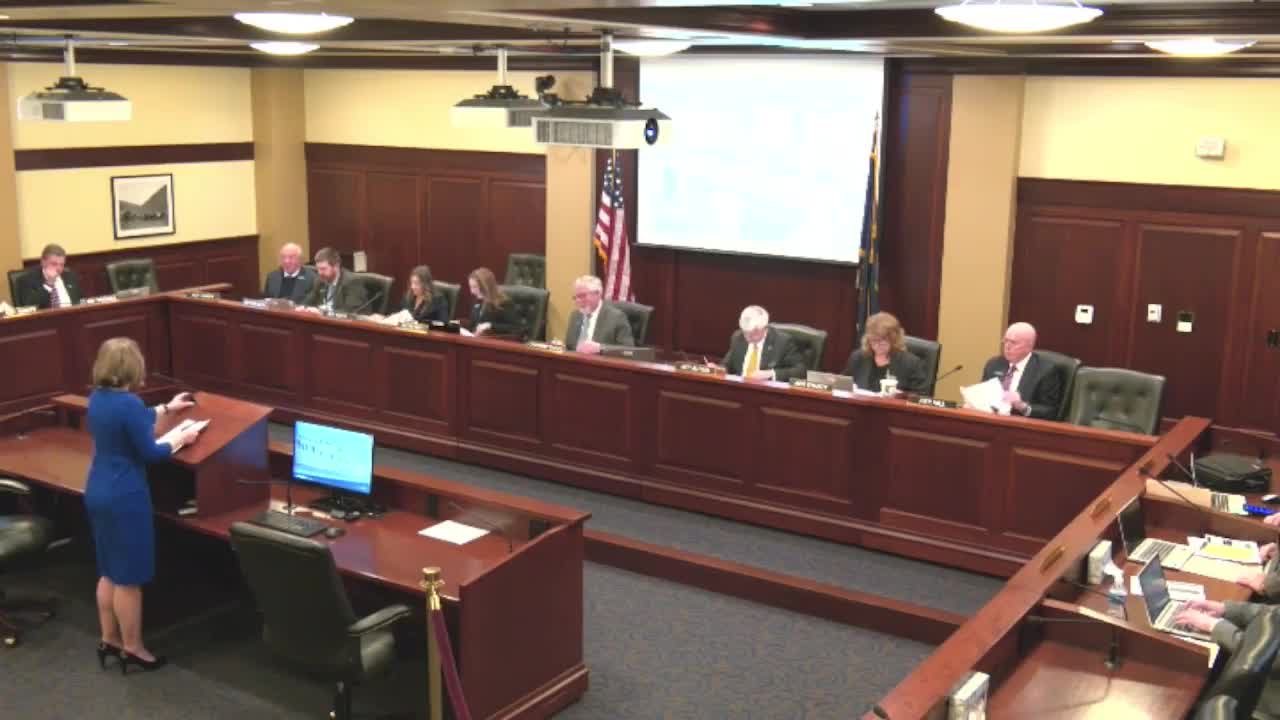
House Bill 88, which would make solicitation / paying for sex a felony rather than a misdemeanor (charging a felony on first offense), was sent to the floor by the committee after debate among sponsors, law enforcement testimony, and opposition from criminal-defense advocates who said heavier penalties can make sex workers less safe.
House Bill 88, which would remove the misdemeanor option and make solicitation for commercial sexual activity a felony on first offense, was forwarded to the House floor with a due-pass recommendation after a closely contested committee debate.
Sponsor Representative Britt Raybould said the change is aimed at reducing demand and repeat offending. "This should be a crime, period, full stop," Raybould said, adding that studies of buyer behavior show a small number of high-frequency buyers account for the majority of transactions and that raising penalties for buyers targets that demand.
Opponents told the committee a felony approach can make sex work more dangerous and hamper law enforcement efforts. Mike French, a criminal defense attorney speaking for the Idaho Association of Criminal Defense Lawyers, said criminalizing buyers can push activity underground, increase the risk to sex workers and make victims less likely to cooperate with police. Northern Ireland research was cited by French to illustrate an increase in assaults after a buyer-focused criminalization effort.
Sheriff Chris Getz said increasing penalties for buyers could reduce demand; he said the Idaho Sheriffs' Association had not taken an official position but he personally supported the bill’s approach to targeting demand. Testimony indicated prosecutors and law-enforcement organizations had signaled neutrality.
Committee members asked for data about how often the current statute is enforced and whether felony prosecution would address repeat buyers versus one-time offenders. Representative Gannon moved to hold the bill to request case data; Representative Mathias later offered a substitute motion to send the bill to the floor with a due-pass recommendation. The committee ultimately approved the substitute motion; the hearing record shows a roll-call result recorded by the clerk as 8–7 in favor of sending House Bill 88 to the floor.
Votes at a glance: The committee voted to send House Bill 88 to the floor with a due-pass recommendation; the committee roll call was recorded as 8–7.
Background and context: Witnesses disagreed on whether increasing the statutory penalty will reduce trafficking or buyer behavior and several members requested additional case data (charges, dispositions, frequency) before committing to the statutory change. Raybould cited Texas' experience after a similar change, noting arrests rose in one reporting year while convictions remained lower than arrests.