Get Full Government Meeting Transcripts, Videos, & Alerts Forever!
Get email alerts on the Career Technical Education topic
No spam. Unsubscribe anytime.
Lawmakers press Idaho Career Technical Education on wait lists, oversight of $10 million workforce proposal
Summary
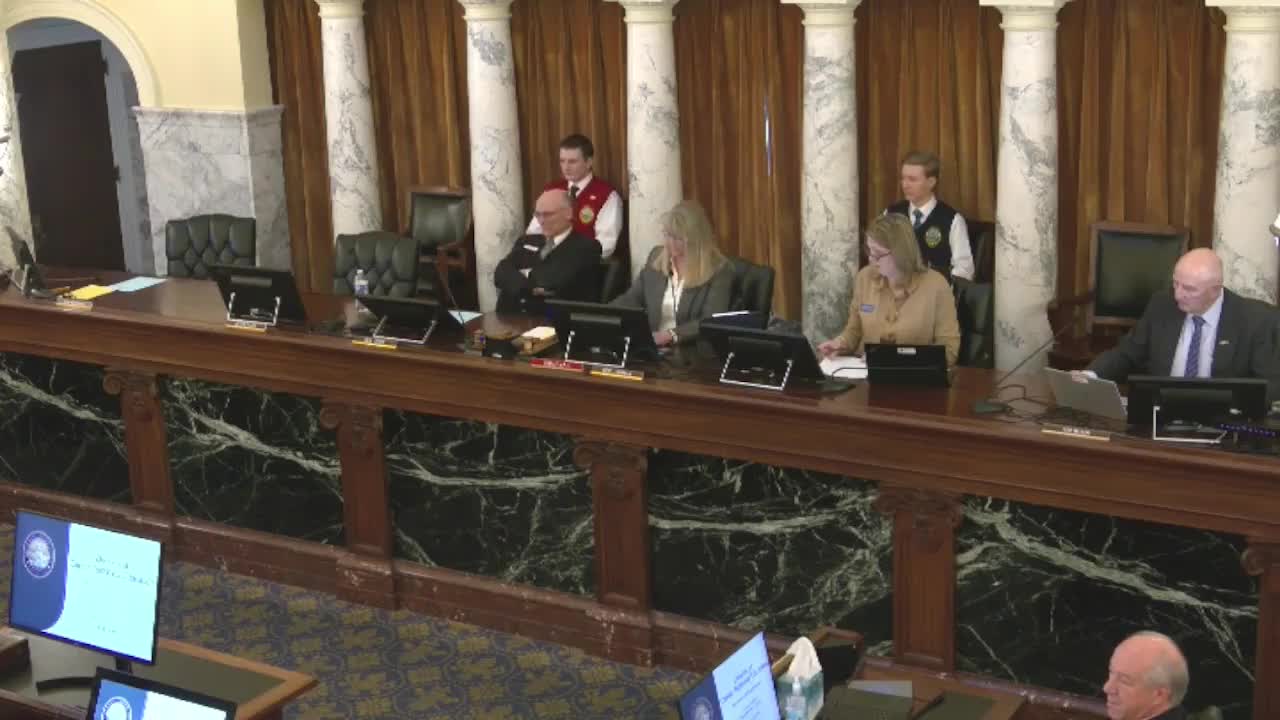
Kevin Campbell, a budget and policy analyst with the Legislative Services Office, presented the Division of Career Technical Education’s overview and FY2026 budget request Monday to the Joint Finance‑Appropriations Committee.
Kevin Campbell, a budget and policy analyst with the Legislative Services Office, presented the Division of Career Technical Education’s overview and FY2026 budget request Monday to the Joint Finance-Appropriations Committee.
CTE is seeking a mix of ongoing and one-time funding, including a $10 million ongoing governor recommendation to expand capacity in high‑demand programs and a slate of smaller requests for instructors, a business‑industry engagement manager and adult education. Joshua Whitworth, executive director for the State Board of Education and interim leader of the CTE division, told the committee the state is seeing “massive growth of demand” and that CTE is trying to expand faculty and facilities to reduce wait lists.
Why it matters: Committee members repeatedly tied the funding request to statewide workforce shortages. Members cited long wait lists for programs such as welding and nursing and pressed CTE on how dollars would be distributed, how the state would ensure oversight of grants, and whether federal grant guidance affects timing of spending.
CTE overview and requests CTE provides career education across secondary schools, six technical colleges and adult workforce training centers. Kevin Campbell told the committee CTE reported roughly 569 full‑time positions (FTP) and that approximately 93.3% of some appropriations are spent on personnel‑related costs. Campbell and Whitworth summarized recent and requested appropriations, including:
- Ongoing and one‑time appropriations in recent years for personnel, middle/high‑school readiness and equipment. Notable past one‑time sums included $10 million for secondary CTE programs and $5 million for postsecondary equipment and investments. - FY2026 requests including $664,000 ongoing for additional instructors, $125,400 for a business‑industry engagement manager, $50,000 for adult education and literacy, modest federal grant spending authority requests, and a $3,000 one‑time computer for the requested engagement manager. - The governor’s recommendation of $10,000,000 ongoing to build capacity in high‑demand CTE programs.
Demand, and the constraints driving wait lists Committee members and Whitworth described three core constraints on growth: student demand, available qualified faculty/instructors and adequate facilities (for example, welding booths). Whitworth said those three “legs of the stool” must be addressed together; committee members emphasized that adding seats typically requires both additional faculty and capital improvements such as ventilation for welding labs.
On program demand, Whitworth and committee members identified welding and nursing as common examples of oversubscribed programs. Whitworth cited Micron and other industry growth as drivers for welding demand and said Idaho could “throw as much money at the welding side here currently and still need more” given expected industrial expansion.
Business‑industry engagement manager and coordination with Launch Whitworth described the requested business‑industry engagement manager as a position to embed business‑facing capacity at the district level and to help rural or small districts form partnerships with employers, match equipment or support program alignment. He told the committee the position is intended to provide district‑level support rather than duplicate statewide strategy led by the Workforce Development Council and the Launch grant program. Whitworth said the Launch program “drives demand” while CTE focuses on program quality and capacity.
Federal grants and timing When asked whether large federal grants remain available, Whitworth said, “for our knowledge right now, the funding is available. But, I think we have to be diligent about when we pull that down, when it's appropriate that those expenses have been, met by the state.” He emphasized the need to follow federal guidance on allowable timing and activities.
Adult education and workplace English Tracy Bent, chief administrative officer for CTE, described the workplace English program as “focuses heavily on adult basic education but also, individuals that English is not their first language as well,” and said the instruction is aimed at helping participants “move into our workforce and be successful.” Committee members asked whether participants include refugees, immigrants or Department of Corrections populations; Bent said the program serves adults who attend workforce training centers, including people from local communities and participants coming through the Department of Corrections.
Funds and accounting concerns raised by lawmakers Campbell and Whitworth flagged a small number of questions committee members asked staff to follow up on:
- Displaced Homemaker Fund: Campbell noted it receives revenue from a $20 fee assessed on divorces and is statutorily directed to Centers for New Directions at each technical college for career training. - Hazardous Materials and Waste Enforcement Fund: Campbell said the fund receives revenues from hazardous‑materials trip fees and annual permits and is used to train firefighters. Senator Berkey and Representative Tanner noted what appeared to be negative or inconsistent balances; Whitworth said staff would validate reporting and “get you that information directly and send back to the committee.” Representative Tanner noted fee details (e.g., $20 per trip and $2.50 annual permit) when urging staff to verify cash counts. - Motorcycle Safety Fund: The division said the fund receives revenues from driver's license issuances, motorcycle registrations and safety‑program fees; committee members noted balances have grown and asked whether program expenditures align with revenues and whether fee changes or program activity adjustments should be considered.
Oversight, distribution and next steps Several committee members pressed for specifics on how the $10 million ongoing recommendation would be distributed and overseen. Whitworth described the proposal as a competitive, demand‑driven grant program that would require industry engagement and local matching commitments in many cases; he said the division would distribute grants to technical colleges and districts based on demonstrated regional need rather than equal allocation. Multiple lawmakers asked for a detailed line‑item plan and specific metrics to justify and defend the request on the floor.
What the committee asked for and what remains open Committee members requested follow‑up information, including a list of oversubscribed programs, a breakdown of personnel costs versus funds sent to colleges, reconciled balances and recent expenditures for the hazardous materials and motorcycle safety funds, and a more detailed distribution/oversight plan for the $10 million ongoing proposal. Whitworth and Campbell agreed to provide additional documentation and clarifications.
No formal committee action or vote occurred during the presentation; staff follow‑up and additional documentation were the committee’s immediate next steps.