Get Full Government Meeting Transcripts, Videos, & Alerts Forever!
Get email alerts on the Public Health Authority topic
No spam. Unsubscribe anytime.
Senate committee sends SB 10-31 to amendment order after debate over limits on health districts
Summary
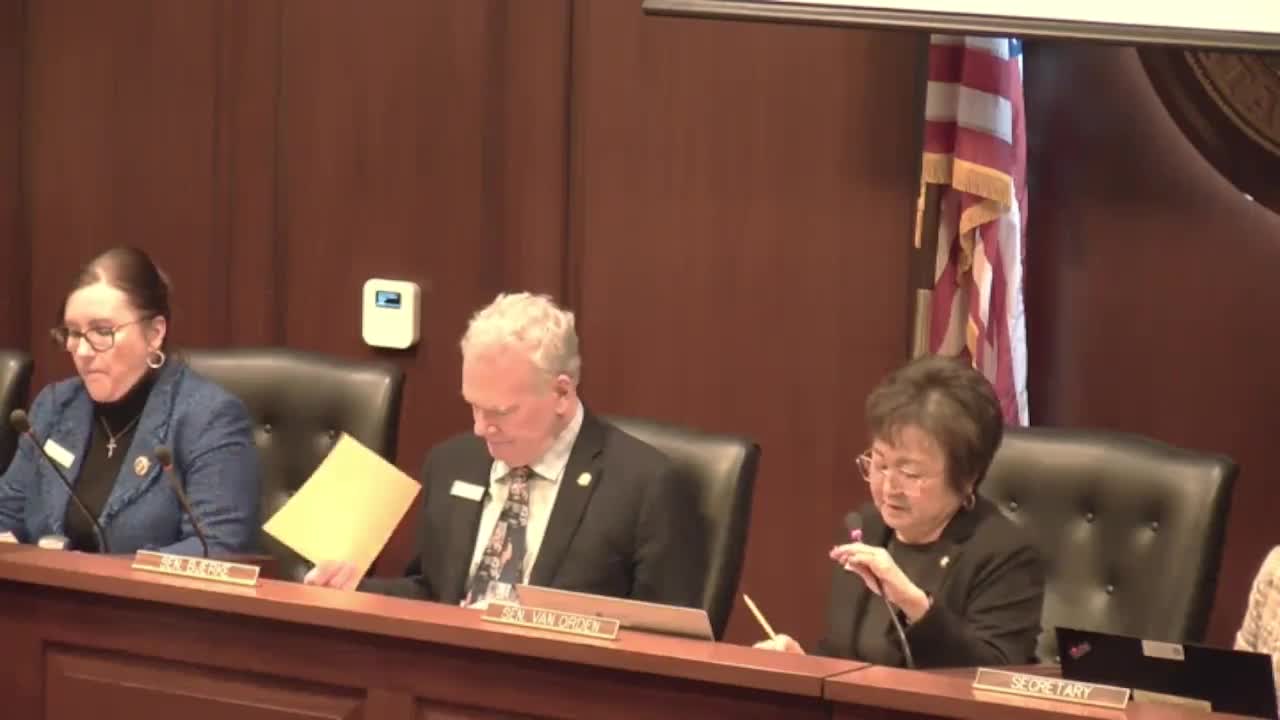
The Idaho Senate Health and Welfare Committee voted to send Senate Bill 10-31 to the fourteenth order for possible amendment after senators disputed language that would narrow public health districts’ authority and restrict preventive measures to immediate, evidence-backed risks.
The Idaho Senate Health and Welfare Committee moved on Senate Bill 10-31 to the fourteenth order for possible amendment after extended debate over language that would narrow public health districts’ authority.
Senator Brian Lenny, sponsor of SB 10-31, told the committee the bill would remove a broad grant of power that currently lets health districts act in the name of public health without a clear statutory limit. "All this entire bill does is say, hey. You guys just have right now, they can do all things ... we're just kind of knocking you down a peg saying, if you are going to do something, it should be justified by science, by reason, by necessity," Lenny said.
The measure would strike language that lets health districts take "all things required" for public health and replace it with a requirement that districts take "only actions specifically authorized by state law that are necessary and reasonable for the preservation and protection of public health." It also states that "preventive health measures may be taken only in cases of a demonstrated immediate public health risk supported by scientific evidence." SB 10-31 does not specify implementing definitions for terms such as "necessary and reasonable," "immediate," or what qualifies as "scientific evidence."
Why it matters: The bill attempts to limit discretionary powers that some senators said were exercised during the COVID-19 pandemic. Supporters said the change would add accountability and protect individual liberties. Opponents and some members of the committee warned the language is ambiguous and could unintentionally bar routine preventive public-health activities.
Committee debate centered on several recurring concerns. Senator Wintrow asked which state laws the bill would reference and whether the phrase "specifically authorized by state law" would create more confusion than clarity. "When I read specifically authorized by state law, I immediately ... went to the research librarians and said, what do you think this means?" she said, adding that routine preventive work — such as vaccination clinics or sanitation programs — could be impeded if the phrase is read too narrowly.
Several senators said the bill as written appears to conflict internally: the provision limiting actions to those taken for an "immediate public health risk" was described by multiple members as at odds with the idea of "preventive" measures, which by definition look ahead. "Prevention means we're looking forward, and there's not necessarily immediate risk," Wintrow said.
Senator Blaylock and others urged clearer definitions in either a committee amendment or an amendment in a later order. "There are a lot of terms in here that need more context or definition," Blaylock said, specifically calling out "necessary and reasonable," "immediate public health," and "scientific evidence."
Some members pointed to a 2023 change to state law: Wintrow noted the committee previously amended law to require county commissioners' approval of public health orders, a step she said already added an elected oversight layer. "In 2023 ... we did add that no public health orders ... could happen without the approval of the county commissioners," she said.
Supporters from outside the Legislature also testified. Misty Karlfeld, who identified herself as leader of Health Freedom Idaho, told the committee that Idaho code "39-414 grants staggering power to a select few" and urged passage of the bill. "SB 10-31 is a very necessary and reasonable bill," Karlfeld said, adding that some districts "went outside their bounds" during the pandemic.
Sponsor Lenny cited several pandemic-era examples to illustrate his concerns, including business closures, masking orders in schools, and what he described as an incident in which law enforcement secured a health-district meeting location. "We had snipers on the roof of Central District Health during 1 of their meetings ... because they were afraid of the crowd," Lenny said.
Outcome: Senator Seiderfeld moved to send SB 10-31 to the floor with a due-pass recommendation; Senator Keiser seconded that motion. Senator Harris offered a substitute motion, seconded by Senator Bierke, to send the bill to the fourteenth order for possible amendment. The substitute motion passed on a voice vote; at least one senator asked to be recorded as opposed. The committee then adjourned.
The bill will return to the committee’s fourteenth order for potential language changes before any floor action.