Get Full Government Meeting Transcripts, Videos, & Alerts Forever!
Get email alerts on the Construction Reappropriation topic
No spam. Unsubscribe anytime.
ITD Seeks Reappropriation Authority and $311M in Transfers for Ongoing Road Projects; Committee Probes Cash‑flow Risks
Summary
The Idaho Transportation Department requested reappropriation authority up to $250 million, supplemental spending authority and general‑fund cash transfers to cover contract construction payouts on multi‑year projects, citing large obligated-but-unspent commitments across multiple funding sources.
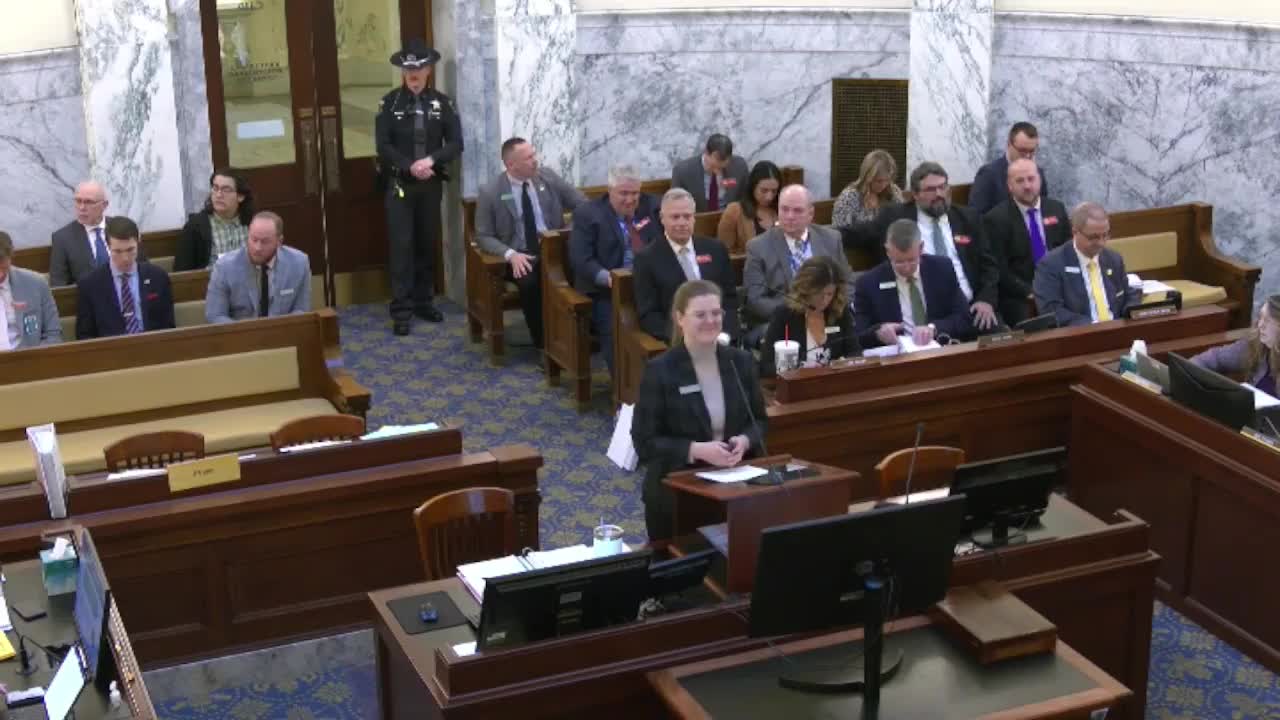
The Idaho Transportation Department asked the Joint Finance-Appropriations Committee on Wednesday for authority to spend previously obligated highway dollars and for new transfers to complete multi-year construction projects, saying the department faces a timing mismatch between contractor payments and single-year appropriation caps.
Brooke Dupree, the Legislative Services Office analyst, summarized the department’s request: a $60 million supplemental for fiscal year 2025 (including $50 million from federal highway funds and $10 million from state highway-local funds), ongoing federal fund capital outlays of $57.3 million tied to increased IIJA funding, an ongoing $55 million increase (50 million federal, 5 million local), and proposed general fund cash transfers of $99.7 million for safety and capacity projects and $212 million for road and bridge maintenance. Dupree also noted ITD’s request that the Strategic Initiatives Program Fund remain continuously appropriated rather than be constrained by an annual appropriation.
ITD officials told the committee the practical problem is not lack of cash but lack of spending authority in a fiscal year to make final payments on contracts for projects that span multiple years and multiple funding sources (state, federal and bond proceeds). Dave Tolman, chief administrative officer at ITD, said the department’s “obligated unspent construction program was a little over $600,000,000” at the end of FY24 across funding sources, creating a need for reappropriation or continuous appropriation mechanisms to avoid delaying contractor payments.
The committee and ITD discussed GARVEE bonds (bonding backed by future federal funds) and TECM (transportation expansion and congestion mitigation sales-tax diversion) as existing financing mechanisms, and members asked whether the current $250 million reappropriation cap is sufficient. Director Scott Stokes said the department had come close to running out of spending authority last fiscal year and had deferred some payments; the department asked for broader reappropriation flexibility to avoid repeating that situation.
Why it matters: Large multi-year construction projects often involve federal, state and bonded funding that must be synchronized with annual appropriations. Without reappropriation authority or continuous appropriation of specific funds, the state risks delaying contractor payments or deferring project work.
The committee did not take a formal appropriation decision at the hearing; members requested follow-up data on current cash balances, obligated-but-unspent contract totals and how proposed transfers would be applied across projects.