Get Full Government Meeting Transcripts, Videos, & Alerts Forever!
Get email alerts on the Medical Residency Funding topic
No spam. Unsubscribe anytime.
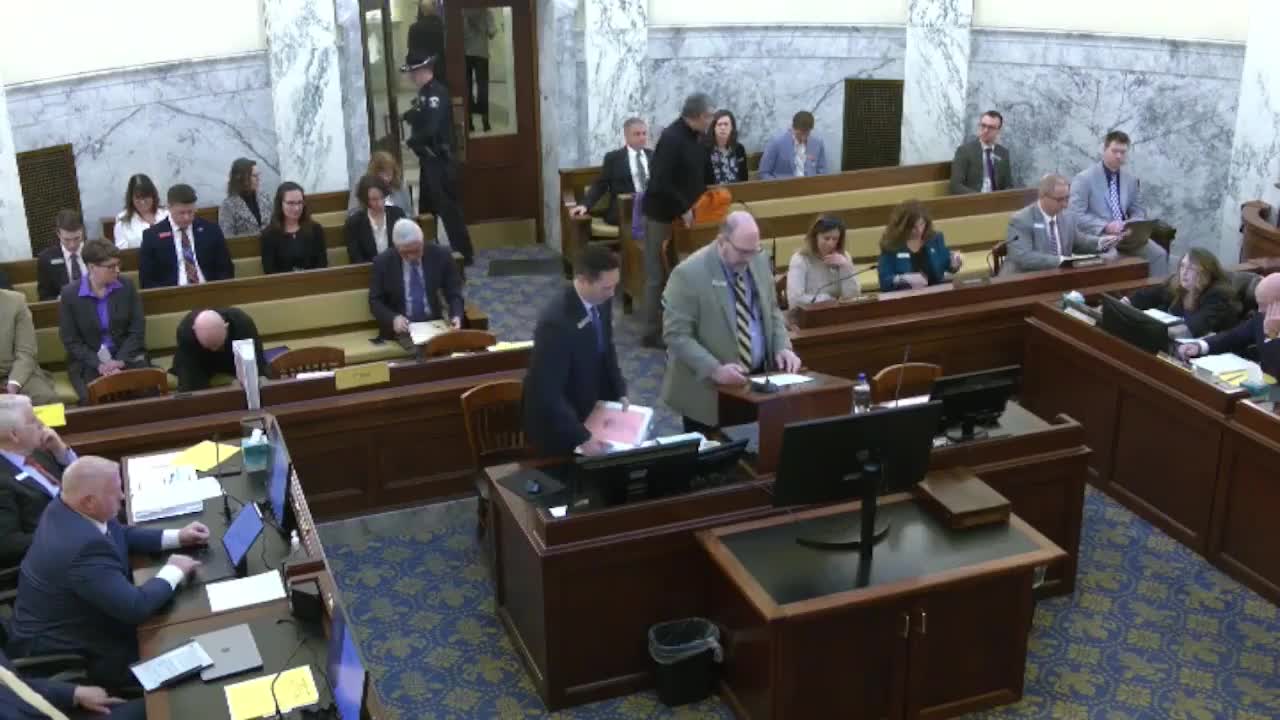
Residency directors tell JFAC: funded residencies expand Idaho’s physician pipeline; state share remains critical
Summary
Program directors and legislative analysts told the Joint Finance‑Appropriations Committee that state support of graduate medical education remains vital to Idaho’s physician pipeline, and they asked the committee to continue stable funding as program expansion reaches maturity.
Program directors and legislative analysts told the Joint Finance‑Appropriations Committee that state support of graduate medical education remains vital to Idaho’s physician pipeline, and they asked the committee to continue stable funding as program expansion reaches maturity.
Kevin Campbell, a budget analyst with the Legislative Services Office, told the committee that Idaho residency programs consistently spend their appropriations and that the state’s portion of a typical residency cost has enabled programs to exist. "During that time, the new doctor is treating patients under the supervision of one or more experienced supervising physician teachers," Campbell said while describing the residency phase that follows medical school.
Directors from several programs gave operational details and near‑term requests. Dr. Matt Larson, psychiatry program director at Eastern Idaho Medical Residency (EIMR) in Idaho Falls, explained that psychiatry training in his program is a four‑year residency and that EIMR requested a $240,000 ongoing increase to support four additional psychiatric residents (the packet listed the funding request as the third‑year funding step in a four‑year psychiatry pipeline). Campbell also reviewed EIMR’s five‑year funding history and noted that the program had no state FTPs because residents are employees of the sponsoring institution; in FY2024, the program’s expenditures went 100 percent to trustee and benefit payments.
Boise Internal Medicine and Family Medicine Residency (FMR) presentations emphasized steady growth and retention. Boise Internal Medicine requested $60,000 ongoing for one additional resident in FY2026. Family medicine residency programs across the state (Full Circle Health, ISU‑sponsored programs, Kootenai Clinic and others) are organized as several regional programs; FMR asked for a package that included a 6‑resident expansion tied to a new St. Alphonsus‑Nampa program and other additions; the packet noted a combined request of $420,000 ongoing (six new residents) and several fellowship and state‑employee positions in the ISU program.
Retention, costs and the three‑way funding model
Analysts and program directors described a three‑way funding model: the sponsoring institution, local health system partners, and the state each contribute portions of resident costs. Presenters said the per‑resident annual cost has risen from roughly $180,000 earlier in the decade to about $210,000 per year in current budgets. Historically the state’s contribution was roughly one‑third of that per‑resident cost; program directors told the committee continuing or slightly increasing the state third would stabilize programs as costs rise.
Kevin Campbell cited a retention statistic from the American Medical Association that 55 percent of graduates of Idaho residencies and fellowships remain in Idaho, a retention level that places the state among the top 10 for retention nationally. Division Administrator Elke Shaw‑Tulloch and program directors said loan‑repayment and rural incentive programs have very high retention: Elke Shaw‑Tulloch stated that the department’s loan repayment programs show roughly a 91 percent retention rate among providers who receive those repayments and practice in Idaho.
Direct patient‑care value during training
Committee members pressed residency directors on the immediate service value of residents. Dr. Larson said residents provide substantial clinical capacity during training: "Even if no one stayed in the state afterwards, you still have 16 additional doctors practicing psychiatry in Idaho Falls and the surrounding areas just from my program," he told the committee, describing residents’ daily clinic and hospital work under supervision.
Capacity, growth and readiness to add positions
Program directors told committee members that several positions were ‘‘ready to go’’ if the committee provided funding: examples included child psychiatry slots associated with a University of Utah partnership (a multi‑year training arrangement) and sports‑medicine fellowship capacity. Presenters also noted that some programs have already scaled up under prior appropriations and that additional state funding helps move from pilot to sustained programs.
What happens next
No formal committee votes were recorded during the presentations. Analysts and directors said they would remain available for follow‑up line‑by‑line review. Directors urged continuation of the multi‑year plan to expand residency slots statewide so that training capacity and retention gains are sustained.
Ending
Program directors and analysts told the committee that graduate medical education funding is a long‑term investment in Idaho’s health workforce: "Training people here gets people to stay here," Dr. Larson said in closing.