Get Full Government Meeting Transcripts, Videos, & Alerts Forever!
Get email alerts on the Anti Slapp topic
No spam. Unsubscribe anytime.
Subcommittee amends anti‑SLAPP law to cover statements made in certain official proceedings; committee makes sanctions discretionary
Summary
The Criminal Subcommittee advanced HB 1888, a substitute that expands Virginia—s anti‑SLAPP protections to statements made "at or in connection with an official proceeding authorized by law," and that adds attorney-fee awards; the panel amended proposed mandatory sanctions to a discretionary standard after committee discussion and testimony.
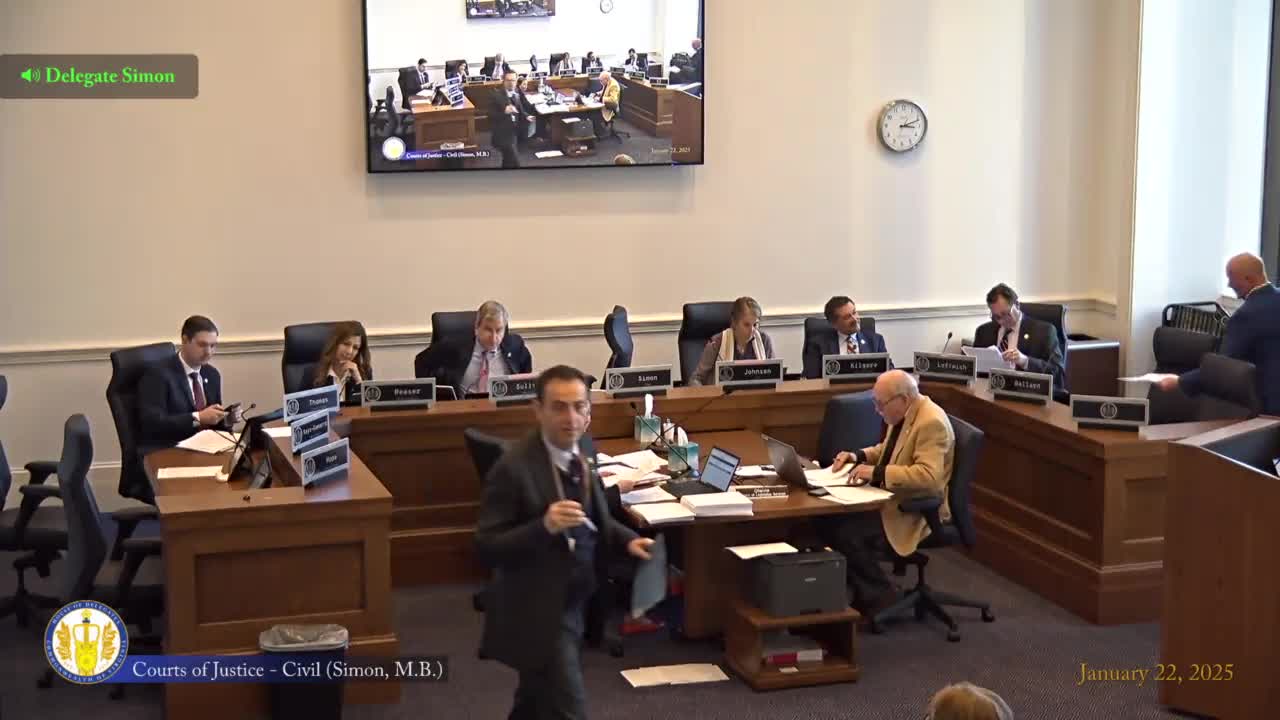
Chair Simon introduced House Bill 1888 as a targeted change to Virginia—s anti‑SLAPP law to cover statements made "at or in connection with an official proceeding authorized by law." The substitute also included an attorney-fee provision and initially proposed mandatory sanctions against parties who bring retaliatory suits; the committee later amended the substitute to make sanctions discretionary (changed the second "shall" on line 26 to "may").
Why it matters: supporters said the change would protect complainants who participate in quasi-judicial or investigatory proceedings (Title IX proceedings were cited repeatedly) from retaliatory civil suits intended to chill speech and deter future reporting. Opponents and counsel raised due-process and definitional questions about the scope of "official proceeding" and whether the amendment should name Title IX explicitly. The committee adopted a narrower sanctions approach after those concerns were raised.
What supporters said: Elise Sorcy, who testified in favor of the bill, described filing a Title IX complaint and subsequently being sued for more than $100 million, which she characterized as a retaliatory action that threatened to bankrupt her and to silence other potential complainants. Sorcy told the committee she has relied on pro bono counsel but continues to face substantial fees; she urged mandatory attorney-fee awards as a deterrent to retaliatory litigation.
Committee discussion and change: committee members asked counsel whether Virginia law defines "official proceeding" (counsel reported no single definition in the code and noted the phrase is used in other states' statutes that courts have interpreted to include quasi-judicial or administrative hearings). Several members questioned making sanctions mandatory, noting the risk it could sweep in good-faith claims that are ultimately unsuccessful; following that exchange the committee adopted a friendly amendment replacing a mandatory-sanctions requirement with discretionary language granting the court authority to impose sanctions.
Outcome: the committee reported the substitute as amended by a recorded vote of 6–1. The patron and committee members said they intended the change to discourage the filing of retaliatory suits that can impose large defense costs on complainants and witnesses and to align Virginia—s protection with approaches taken in other states.
What the bill does not do: the amended substitute, as discussed in the hearing, applies prospectively and does not alter or affect pending litigation; the committee did not adopt language expressly naming Title IX proceedings, preferring broader language that could cover other official proceedings in the future.
Next steps: HB 1888 will move forward from the subcommittee with the substitute as amended; proponents and legal observers may track potential floor amendments or judicial interpretation if the bill becomes law.