Get Full Government Meeting Transcripts, Videos, & Alerts Forever!
Get email alerts on the State Budget topic
No spam. Unsubscribe anytime.
Governor's executive budget proposes $150M for public schools, $100M for fire and water response and $100M reserved for tax relief
Summary
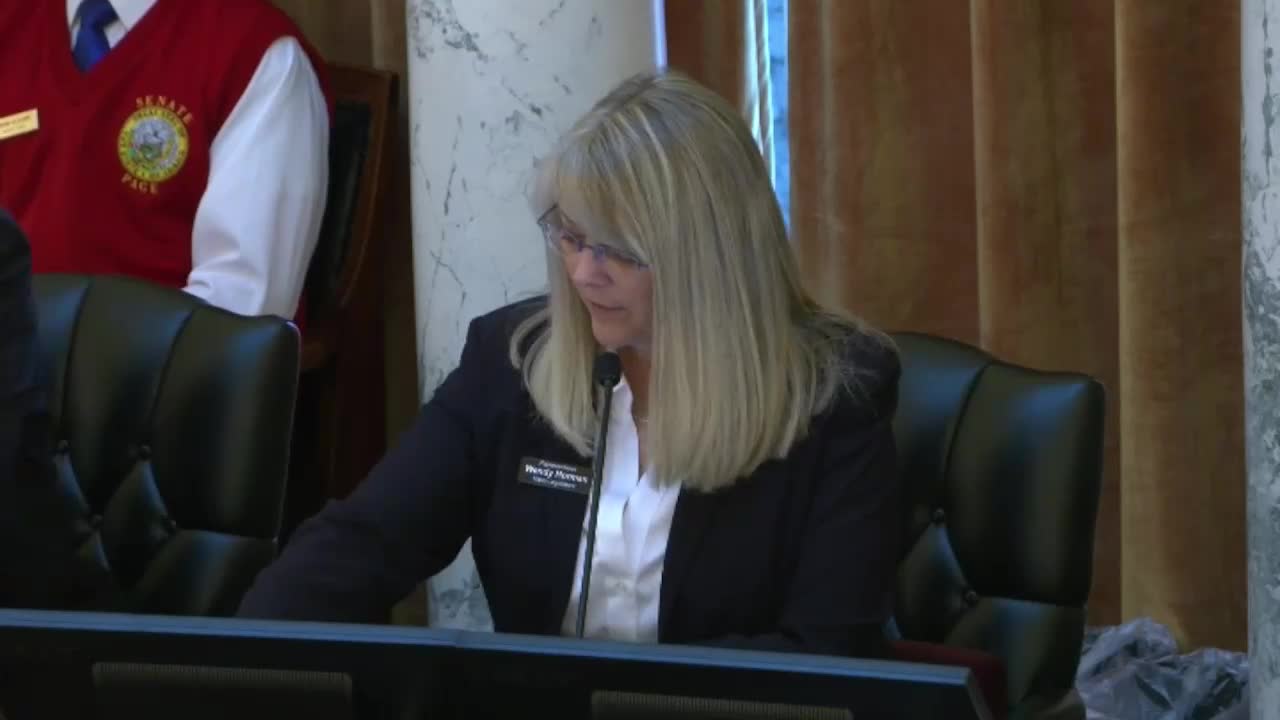
Laurie Wolf, Administrator of the Division of Financial Management, presented Governor Brad Little's executive budget to the Joint Finance and Appropriations Committee on Tuesday, Jan. 8, laying out revenue projections, recommended transfers to stabilization funds and a set of enhancements referred to as the governor's "keeping promises" priorities.
Laurie Wolf, Administrator of the Division of Financial Management, presented Governor Brad Little's executive budget to the Joint Finance and Appropriations Committee (JFAC) on Tuesday, Jan. 8, laying out revenue projections, recommended transfers to stabilization funds and a set of enhancements referred to as the governor's "keeping promises" priorities.
Wolf said the DFM used a conservative revenue forecast and that the proposed budget remains structurally balanced. The administration projects total general fund revenue of about $5.9 billion for fiscal 2025 and about $6.2 billion for fiscal 2026, with projected ending balances of roughly $383 million in FY25 and $227 million in FY26 after recommended transfers.
Why this matters: The executive budget frames the state's spending priorities for the legislative session and determines the baseline for JFAC's work setting program maintenance and enhancement funding. Wolf emphasized education, infrastructure, natural‑resource responses and reserves as core priorities while keeping a portion of funds available for tax relief.
Key fiscal numbers and reserves
- FY25 revenue projection: about $5.9 billion (DFM conservative update through November). - FY26 revenue projection: about $6.2 billion. - Projected ending balances: roughly $383 million (FY25) and $227 million (FY26) after transfers. - Recommended transfers include a $59 million transfer to the budget stabilization fund and a $50 million transfer to the public education stabilization fund; DFM noted that, after those and other actions, the state would hold the largest revert reserve in state history — about $1.4 billion (roughly 22% of the budget).
DFM said the recommendation leaves money for tax relief: Wolf said the governor "is holding a hundred million dollars for tax relief this year and looks forward to working with the legislature on where that tax relief ... looks like."
Enhancements and major program recommendations
- Education: The governor recommended approximately $150 million for public schools, including about $83 million aimed at teacher pay and about $30 million for health insurance for educators. The governor also set aside $50 million in revenue adjustments for education‑choice initiatives; Wolf said any policy action to spend that $50 million would require a separate policy bill.
- Transportation: The budget recommends a $50 million transfer to a transportation expansion and congestion mitigation fund administered by the Idaho Transportation Department (ITD). DFM said the transfer would enable additional bonding — the administration estimated the $50 million could underwrite about $800 million in additional high‑value transportation projects beyond current TechEm bonding capacity. DFM also recommended a 3% increase to the strategic initiatives fund, bringing annual funding from about $302 million to just under $312 million.
- Workforce training and CTE: The governor proposed an additional $25 million for workforce programs — $15 million one‑time for grants that require private‑sector match and $10 million ongoing to support career and technical education (CTE) operations and capacity.
- Natural resources, water and wildfire response: The governor recommended a combined $100 million focused on fire and water work. That includes a $60 million supplemental to backfill the state's fire suppression account for costs already incurred in FY25 and $40 million ongoing to support fire suppression and management in future years. Wolf also cited a $5 million proposal for aviation and early detection systems and $30 million in ongoing general‑fund support to the Idaho Water Resource Board for prioritized recharge projects.
- Public safety and IT security: DFM recommended $10 million to address statewide cybersecurity and infrastructure priorities (administered through ITS), $500,000 to continue a fentanyl enforcement program, and targeted investments at state prisons totaling about $3.4 million for contraband and security efforts.
- Workforce housing and health workforce: The governor recommended a $15 million one‑time transfer to the workforce housing fund (statute established a state workforce housing mechanism in 2022) to support affordable housing projects, including rural allocations. Wolf also recommended about $850,000 to fund roughly 18 medical residency positions, plus $500,000 ongoing for the rural physician incentive program.
- State public defense: Wolf said the state transitioned responsibility for public defense from counties to the state on Oct. 1. The DFM noted prior FY25 appropriations and said the state public defense office originally requested about a $17 million increase for FY26 relative to the previous appropriation. The governor recommended a FY25 supplemental of about $5.4 million and additional FY26 funding of about $16.8 million; DFM presented a total FY26 support figure of about $83 million to support state public defense operations while noting that some funding decisions will require policy choices about how the public defense fund — currently financed through a distribution of online sales tax — will be adjusted.
Questions from committee members addressed several items, including contract inflationary adjustments in the maintenance budgets ("contract inflationary adjustments are...the inflation that they have within their contracts," Wolf said), the composition of recommended transfers, concerns about ongoing fire funding levels, and how workforce and education grants would be administered. Wolf told the committee she would work with officials to provide additional background materials (for example, on prior GEAR allocations used for workforce/education projects).
Next steps: The DFM presentation establishes the governor's recommended starting point for the biennial budget debate. JFAC staff and work groups will analyze the maintenance and enhancement proposals in detail at upcoming hearings and work‑group meetings; program maintenance budgets were scheduled by staff for a first setting on Friday, Jan. 17.