Get Full Government Meeting Transcripts, Videos, & Alerts Forever!
Get email alerts on the Water Resources Rulemaking topic
No spam. Unsubscribe anytime.
Water resources staff outline multiple rule dockets; committee requests clarifications and pauses action
Summary
Department of Water Resources staff reviewed several negotiated rule dockets and a rule amendment before the Resources and Conservation Committee; members requested clarifications and the committee took no adoption action.
Department of Water Resources staff briefed the Resources and Conservation Committee on a suite of rulemakings carried out under the state’s zero-based review process. Eric Bowe, Water Compliance Bureau Chief and department rule officer, summarized four negotiated rule chapters promulgated in 2024 — adjudication rules, beneficial-use examination rules, injection well rules and well construction standards — and a fall 2024 amendment to conjunctive-management rules.
Department staff said the negotiated rulemakings trimmed wording and clarified administrative language. Craig Saxton, Water Allocations Bureau Chief, explained a substantive clarification in the adjudication rules about how to record a water source that at times flows into a named stream and at other times sinks into the ground: "When a water source sinks into the ground before flowing into another named stream or lake, the pending rule directs water right claimants to use the term sinks," he said, and noted the department would review individual claims and recommend corrections to the court where needed.
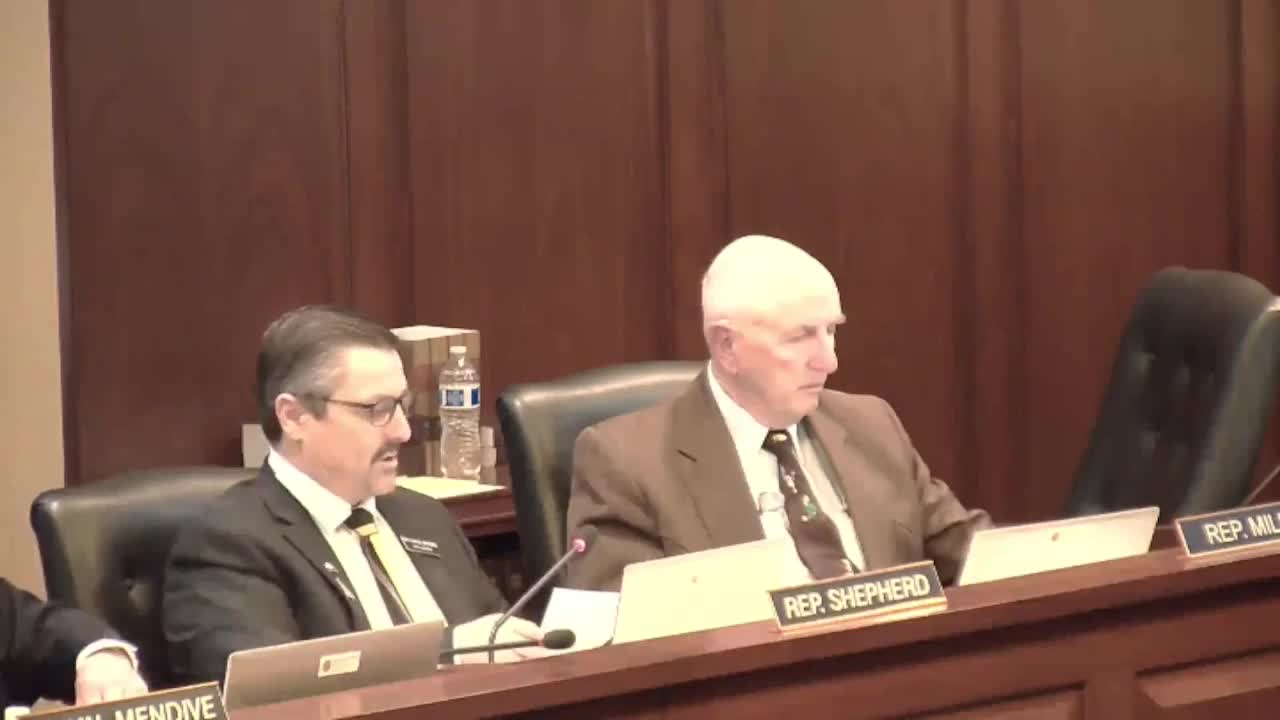
Committee members sought additional guidance and asked the department to supply written clarifications before any committee action. Representative Shepherd and others expressed concern that the phrasing about naming tributary sources and identifying downstream water bodies could be interpreted in ways that affect landowners' setbacks or project permitting; they asked whether the change could be used by federal or state land managers to expand environmental buffers. Craig Saxton replied that the rule aims to make claim filing consistent and that IDWR’s review and the adjudication objection process could address inaccuracies.
Members also questioned why the department defined delegation of the director’s authority in the rules when Idaho statute already allows the director to delegate duties. Eric Bowe and other staff said the definition was added for clarity and consistency across rule chapters; staff agreed to revisit that choice if the committee prefers to rely on statute language alone. Representative Miller urged staff to walk the committee line-by-line through any substantial changes in future sessions.
The department presented that the adjudication rule changes reduced the rule text and restrictive wording and that the beneficial-use examiner rules likewise were reworked to modernize terminology, measurement standards, and municipal volume-reporting language. Members asked for more detailed, bulletin-style explanations of selected edits (for example, how in-stream stock water claims interact with Idaho Code section 42-113) so affected landowners and permittees would not be confused about whether filing is required for protection of rights.
Because committee members requested further detail, committee leadership did not move to adopt any of the pending rule dockets at this meeting. Representative Mickelson moved to adjourn the meeting, the motion carried, and the department agreed to provide follow-up materials and line-by-line clarifications for subsequent committee consideration.