Get Full Government Meeting Transcripts, Videos, & Alerts Forever!
Get email alerts on the Parks And Recreation topic
No spam. Unsubscribe anytime.
Committee advances bill to expand Parks Passport, add funding for nonmotorized trail maintenance
Summary
The Idaho House Resources and Conservation Committee voted to send House Bill 57 to the floor with a do-pass recommendation after debate and extensive public testimony. The bill would raise the state Parks Passport from $10 to $20, earmarking $16 for parks maintenance and $4 for nonmotorized trail maintenance.
The Idaho House Resources and Conservation Committee voted to send House Bill 57 to the floor with a do-pass recommendation after more than an hour of debate and public testimony. Representative James Petzke, sponsor of the bill, told the committee the measure would expand the existing Parks Passport to a Parks and Trails Passport and raise the annual resident passport fee from $10 to $20.
The bill is intended to shore up an ongoing revenue stream for the Idaho Department of Parks and Recreation and to establish the state's first dedicated funding source for nonmotorized trail maintenance. Representative James Petzke said, "The fee for the passport will be $20 versus the current $10," and explained that $16 of each pass would fund parks maintenance and operations while $4 would be earmarked for nonmotorized trail work.
Supporters at the hearing — including recreational groups, business owners and outfitters — testified that Idaho's trails need steady funding. Tim Martin, chair of the Idaho Trails Association, told the committee, "Trails are part of Idaho's history and part of who we are as Idahoans," and said volunteer efforts alone cannot keep pace with maintenance needs. Daniel Waugh of the Idaho Horse Council said the initiative began as an equestrian effort and reported broad support in polling for a voluntary funding option. Business representatives and outfitters — including Matt Bishop of Cafe Mule, Heather Eastman of Idaho Business for the Outdoors, Aaron Lieberman of the Idaho Outfitters and Guides Association and others — said trail access supports local commerce and welcomed a user-pay approach.
Committee members pressed sponsors and department staff on several points: how the nonmotorized fund would be allocated, whether the passport would be required to use nonmotorized trails, and how the proposal interacts with existing motorized user programs. Troy Elmore, operations administrator for the Idaho Department of Parks and Recreation, clarified that the department administers existing motorized programs and that motorized users already pay separate registration (the department stated an OHV registration sticker runs $12 annually and snowmobile registration $32.50). Representative Petzke repeatedly emphasized the bill is voluntary and does not create a permit requirement to use public trails: "There's nothing requiring somebody to have this pass to use any of the trails," he said.
Some committee members expressed concern that splitting the passport revenue could leave parks short of funds needed to address a backlog of maintenance. Representative Tanner said the $16 directed to parks would not eliminate the backlog and said he would prefer a larger allocation for parks maintenance; others called the proposal a pragmatic first step given neighboring states' higher fees. Representative Miller asked whether the fee could be higher to make a larger dent in maintenance needs; Petzke said the $20 figure reflected stakeholder and leadership negotiations and was chosen as a politically viable increase for this session.
Testimony cited several quantitative details the committee noted: the Idaho Trails Association reported clearing about 332 miles of trail with nearly 12,000 volunteer hours in 2024; the state recreation economy was described by a witness as approximately $7.8 billion annually with the horse industry producing about $1.7–$1.8 billion; and stakeholder polling cited substantial willingness among trail users to support a $20 voluntary passport. Witnesses also said the Parks Department would administer the nonmotorized program and could issue grants — the bill text (discussed in committee) allows grants to governmental entities, tribes or NGOs and caps grants at no more than 50% of funds in certain grant provisions.
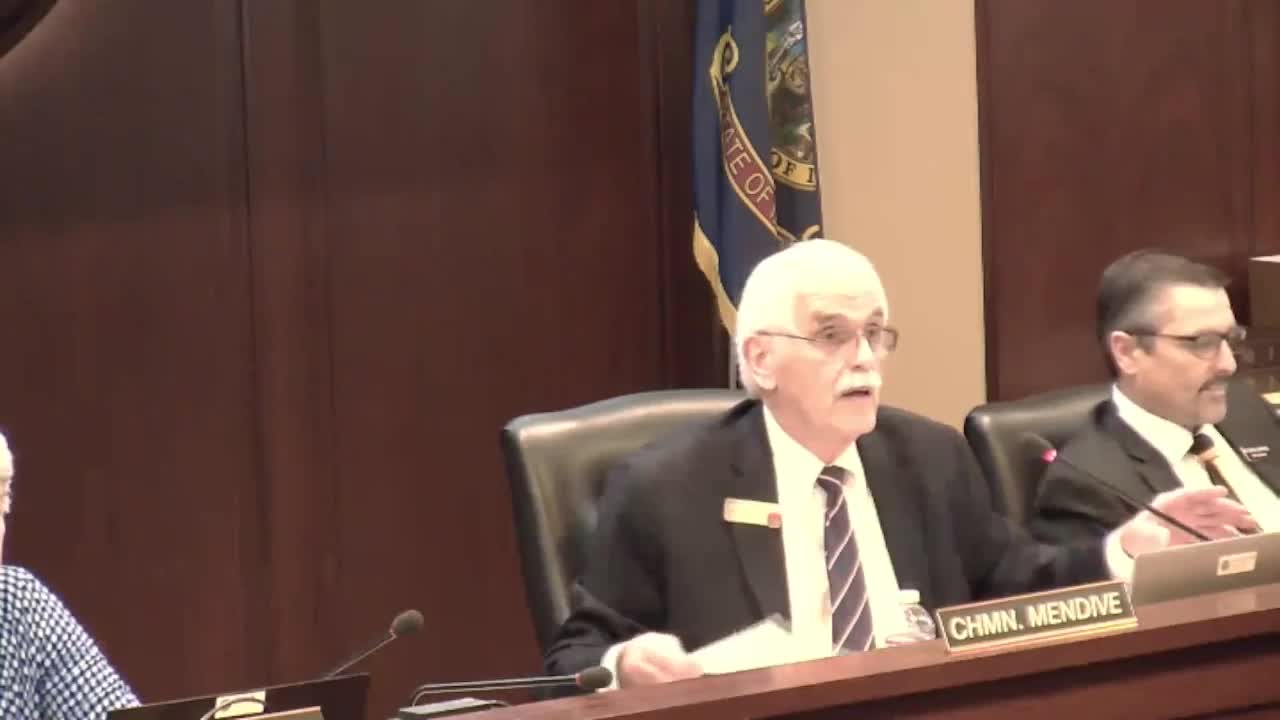
After public testimony and brief additional debate, Representative Raybould moved to send House Bill 57 to the floor with a do-pass recommendation. The committee took a voice vote; the chair voted aye and a nay was voiced, but the committee clerks did not record a numerical tally on the record. The motion passed and the bill will be forwarded to the full House.
Next steps: House Bill 57 will appear on the House floor calendar for further debate and possible amendment. Committee members asked the Parks Department and sponsors to provide further detail on administration, grant rules and nonresident access to parks ahead of floor consideration.