Get Full Government Meeting Transcripts, Videos, & Alerts Forever!
Get email alerts on the Speed Safety Cameras topic
No spam. Unsubscribe anytime.
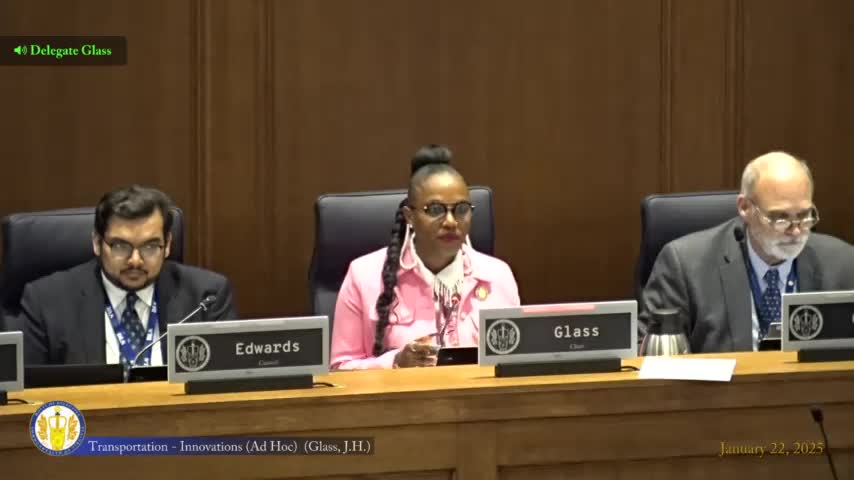
Subcommittee advances bill to expand, tighten rules on Virginia speed-safety cameras
Summary
A House bill to expand and tighten rules for speed safety cameras in Virginia advanced from the Transportation Innovation Subcommittee on a 5-3 vote after debate over local control of revenue and vendor contracting.
The Transportation Innovation Subcommittee voted 5-3 to report House Bill 2041 with a substitute that would expand and impose new operating, transparency and vendor limits on speed safety camera programs in Virginia.
The substitute requires two warning signs placed before any speed-safety camera — including a feedback sign that displays a driver’s speed — and directs localities to issue warnings by mail (rather than civil summonses) during the first 30 days of operation. It also limits use of work-zone cameras to periods when workers are present; requires jurisdictions or law enforcement to report operating costs; prohibits vendors from adding extra fees to summonses (with a civil penalty of $1,000 for noncompliance); and directs revenue in excess of operating and associated costs to the Virginia Highway Safety Improvement Program.
“HB 2041 is the result of feedback from stakeholders throughout the Commonwealth,” Delegate Seboe said in committee testimony. “This bill ensures that our speed safety camera programs in Virginia are well designed, fair, equitable, transparent and most importantly, they include the voices from the community.”
Delegate Seboe told the panel that the bill responds to concerns raised in earlier hearings and to recommendations from national organizations, including AAA, the Governor’s Highway Safety Association and the Insurance Institute for Highway Safety. The substitute also adds reporting requirements for operating costs so localities can make programs revenue-neutral and directs excess funds to the state highway safety fund rather than to local general uses.
Supporters, including advocacy groups and local safety practitioners, said cameras have a strong record of reducing speeding where properly implemented. Mike Doyle of Northern Virginia Families for Safe Streets described the human toll of crashes, saying, “Speed kills. Speed maims,” and urged passage. The Insurance Institute for Highway Safety said many of its best-practice recommendations are included in the substitute and that added safeguards can increase public confidence in camera programs.
Opponents from local government associations raised two core concerns: (1) the proposed diversion of funds collected locally into the Virginia Highway Safety Improvement Program rather than retaining them for locally chosen safety projects; and (2) how the substitute would interact with existing vendor contracts. Mitchell Smiley of the Virginia Municipal League said, “It pains me that I cannot support this bill today,” and asked for language to protect localities that have already entered contracts, such as a hold-harmless clause or delayed enactment. James Huttler of the Virginia Association of Counties echoed the call to keep revenue local where possible.
The committee also recorded brief administrative actions before the HB 2041 hearing. The panel struck House Bills 11666 and 1673 from the agenda (vote 7-0) and moved House Bill 1664 "for the day" by voice vote. At the close of the HB 2041 discussion the clerk announced the 5-3 report with a substitute.
Supporters said the substitute tries to address equity and transparency concerns by requiring signage, a warning period, public reporting and an advisory stakeholder review. Opponents pressed for assurances that localities would not lose funding needed for local safety projects and asked for protections related to existing contracts.
The substitute will be included in the committee report; the bill will proceed through the legislative process with the committee’s recommendation to the next house committee or floor calendar. The subcommittee had no further business and adjourned afterward.