Get Full Government Meeting Transcripts, Videos, & Alerts Forever!
Get email alerts on the Aging Services topic
No spam. Unsubscribe anytime.
Idaho Commission on Aging administrator seeks reappointment; highlights meals, caregiver support and dementia programs
Summary
Judy Taylor, administrator of the Idaho Commission on Aging, appeared for a reappointment hearing and described the commission's nutrition and caregiver-support programs and funding challenges.
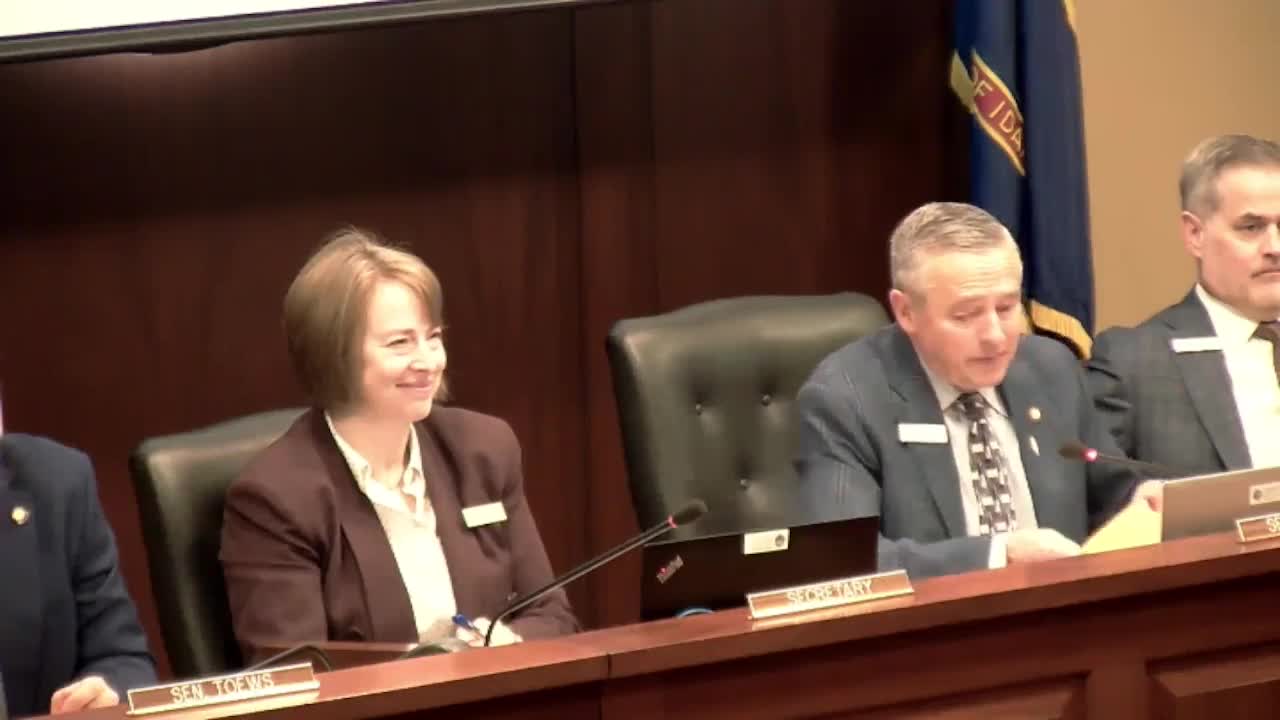
Judy Taylor, administrator of the Idaho Commission on Aging, appeared before the Senate State Affairs Committee seeking reappointment and described the commission's work to keep older Idahoans living in their communities. "The mission of the Commission on Aging is to prevent early or unneeded institutionalization of our older Idahoans and to keep them living in their communities of choice with safety, dignity, and health for as long as as possible," Taylor said.
Taylor told the committee the commission's largest program area is nutrition: congregate meals served at senior centers and home-delivered meals commonly known as Meals on Wheels. She described statewide pandemic-era one-time funding that enabled the commission and local senior centers to pivot operations (for example, moving to drive-through models) and to make infrastructure investments such as freezers, stoves and ramps. "We didn't miss a single day during the pandemic delivering our home delivered meals," Taylor said.
Taylor outlined the funding picture: one-time federal and state funds during the pandemic have mostly been expended; the Legislature approved an additional $500,000 in ongoing funds last year for nutrition programs, and as of July 1, 2024 the commission increased reimbursement rates statewide by $0.25 per meal. She said reimbursement under state code is intended to cover about half the cost of a meal, with the other half expected from participant contributions or local fundraising, and that costs vary across centers depending on rent, paid staffing and local fundraising capacity.
On caregiving and dementia, Taylor said the commission received $700,000 in ongoing funds two years earlier to support caregivers of people with dementia and that the state has a targeted caregiver support program for high-risk caregivers and those caring for people with memory problems. The program provides local assessment, case management and respite and was piloted using one-time funds before ongoing funding was secured. Taylor said caregiver support is central to delaying institutionalization for people with memory disorders.
Committee members asked whether the 25-cent rate increase covered meal costs and about ongoing struggles at some senior centers. Taylor said some centers remain vulnerable because of local rent and labor pressures, particularly those near Oregon and Washington borders where labor costs are higher. She said the commission holds reserve funds to address short-term home-delivered meal wait lists and will deploy money to local area agencies on aging as needed.
The committee did not vote on Taylor's reappointment at the hearing; the chair said the committee will vote on the appointment at a future meeting. Taylor asked the committee to convey appreciation to volunteers who run senior centers and meal programs.