Get Full Government Meeting Transcripts, Videos, & Alerts Forever!
Get email alerts on the Teacher Apprenticeship Rule Debate topic
No spam. Unsubscribe anytime.
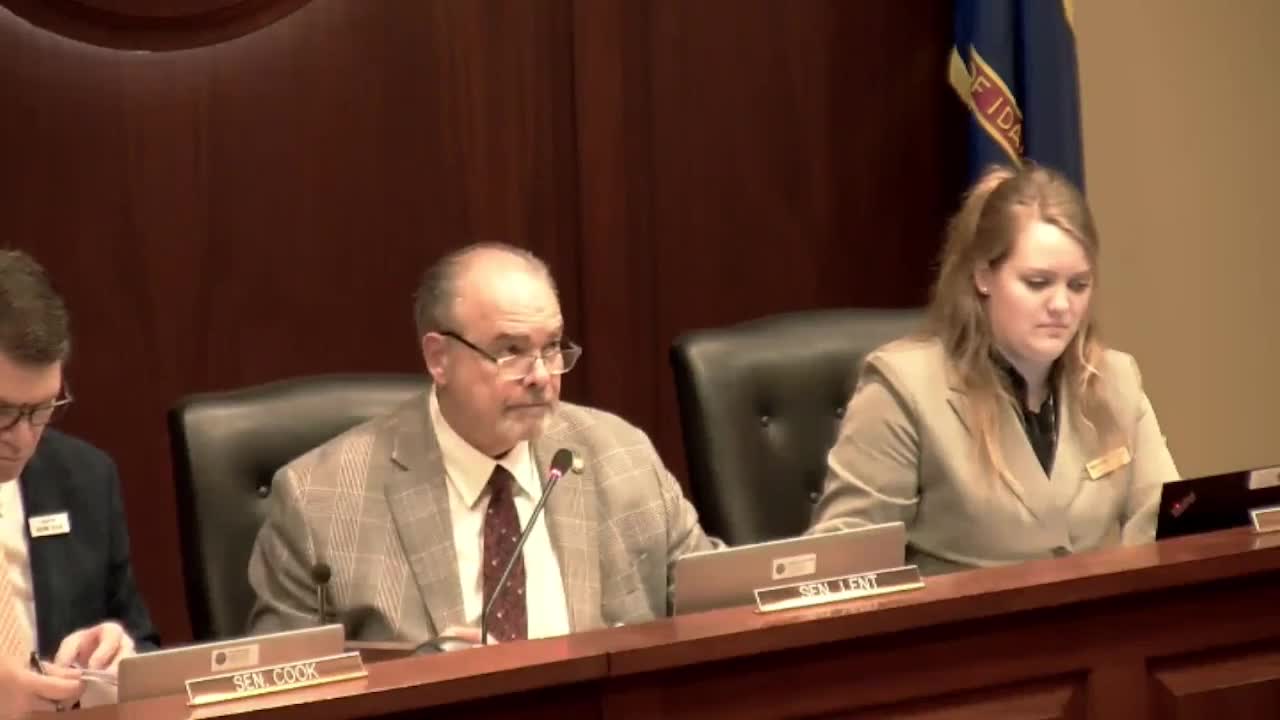
Senate Education Committee Hears State Board Rule Changes; Debate Centers on Teacher Apprenticeship Standards and Oversight
Summary
State Board of Education staff presented a multi‑item rule package to the Senate Education Committee; senators focused questions on new teacher apprenticeship rules and whether changes reduce degree requirements or weaken oversight of nontraditional educator preparation programs.
State Board of Education staff presented a package of rule changes to the Idaho Senate Education Committee on Monday, covering accreditation of private post‑secondary institutions, revisions to the Opportunity Scholarship renewals, school facilities reporting, educator preparation pathways (including a new teacher apprenticeship route), Idaho Digital Learning Academy course completion options, and vocational rehabilitation standards. Committee members paused action on the docket and moved to revisit the rules later in the week.
Matthew Ryber, representing the State Board of Education, said the package includes both technical updates and policy changes. He said one set of changes would "open up" accreditation recognition for private post‑secondary institutions to accreditors approved by the U.S. Department of Education rather than limiting recognition to regional accreditors. He also described rule changes to align with recent legislative changes for the Opportunity Scholarship and to implement school facilities reporting requirements from last year's House Bill.
Much of the committee's questioning focused on proposed rule language tied to new educator preparation pathways, specifically the registered teacher apprenticeship model authorized in recent legislation (Senate Bill 1069, as discussed in committee). Senator Semeroth pressed staff about the definition of "accredited institution" versus "alternative or nontraditional models approved by the State Board of Education," asking what quality assurances would apply to non‑accredited programs. Ryber said that approval requires review by State Department of Education experts and a recommendation to the State Board, which "is a body of 8 different members" who vet proposals. "There are many different layers and many different steps a program must go through to become approved by the State Board of Education," he said.
Senators raised sharper concerns about whether the rule changes would allow individuals to obtain a standard instructional certificate without a baccalaureate degree. Senator Semeroth and others noted the redlining in the draft rules that removes language referencing a baccalaureate requirement in the standard instructional certificate definition and asked whether private or nontraditional institutions could provide institutional recommendations without requiring a degree.
Ryber and committee members repeatedly emphasized that the State Board intends to preserve the traditional standard instructional route — which requires completion of a state board‑approved educator preparation program that is currently housed at degree‑granting institutions — while creating a separate apprenticeship pathway for staffing‑challenged districts. "The apprenticeship model is the one chosen…that's a different route that the State Board has set up," Ryber said. He described apprenticeship programs as federally recognized pathways (U.S. Department of Labor / U.S. Department of Education) that several states, including Tennessee, are using to recruit and credential teachers.
Several senators urged more explicit continuous‑improvement and oversight language for nontraditional and apprenticeship programs. Senator Semeroth asked how quality would be monitored in three‑ and seven‑year cycles compared with accreditation cycles that apply to degree‑granting institutions. Ryber said the State Board and Department will monitor approved programs and reiterated that approvals come with ongoing oversight, but senators asked for clearer written standards in rule language.
Other rules discussed included a modest change to Idaho Digital Learning Academy course completion: allowing a comprehensive final project in addition to a proctored comprehensive final exam, with site coordinators or local staff continuing to oversee completion. Vocational rehabilitation rule edits were presented as technical alignment with federal standards giving the agency flexibility in individualized planning and prioritization of services.
After extended discussion, Senator Sumnerall asked for more time to review several items, and the committee agreed to hold further votes at the call of the chair to allow follow‑up. The vice chair said one docket in particular (the educator preparation rule set) warranted additional review; the committee tentatively planned to revisit the rules on Wednesday.