Get Full Government Meeting Transcripts, Videos, & Alerts Forever!
Get email alerts on the Personnel Benefits topic
No spam. Unsubscribe anytime.
State benefits account for roughly one‑quarter of personnel costs; analysts explain health premium, PERSI and reserve choices
Summary
Legislative analysts told JFAC that benefits are about 25% of personnel expenditures, with health insurance the largest single piece; the governor’s health appropriations use a higher per‑FTP reserve target than the actuarial 10% minimum.
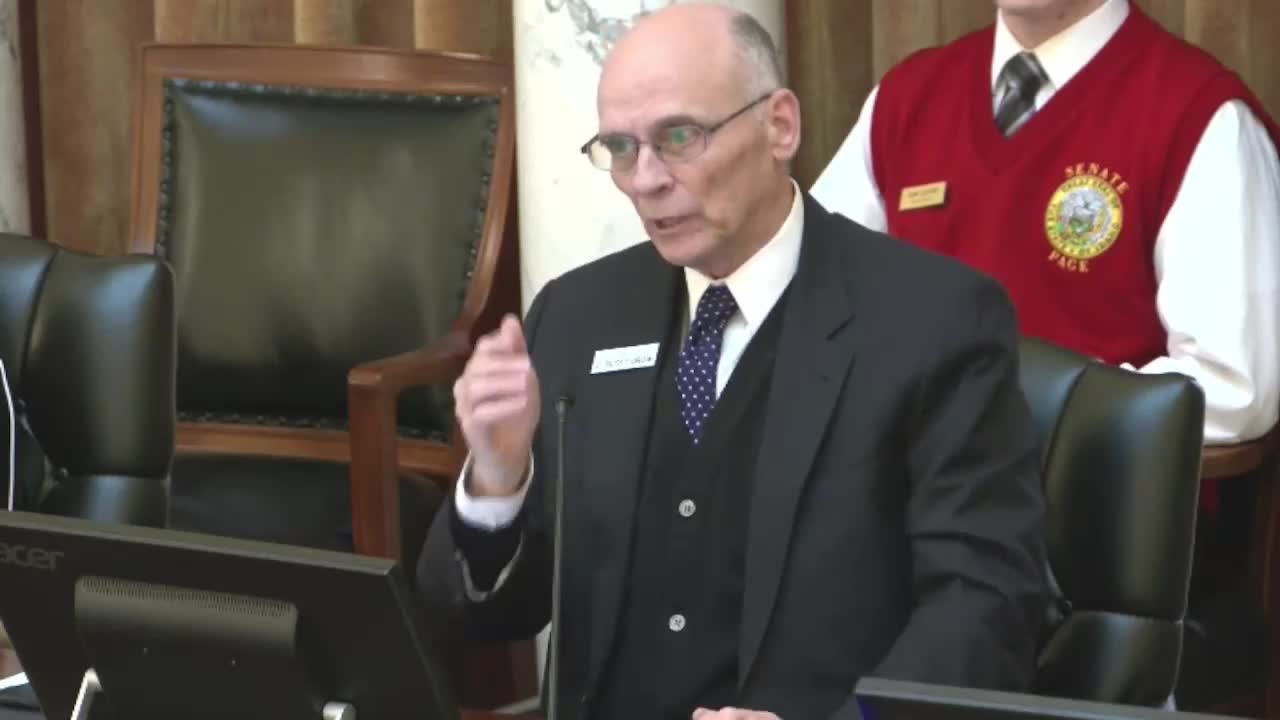
Frances Lippitt, budget and policy analyst with the Legislative Services Office, gave the committee an overview of how employee benefits are budgeted and how they affect agency personnel costs.
Lippitt said Idaho’s benefits package includes health and dental insurance, PERSI (the state pension plan), Social Security and Medicare, life insurance, workers compensation and other variable items. She summarized that benefits generally account for roughly one‑quarter of the state’s total personnel‑cost expenditures and that health insurance is nearly half of benefits costs.
On health coverage, Lippitt noted appropriations are typically shown as a per‑FTP (full‑time position) appropriation. Agencies budget health premium costs by FTP plus an appropriation “sweep” for employees who decline coverage and a reserve target tied to plan reserves. Idaho code and contract practice require the plan to carry a minimum reserve equal to 10% of expected premiums; the actuarial analysis used in the presentation recommended a funding level to cover 100% of plan costs in 90% of scenarios. The governor’s recommendation funds health insurance at $14,300 per FTP (LSO summarized) rather than the calculated $13,960 per FTP minimum; Lippitt said the governor’s figure is more conservative and reduces reliance on drawing down reserves. Lippitt put the estimated cost of that change at roughly $56.6 million.
Lippitt also reviewed employer contribution rates for PERSI: 11.96% for general members, 14.65% for public safety employees and 13.47% for teachers, and noted employer contributions for FY2024 were on the order of $141.5 million as a whole.
A senator asked why the governor’s recommendation used a higher per‑FTP figure rather than relying on reserves; Lippitt said the higher appropriation provides more stability against rapid premium increases.
Ending: Lippitt concluded by offering to provide additional actuarial or plan‑reserve detail in future briefings as the committee considers change‑in‑employee‑compensation recommendations from the CEC process.