Get Full Government Meeting Transcripts, Videos, & Alerts Forever!
Get email alerts on the Legislation Health Privacy Workers topic
No spam. Unsubscribe anytime.
Senate advances privacy, health and worker-protection bills; key measures pass on party-line margins
Summary
On Jan. 24, 2025, the Virginia Senate passed a package of bills affecting reproductive-data privacy, contraceptive coverage and worker protections, with several measures approved on narrow margins after brief floor statements.
The Virginia Senate on Jan. 24 passed a series of bills on reproductive-data privacy, contraceptive coverage and workplace protections, voting largely along party lines on several measures.
Senators approved a bill that creates a private right of action for willful disclosures of reproductive or sexual health data; a separate bill eliminated certain cost barriers to contraceptive drugs and devices; and bills addressing prevailing-wage and apprenticeship requirements on renewable-energy projects and overtime protections for domestic workers also cleared the floor.
The reproductive-data bill (Senate Bill 754) was presented by Senator Favola (Senator Favola, the senator from Arlington), who said the bill “says if there's a willful disclosure of reproductive or sexual health data without the individual's consent, then that individual would have the right to sue.” The Senate recorded the vote as 21 yeas and 17 nays; the clerk announced “Eyes 21, no 17,” and the bill passed.
Senate Bill 780, aimed at reducing cost barriers to contraceptive access by eliminating certain copays and prior-authorization delays, was introduced by Senator Carol Foy (the senator from Eastern Prince William) and passed on a 21–17 vote after she said the measure “addresses cost barriers to contraceptive access and equity.”
Senate Bill 853, which the sponsor described as codifying labor protections for workers on renewable-energy projects and preserving apprenticeship and prevailing-wage requirements, passed on a 20–18 vote. Senator Rouse (the junior senator from Virginia Beach) said the bill “is designed to ensure that Virginia workers, particularly those on renewable energy projects, are not left behind.”
Senate Bill 897, establishing overtime for certain domestic service employees and live‑in domestic workers, was described by Senator Carol Foy as recognizing that “domestic workers are on the front lines” and should be eligible for overtime; it passed 21–17.
Other bills and blocks: the Senate also disposed of an uncontested block of bills earlier in the session (the clerk recorded results such as “Eyes 38, no 0” for an uncontested block). Several bills were advanced to engrossment in blocks or by unanimous voice votes after committee substitutes and committee amendments were agreed to on the floor.
Why it matters: The measures change private‑party remedies for data disclosures, require insurers to reduce cost barriers to contraceptives, and expand labor protections for specific worker categories. The narrow vote margins indicate continuing partisan division on health and labor policy in the Senate.
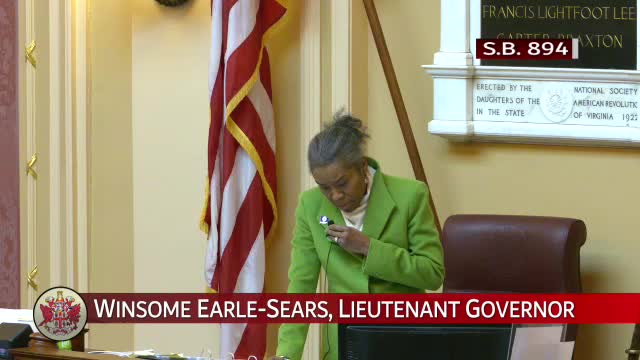
What happened next: Sponsors said some measures reflect compromises reached in committee and with affected stakeholders. For example, a later floor substitute for Senate Bill 894 (a separate tort‑related bill that came up later in the calendar) incorporated language from negotiations among hospital groups, plaintiffs’ attorneys and other advocates and specified an effective date for new claims. That substitute clarified the bill would apply only to claims accruing after July 1, 2025.