Get Full Government Meeting Transcripts, Videos, & Alerts Forever!
Get email alerts on the Child Welfare topic
No spam. Unsubscribe anytime.
New state ombudsman for children’s health and social services outlines role, staffing request to JFAC
Summary
Trevor Sparrow, the newly appointed ombudsman for the Office of Health and Social Services Ombudsman, told the Joint Finance and Appropriations Committee on Jan. 15 that the office will receive complaints and investigate the state’s foster‑care system and related residential placements and that the governor supports increased personnel funding to help recruit qualified staff.
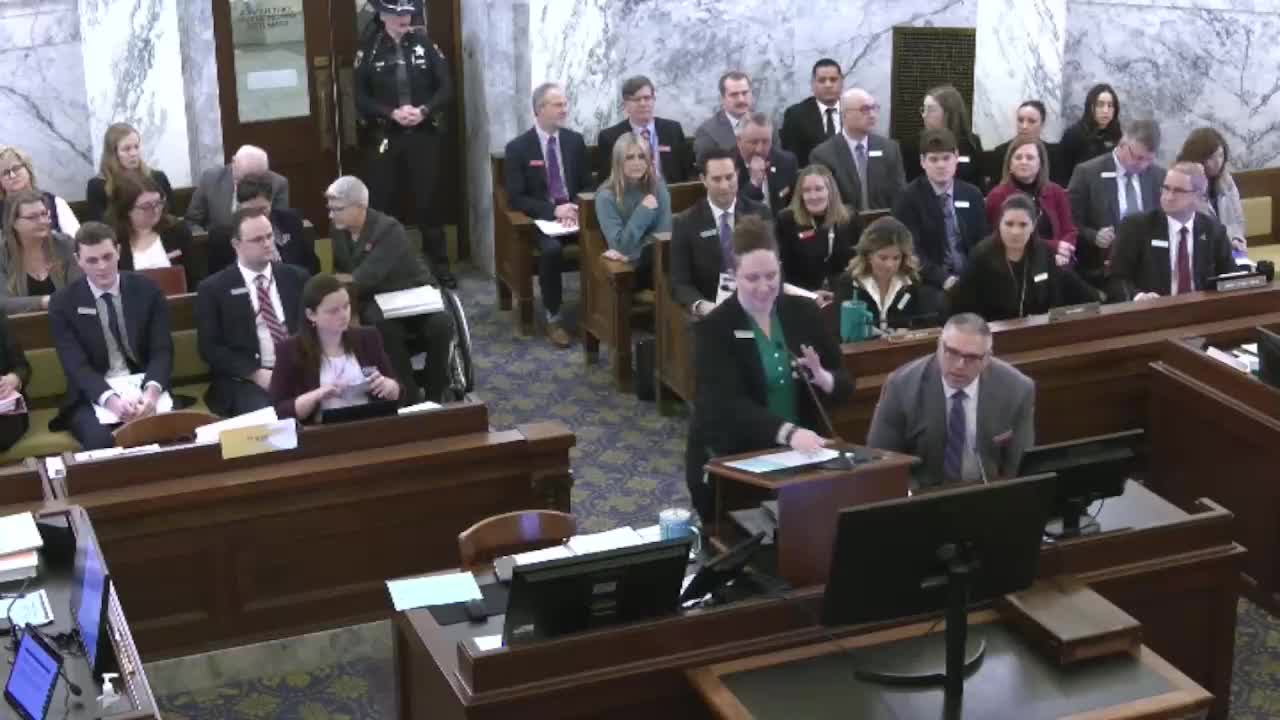
Trevor Sparrow, the newly appointed ombudsman for Idaho’s Office of Health and Social Services Ombudsman, introduced the office’s scope and staffing priorities to the Joint Finance and Appropriations Committee on Jan. 15 and described how the office will receive and investigate complaints about the foster‑care system.
Alex Williamson, budget and policy analyst for the Legislative Services Office, told the committee the office is new this budget cycle under legislation the transcript cites as Senate Bill 1380; the office is appropriated three FTE and an ongoing general fund base of $450,000 (total ongoing appropriation reported as $470,000 with a $20,000 one‑time capital outlay item for setup). Williamson said roughly $395,000 of the ongoing appropriation is for personnel costs.
Sparrow described his role and background and said the ombudsman’s authority focuses primarily on the foster‑care population but — as the statute permits — may extend to other residential placements for children, including juvenile corrections. “We will primarily focus on the foster care system,” Sparrow said. He described the office’s functions as receiving complaints from parents, foster parents, providers and citizens; investigating individual complaints; conducting broader reviews and investigations of agencies; and making recommendations, including legislative recommendations where warranted.
On staffing, Williamson said the Department of Human Resources recommended a higher level of personnel funding to recruit and retain qualified staff, advising that the current personnel cost allowance might not be sufficient to hire at competitive rates. The analyst described a governor‑supported ongoing request to increase personnel dollars so positions could be hired “at above 80% of policy” (a recruitment/retention benchmark noted by DHR).
Committee members asked about the office’s potential coordination with citizen review panels and about the status of children in congregate care. Sparrow said he had discussed possible coordination with deputy directors at Health and Welfare and viewed citizen review panels as a possible resource for research and policy recommendations. On congregate care, Sparrow said his understanding from meetings with Health and Welfare leadership was that the state has moved children out of congregate care and that short‑term placement situations cited earlier in the session have ended.
Sparrow told the committee the office is adopting the U.S. Ombudsman Association standards and that a multidisciplinary staff (legal, nursing, social work expertise) is a reason for the additional personnel funding request.
The committee did not vote during the hearing. The requested personnel funding increase is under consideration as part of the agency’s budget and the governor’s recommendation.