Get Full Government Meeting Transcripts, Videos, & Alerts Forever!
Get email alerts on the Water Metering topic
No spam. Unsubscribe anytime.
Committee advances House Bill 143 to streamline agricultural water metering
Summary
After testimony from Georgia Environmental Protection Division staff, a legislative committee voted to send House Bill 143 to the full committee. The bill clarifies who pays for water meters, reduces a backlog of compliance cases and allows limited EPD staff maintenance in emergencies.
A legislative committee voted to advance House Bill 143, which changes how agricultural groundwater metering is administered and enforced, after hearing detailed testimony from staff of the Georgia Environmental Protection Division (EPD).
The bill’s sponsor and committee members said the measure is intended to reduce a growing backlog of compliance cases, protect the integrity of EPD’s metering data and give the division more flexibility to respond to sites that lack infrastructure. Jeff McCown, EPD director, and EPD staff described three primary changes HB 143 would make to the current metering program.
EPD staff member Margie said the bill would (1) clarify which party pays for meter installation based on the permit issue date — restoring state payment responsibility for permits issued before Feb. 2003 and leaving post‑Feb. 2003 permits as the permittee’s responsibility; (2) remove a statutory trigger that shifts costs to permittees if a site assessed for metering lacks infrastructure and the permittee does not install infrastructure within a specified period; and (3) allow trained, certified EPD staff to perform maintenance and some new meter installs in limited circumstances when contractors are unavailable. “We have 3,700 cases,” Margie said in testimony, and she warned the existing statutory regime could amount to “over 9,000,000 in metering costs for the farmer.”
Margie and other EPD witnesses told the committee that the metering program has been strengthened since the division began large‑scale metering work in December 2016 and that the agency’s hydrology team determines how many usable meter readings are needed in each basin. The EPD witness said the division joined a metering statute update in Feb. 2018 and that staff who handle metering work began joining in 2017.
EPD staff also said some permits that appear active are not currently being used on the ground; in many instances the infrastructure to meter withdrawals is missing, which makes installation technically difficult and often costly. The EPD presenter said the agency sometimes skips installation at sites that are not irrigated and focuses on locations where meters produce useful, cost‑effective readings. The agency contracts meter reads and reported that the Georgia Forestry Commission read more than 13,000 meters this year under contract and that those readings will be delivered to EPD shortly.
Committee members pressed on geography and scope. Staff said the backlog identified in testimony — roughly 3,700 sites — relates to assessments done in Southwest Georgia (the Flint, Chattahoochee, Suwannee and Ochlockonee basins) but that similar counts would grow if EPD performed like assessments statewide. The EPD presenter said the bill applies statewide but that Southwest Georgia remains a priority because of past litigation and hydrologic priorities.
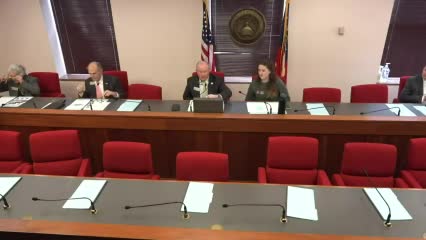
After questions, a committee member moved and another seconded a motion to “do pass” HB 143. The committee chair called for a voice vote; members responded “aye,” and the chair said the bill would be moved to the full committee. Individual roll‑call votes were not recorded in the transcript.
Next steps identified in the meeting: EPD will begin work on permit modifications tied to the agency’s planned suspension modification starting April 1, and the division will continue installing and repairing meters according to hydrology priorities. The committee’s passage sends HB 143 to the full committee for further consideration.