Get Full Government Meeting Transcripts, Videos, & Alerts Forever!
Get email alerts on the Higher Education topic
No spam. Unsubscribe anytime.
Idaho university presidents outline enrollment gains, workforce priorities and responses to DEI resolution
Summary
Presidents of Lewis‑Clark State College, Boise State, the University of Idaho and Idaho State told the Senate Education Committee that enrollments have risen in several programs, highlighted economic impacts and detailed steps taken after a statewide resolution on diversity, equity and inclusion.
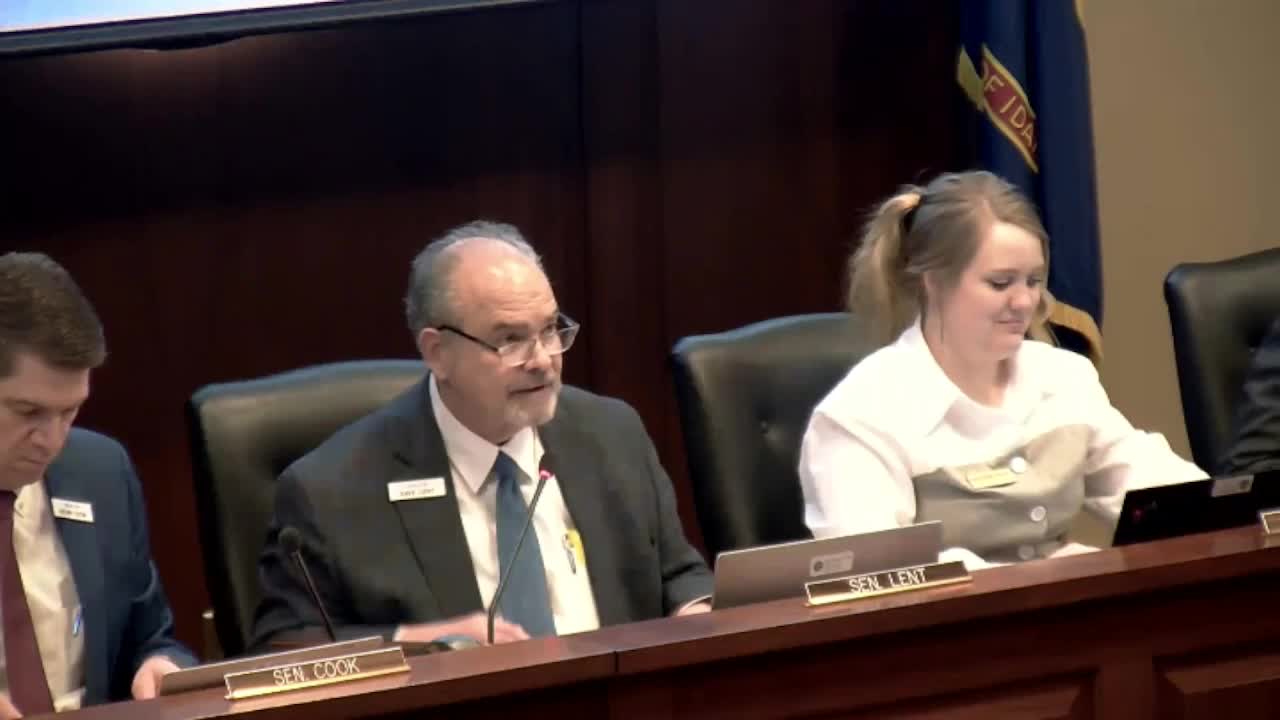
Four public university presidents appeared before the Idaho Senate Education Committee to summarize enrollment trends, workforce programs and the institutions' responses to a statewide resolution affecting campus diversity offices.
The presidents said Idaho institutions are seeing enrollment gains in key workforce areas and that state investment returns economic benefits. "Our resident enrollment across all 8 Idaho public institutions is up," Lewis‑Clark State College President Cynthia Pemberton told the committee, adding that Idaho institutions award more than 18,000 credentials annually and "for every tax dollar that is invested in higher education in Idaho, taxpayers receive an average annual rate of return of 4.6%." Boise State President Marlene Trump said Boise State serves about 33,000 learners and reported a rise in Idaho students: "We have grown our incoming class of Idaho students by 11 and a half percent this year and by a remarkable 52% in the last 5 years."
The presentations stressed workforce alignment and economic impact. Scott Green, president of the University of Idaho, said the university generated about $2.7 billion in annual output and highlighted a $15 million wildfire preparedness grant and a large research dairy project intended to support the state's dairy industry. Idaho State University President Robert Wagner emphasized health‑sciences programs and called Idaho State a "statewide leader for health sciences," noting growth in allied and clinical programs across campuses.
Why this matters: committee members asked the presidents about tuition, student debt, LAUNCH scholarships and the changes on campuses tied to a DEI‑related resolution passed last year. The presidents framed their institutions as workforce engines while describing how they have reorganized or repurposed campus offices in response to that resolution.
On student cost and outcomes, the presidents provided figures the committee pressed for. Pemberton said LC State annual tuition and fees are $7,610; she said Idaho four‑year graduates who borrow have average debt "just over $20,000." Trump said that at Boise State students with federal loans owe on average "$150" (she was referring to the median or low absolute federal loan levels for some cohorts) and said that among borrowers a four‑year average debt figure was "$20,000 for all 4 years." Green cited the university's record research expenditures of nearly $136 million and said the U of I was nearing R1 research classification, which he said would improve competitive access to federal research funds.
Several presidents highlighted the LAUNCH scholarship and other state supports. Trump said almost 1,300 Boise State students received LAUNCH funds; Wagner said Idaho State had 888 LAUNCH recipients this fall; Green said the University of Idaho awarded 747 LAUNCH scholarships to new freshmen in high‑demand majors; and Pemberton said LC State students used launch funds across many CTE programs.
On prison education and federal programs, Pemberton noted Lewis‑Clark State has completed the four stages of the Second Chance Pell experimental program and is serving roughly 200 incarcerated individuals with associate and bachelor programs in Orofino, Boise and Pocatello. Green described research centers and extension work across Idaho counties.
Committee members asked about the effect of last year’s DEI resolution on campus services. Responses varied by institution: Pemberton said LC State has not had "any real issues associated with the resolutions" and continues to operate its Native American veterans center and Accessibility Services Center. Trump said Boise State closed certain centers (she referenced closures and said veterans services continues) and reorganized staffing and that the university had adopted free‑speech principles; Green described reorganizations at the U of I including new student success efforts. Wagner said Idaho State renamed its Office of Equity and Inclusion to the Office of Equal Opportunity and Title IX, closed its diversity resource center and gender resource center, and moved staff into student involvement and a new Bengal Success Center focused on academic support.
Committee discussion also touched on administrative cost ratios, tuition pressure and the institutions' capacity to expand graduates in high‑demand programs. Trump gave specific workforce targets Boise State would pursue with additional funding: she said additional funding could add roughly 40 nursing graduates per year and substantially increase electrical engineering and computer engineering graduates.
The presidents ended by offering to stand for questions and by reiterating the institutions' focus on access, affordability and workforce alignment. "We are a workforce driver of and for the working and the middle class," Pemberton said.
The committee did not take formal action on funding or policy changes during the presentations; the session moved later to separate bills and proposals.