Get Full Government Meeting Transcripts, Videos, & Alerts Forever!
Get email alerts on the Behavioral Health topic
No spam. Unsubscribe anytime.
State officials ask committee to free up transfers so Idaho can access delayed federal behavioral‑health grants; children's services briefly suspended to stay '
Summary
The Joint Finance‑Appropriations Committee heard Tuesday that the Department of Health and Welfare is seeking supplemental and ongoing federal authority tied to the Idaho Behavioral Health Plan and asked the Legislature to lift transfer limits so the department can move existing funds into adult and children's mental‑health programs.
The Joint Finance‑Appropriations Committee heard Tuesday that the Department of Health and Welfare is seeking supplemental and ongoing federal authority tied to the Idaho Behavioral Health Plan and asking the Legislature to lift transfer limits so the department can move existing funds into adult and children's mental‑health programs.
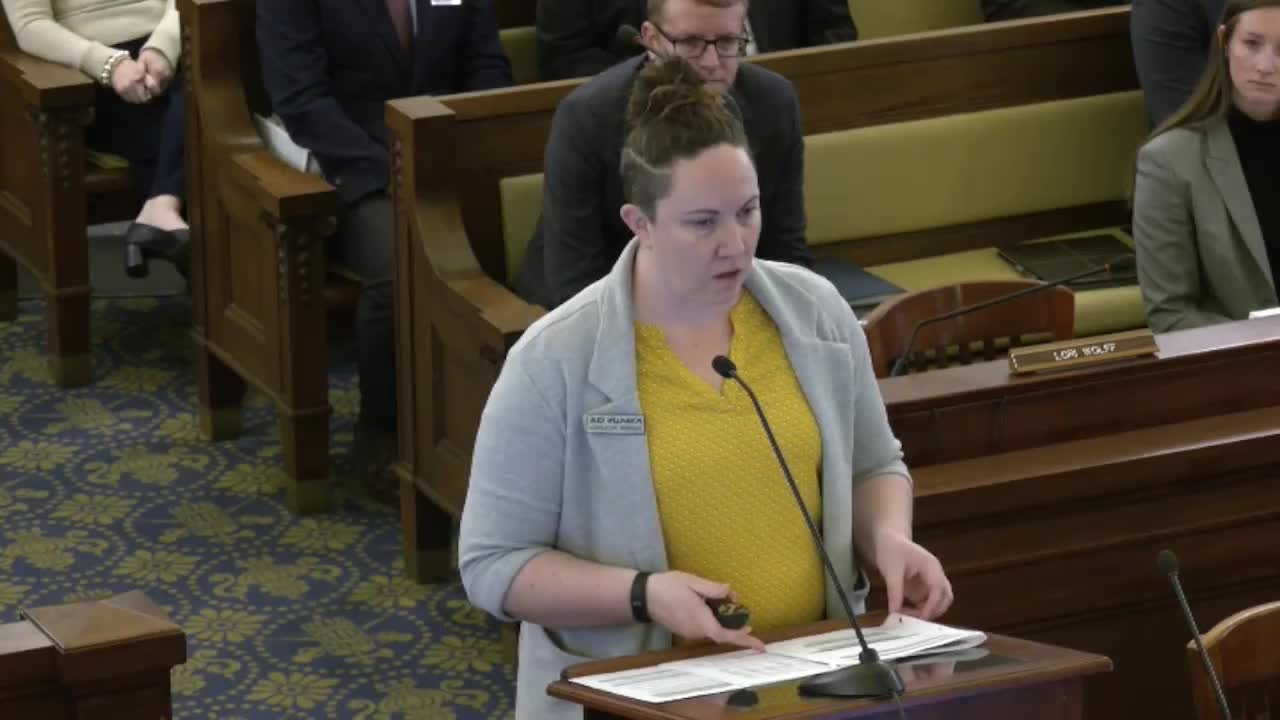
Alex Williamson, budget and policy analyst with the Legislative Services Office, told the committee the department requests a fiscal‑year 2025 supplemental of $6,700,000 in federal funds to support the first year of the Idaho Behavioral Health Plan and an ongoing federal operating request of $261,400. Williamson said the appropriation for the grants was originally dated to 2022 but, because the plan went live in July 2024, the department needs current appropriation authority to access the federal grants.
Director Alex Adams of the Department of Health and Welfare said legal challenges and the contract size delayed the project. “This was, I believe, the largest contract in the history of the state, so I do think it is wise and prudent for the department to do it right versus to do it quickly,” Adams told the committee. He added there was “about a year in legal challenges that delayed it as well.”
Adams and Williamson also told the committee that limitations in Idaho Code 67‑3511 on program transfers complicated the agency’s ability to move dollars between personnel, operating and trustee/benefit categories. Williamson said the department is asking the committee for an exemption to the code’s 10% program transfer limit for fiscal year 2025 and for no additional transfer restrictions beyond those in 67‑3511 for 2026.
Adams described the consequence of those transfer limits: earlier this year “we did have to temporarily suspend some of the services that are available to children's mental health,” because the department lacked authority to reassign appropriations internally. “We will do our best to live within budgets,” he added, but warned the statutory walls on transfers forced difficult choices.
Committee members pressed for detail on the delays and recent contract performance. Adams said the department attempted a careful procurement, that the contract attracted legal challenges and that, after a rocky start, the July 2024 go‑live “went relatively smooth” though it “tapered off” at first. Senator Wintrow and other members asked about what has gone well and what stakeholder concerns remain; Adams said budget forecasting has been the largest challenge and that the IBHP budget estimate was “off by a factor of about 60%,” an issue he said will be addressed in the Medicaid budget hearings.
The committee was also briefed on one‑time appropriations previously approved that affect the mental‑health budget, including earlier one‑time funding to help stand up the national 988 crisis line. Williamson noted a $4.4 million one‑time appropriation for 988 implementation in fiscal year 2024 and $3 million one‑time for community mental‑health funds in the same year.
No formal action or vote on the transfer‑exemption request or the IBHP supplemental was recorded in the transcript during this hearing. Committee members asked for follow‑up information and suggested the department supply additional detail on procurement timing and program performance.
The department and analysts agreed to provide written follow‑ups on the grant timing, the supplemental detail and the operational impacts on children’s services.