Get Full Government Meeting Transcripts, Videos, & Alerts Forever!
Get email alerts on the Agriculture Research Extension topic
No spam. Unsubscribe anytime.
University of Idaho’s ag research and extension asks legislature to sustain research staff, highlights new broadband and digital literacy grants
Summary
University of Idaho leaders briefed JFAC on agricultural research and extension priorities, requested funding for a viticulture/small‑fruits faculty line and building maintenance, and described a federal broadband/digital‑literacy award tied to rural outreach; Dean Michael Perella announced his planned retirement.
University of Idaho agricultural research and extension leaders asked the Joint Finance‑Appropriations Committee to continue funding strategic research faculty and facility maintenance while describing ongoing outreach and a recently secured federal digital‑literacy award.
Kevin Campbell, budget and policy analyst with the Legislative Services Office, summarized the Agricultural Research and Extension Service’s base budget and FY2026 requests on Feb. 10, noting the service operates research and extension centers across the state, holds access to roughly 14,000 acres of research land and reported about 341.33 FTP (full‑time positions).
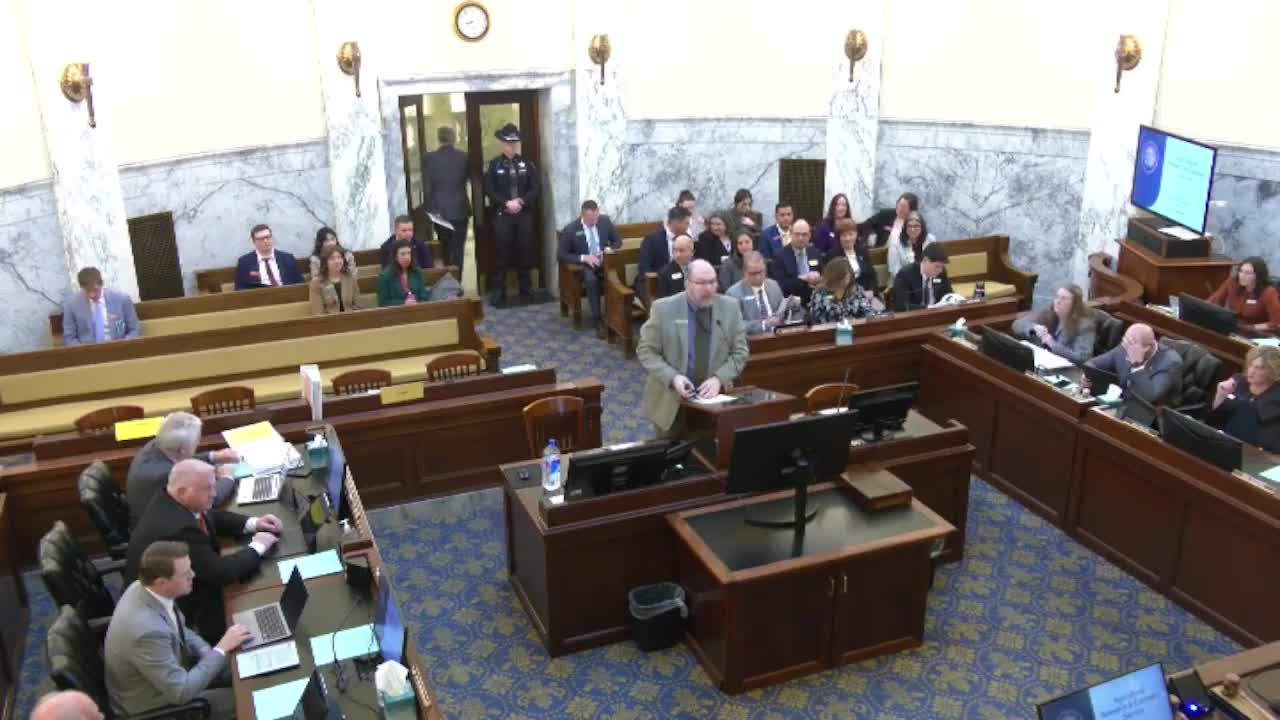
Michael Perella, dean of the University of Idaho College of Agricultural and Life Sciences (CALS), told JFAC he will retire in June after nine years as dean and then presented the college’s priorities and recent accomplishments. Perella emphasized statewide reach, noting extension’s presence in 42 of Idaho’s 44 counties and three tribal communities and the college’s role as Idaho’s land‑grant institution.
Why it matters: CALS supports production agriculture, rural community development and applied research spanning crops, soil health, irrigation, livestock and youth programs. Lawmakers asked for more detail on how federal one‑time funds have been used and whether ongoing state support is needed to sustain programs created with federal dollars.
Requests and program highlights - FY2026 requests highlighted by the service included $157,900 ongoing for a viticulture and small‑fruits research faculty position and $250,100 for maintenance costs at the Idaho Center for Agriculture, Food, and the Environment (a dairy research collaboration). - Past appropriations and federal funds cited: FY2024 funding supported new faculty in animal and plant sciences and agricultural engineering; FY2025 appropriations covered maintenance for a Parma research laboratory. The college also used ARPA funds for a computer literacy effort that extension integrated into rural outreach. - Broadband and digital‑literacy funding: Dean Perella said the college competed successfully for one of 24 Federal Communications Commission pilot grants and described a $13,000,000 award to engage rural communities, two‑year schools and four‑year institutions to address the digital divide. Perella cautioned federal timelines remain subject to Washington processes.
Extension outcomes and metrics Perella and extension staff reported operational results they described as measurable: extension staff recorded more than 450,000 face‑to‑face contacts with Idahoans in the prior year and engaged over 75,000 youth in 4‑H programs. The college reported a reduction in turnover after recent change‑in‑employee‑compensation (CEC) appropriations, with turnover cited as falling from 14% to 11% for fiscal year 2024.
Committee questions and follow‑up requests - Role of extension in non‑production work: Legislators asked why extension is running adult computer‑literacy programs. Perella said extension’s statutory mission includes community and family programs and that the FCC/ARPA‑linked digital literacy efforts target rural digital divides and business development in communities. - Ongoing funding concerns: Several legislators expressed concern about programs begun with one‑time federal funds (ARPA) becoming ongoing state obligations. Perella and staff said they aim to phase and align programs with competitive federal funding where possible; he noted the college had applied for and received additional federal support to sustain digital‑literacy work. - Outcomes and evaluation: Perella said extension collects participant feedback and impact measures after programs and cited reported savings of roughly $47 million in the prior year attributed to extension activities; he offered to provide more detailed outcomes data to the committee.
Discussion vs. decision The hearing was a budget briefing and Q&A; no appropriation votes or formal committee actions were recorded during the Agricultural Research and Extension Service presentation. Committee members asked for additional documentation about program outcomes, the sustainability of activities started with federal funds and cost allocations tied to personnel and facilities.
Context and background CALS and the Idaho Agricultural Experiment Station conduct research across seven broad categories and operate 10 research and extension centers. Recent capital investments include a new Parma research laboratory (Idaho Center for Plant and Soil Health) and other upgraded facilities. Perella said state investments help attract competitive external grants and private funding.
Closing notes Perella thanked the legislature for support, highlighted CALS’s national rankings and said the college leverages state appropriations to attract external funding; he reiterated the college will provide requested outcome data and more detail about continuing programs seeded with federal funds.