Get Full Government Meeting Transcripts, Videos, & Alerts Forever!
Get email alerts on the Program Maintenance Budgets topic
No spam. Unsubscribe anytime.
JFAC approves program-maintenance budgets for multiple state agencies, totaling billions
Summary
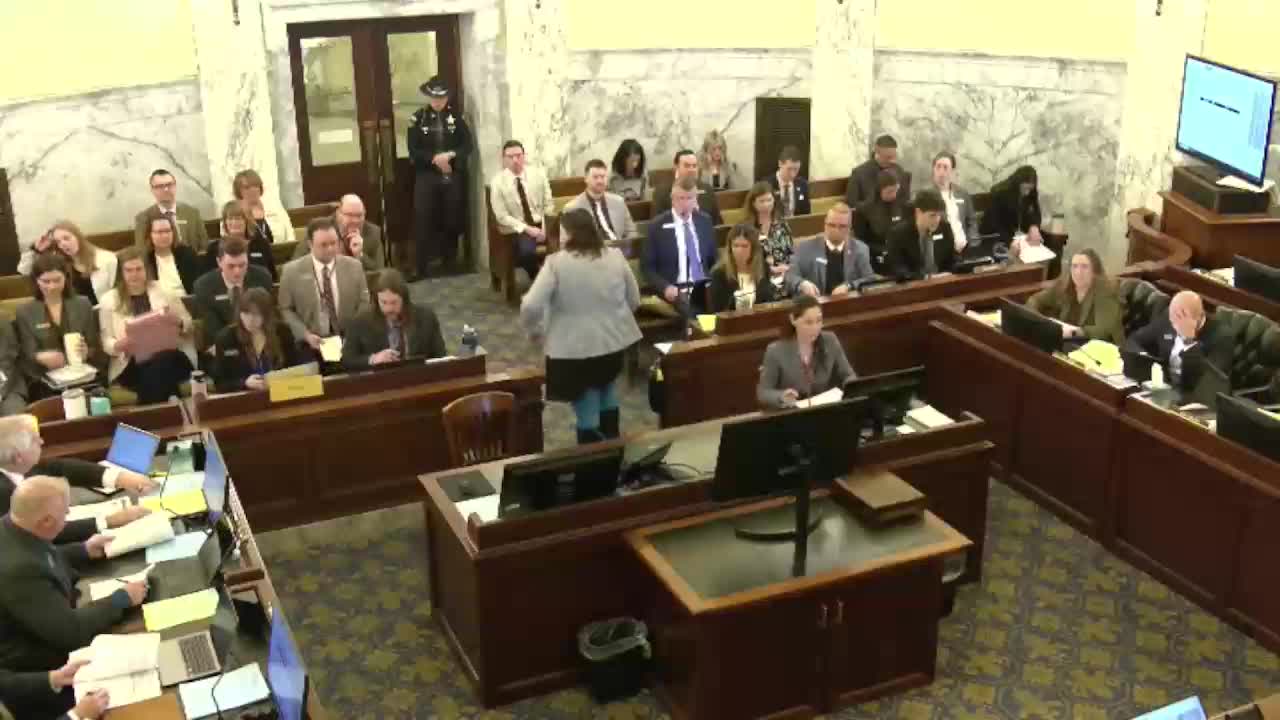
On Jan. 17 the Joint Finance and Appropriations Committee approved program-maintenance appropriations for the 2026 base across many state agencies, setting dollar totals, full-time-equivalent caps and standard appropriation language to be carried into draft bills.
The Joint Finance and Appropriations Committee on Jan. 17 set program-maintenance budgets across a swath of state agencies — including the legislative branch, judicial branch, constitutional officers, public safety, general government, economic development, natural resources, the State Board of Education, public schools and health and human services — and approved the standard clear language and reappropriation authorities that typically accompany those appropriations.
Committee staff described program-maintenance budgets as the legislature’s baseline for ongoing operations: the FY2026 base appropriation adjusted only for statewide decisions such as contract inflation and statewide cost allocation. Committee votes were recorded by roll call for each functional area; most passed unanimously.
Votes at a glance (committee roll-call tallies and key totals):
- Legislative branch: total $12,546,100 (general fund $10,003,100; dedicated $2,543,000). FTP cap: none set. Vote: 20–0.
- Judicial branch: total $96,696,300 (general fund ~ $71,147,500; dedicated $23,596,500; federal ~$1,952,300). FTP cap: none set. Vote: 20–0.
- Constitutional officers (six statewide elected offices): total $73,630,300 (GF $54,865,900; dedicated $15,562,400; federal $3,202,000). FTP cap: 431.91. Vote: 20–0.
- Public safety (Corrections, Juvenile Corrections, State Police and related): total $528,074,000. FTP cap: 3,322.61. Vote: 20–0.
- General government (Administration, governor’s office agencies, State Tax Commission items): total $479,688,000. Vote: 20–0.
- Economic development functional area (Agriculture, Commerce, Labor, IDL, etc.): total $1,380,135,600; FTP cap: 4,165.28. Vote: 20–0.
- Natural resources (DEQ, Fish & Game, Lands, Parks, Water Resources, etc.): total $513,855,000; FTP cap: 1,632.4. Vote: 20–0.
- State Board of Education and affiliated institutions: total $1,099,940,000 (GF $672,259,000; dedicated ~$373,276,000; federal $54,405,000). FTP cap: 534.97 for certain programs; some higher-education agencies are exempt from caps. Vote: 20–0.
- Public schools program maintenance: total $3,166,965,700 (GF $2,651,787,500; dedicated $264,030,400; federal $251,147,800). No FTP caps (district and charter staffing). Vote: 20–0.
- Health and Human Services (Department of Health & Welfare plus State Independent Living Council): total $5,263,083,200 (GF $1,135,543,600; dedicated $824,851,000; federal $3,302,688,600). FTP cap: 3,008.44. Vote: passed; roll calls recorded some dissent (final committee tally recorded 17 ayes, 2 nays, 1 absent/excused on the final numbers motion).
Analysts also presented the standard sections of clear language that accompany many appropriation bills — items such as reappropriation authority for unspent federal or ARPA funds, exemptions from expense-class transfer limits (used selectively), continuous appropriation for specific funds, reporting requirements, and conditions and limitations language subjecting appropriations to the specified restrictions.
Most members asked few procedural questions during presentations. Committee staff told members that the numbers for CEC (compensation adjustments), the revenue consensus and health-insurance figures remained unresolved and would be addressed later; several members said they expect additional motions or a separate multi-agency technical bill if the committee reaches consensus on those items.
What’s next: Staff will draft appropriation bills reflecting these decisions and return them for the committee to review before those bills are introduced on the floor.