Get Full Government Meeting Transcripts, Videos, & Alerts Forever!
Get email alerts on the Disability Services topic
No spam. Unsubscribe anytime.
State Independent Living Council outlines finances; governor proposes small fund-shift to general fund
Summary
The Idaho State Independent Living Council told the Joint Finance and Appropriations Committee it spends nearly all federal dedicated funds it receives, maintains a roughly $280,000 ending balance, and the governor recommends shifting $11,700 of appropriation from the council's dedicated fund to the general fund for FY2026.
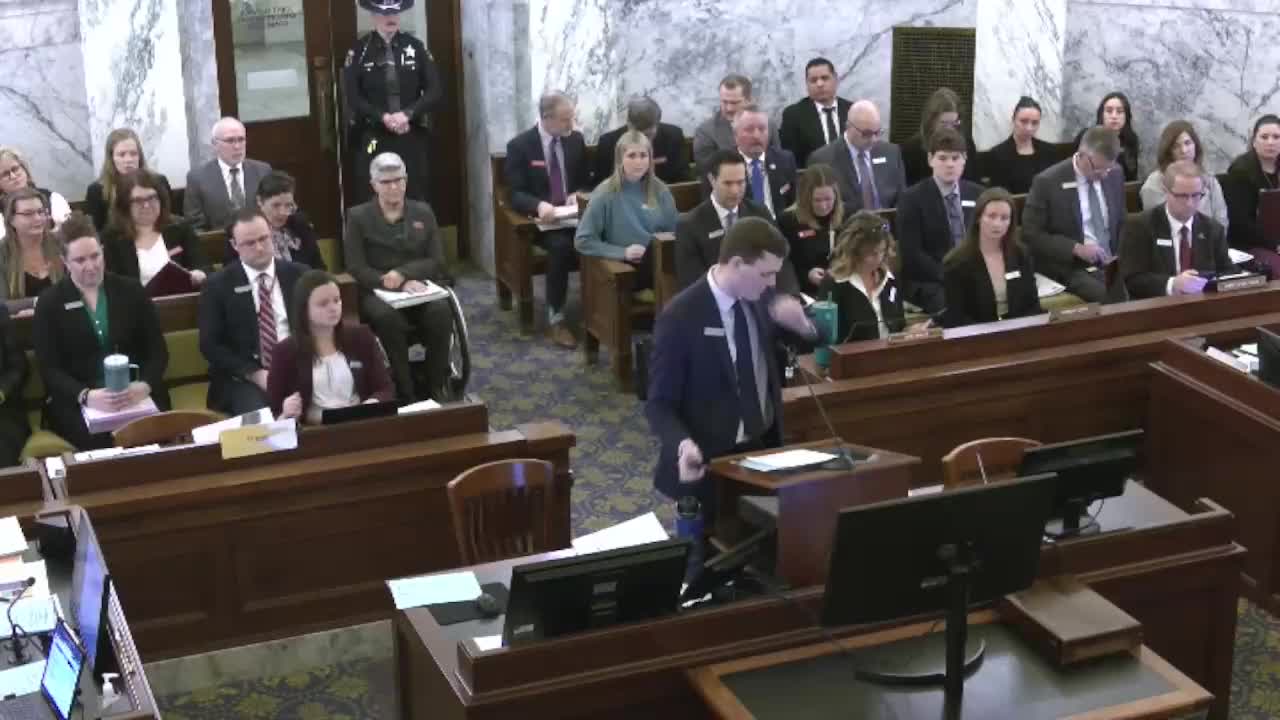
The Idaho State Independent Living Council told the Joint Finance and Appropriations Committee on Jan. 15 that it consistently spends nearly all federal revenue it receives, maintains roughly six months of operating cash and is asking the committee to consider a governor-recommended technical shift of $11,700 in appropriation from the council’s dedicated fund to the general fund for fiscal 2026.
Kellen McGurkin, budget and policy analyst with the Legislative Services Office, told the panel the council typically spends close to its available dedicated-fund revenue and “typically maintains an ending balance close to that $280,000 mark or about 6 and a half months worth of the agency's expenses in the event that its funding were to freeze.” He explained variations in year-to-year receipts reflect federal grant timing rather than sustained overspending.
That dedicated fund is supported by federal independent-living grants, which McGurkin identified as coming through the Idaho Division of Vocational Rehabilitation and tied to federal grants he referenced as “title 1 of the Rehabilitation Act and title 7 of the Workforce Investment Act.” He said differences in federal and state fiscal calendars can make a single year appear to show expenditures exceeding receipts even when the agency’s cash position is stable.
McGurkin summarized five-year figures showing the agency has four full-time positions, “including the director Mel Levitan,” and that personnel costs consistently make up a large share of the council’s expenditures. He told the committee the governor’s FY2026 recommendation would shift $11,700 of appropriation from SILC’s dedicated fund to the general fund; McGurkin said that move would cause the general fund to cover roughly half of recent statewide health benefit and CEC salary increases that otherwise would fall on SILC’s dedicated fund.
Mel Levitan, executive director of the Idaho State Independent Living Council, thanked the committee and highlighted the council’s work outside the Treasure Valley. Levitan said the council had used a one-time $10,000 line item last year to complete three audits with no findings and recognized agency staff who helped close audit findings: “With that $10,000 we have a 22, a 23, and a 24 budget or audits completed with no findings.” Levitan also described stable staffing, noting the agency had no turnover since 2020 and that staff “showed up in the office in April of 2021, and we've all been there since then.”
Committee members asked clarifying questions about the apparent mismatch between receipts and expenditures. Senator Cook asked whether SILC “overspent their dedicated fund,” and McGurkin clarified that apparent overspend was a timing mismatch in federal grant receipts and state fiscal years rather than a structural shortfall.
The presentation included historical appropriation adjustments McGurkin said were driven largely by reductions in unfunded federal appropriations and routine statewide maintenance changes. He noted a modest $30,000 increase in one federal Title I grant in FY2023 — the first increase in about a decade — and that most ongoing increases have come from statewide maintenance, primarily change-in-employee-compensation adjustments.
No formal vote was recorded during the presentation; committee members and agency officials proceeded to other agenda items after questions. The governor’s recommendation to shift $11,700 remains a proposal for the committee to act on during formal budget setting.
Why this matters: SILC coordinates advocacy and independent-living supports for Idahoans with disabilities; its budget is small but concentrated on travel and training to reach rural communities. The proposed appropriation shift would change which fund covers routine statewide salary and benefit increases for FY2026.