Get Full Government Meeting Transcripts, Videos, & Alerts Forever!
Get email alerts on the Budget Program Maintenance topic
No spam. Unsubscribe anytime.
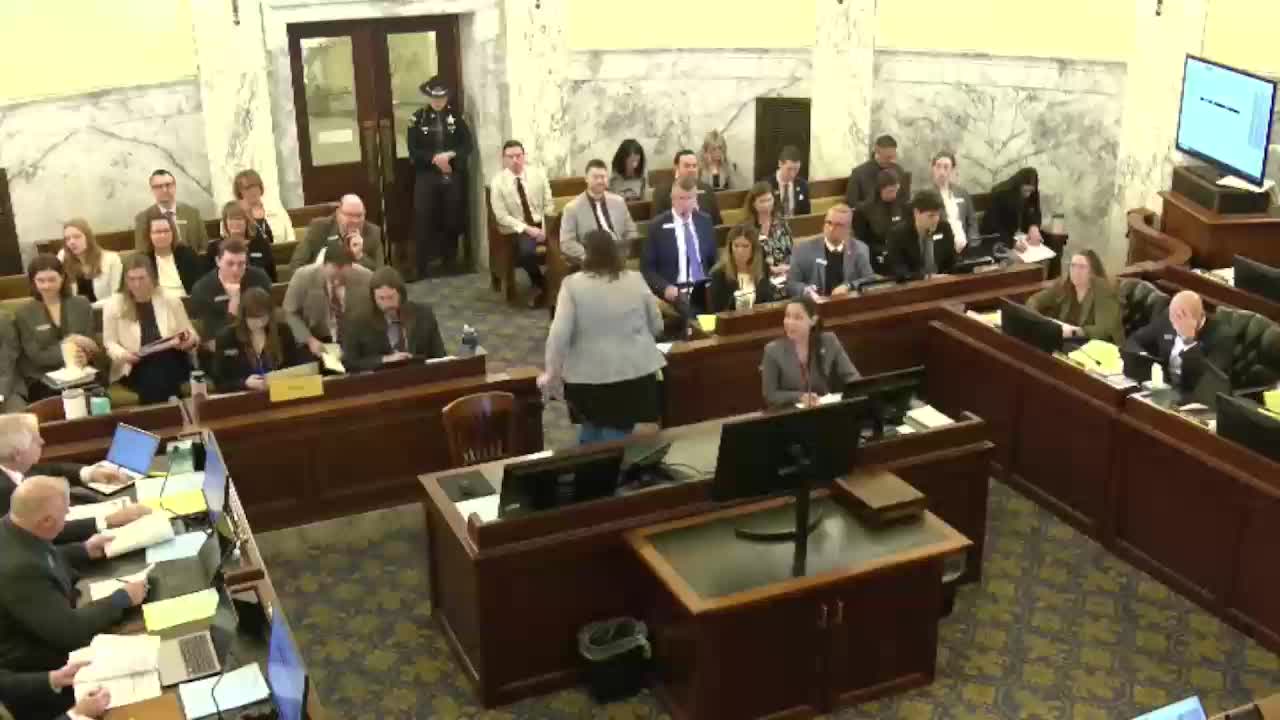
JFAC approves program maintenance budgets for state agencies; Health and Human Services reorganization approved with limited dissent
Summary
The Joint Finance and Appropriations Committee on Jan. 17 approved program maintenance budgets and standard appropriation language for most state agencies, setting baseline budgets and FTE caps to guide the 2026 budget process.
The Joint Finance and Appropriations Committee on Jan. 17 adopted program maintenance budgets and associated standard language or reappropriation authority for most state agencies, including the legislative and judicial branches, statewide elected constitutional officers, public safety agencies, public schools, higher education and the State Board of Education, natural resources, general government functions, and economic development entities.
Most votes were unanimous; committee members said the votes set the baseline for the 2026 budget process and preserved the legislature’s prior policy decisions while allowing staff to carry forward reappropriations and a small set of technical exemptions.
Why it matters: program maintenance budgets set the base spending levels the legislature uses when considering policy changes and enhancements. They typically reflect last year’s ongoing appropriations minus one-time items, plus routine statewide adjustments such as cost allocations and contract inflation where applicable. Approving these maintenance budgets allows the committee to move to the next phase of budget work and to draft appropriation bills for introduction.
Major approvals and key totals (by program area)
- Legislative Branch: The committee set a program maintenance total of $12,546,100 (no FTE cap for the Legislative Branch operations beyond staff flexibility) and approved statutory language to allow certain transfers and ARPA reappropriations as described by staff. Motion by Representative Miller; roll call passed unanimously (20-0).
- Judicial Branch: The program maintenance total approved was $96,696,300, including statewide cost allocation. Motion by Senator Carlson; passed unanimously (20-0). The committee also approved language for judges’ retirement remittances and ARPA reappropriation authority for court technology upgrades.
- Constitutional officers: Maintenance total $73,630,300 and a cap of 431.91 FTEs across those offices (excluding the superintendent of public instruction, which is in Education). Motion by Representative Tanner; passed unanimously (20-0). The committee approved several limited reappropriation and cash-transfer authorities for the State Controller and the Capital Commission.
- Public Safety: Program maintenance total $528,074,000 and an FTE cap of 3,322.61; motion by Senator Wintrow passed unanimously (20-0). The committee approved limited transfer exemptions for specified Department of Correction programs.
- General government: Program maintenance total $479,688,000; motion by Representative Miller passed unanimously (20-0). The committee approved thirteen standard language sections including capital and ARPA reappropriations and reporting requirements.
- Economic development: Program maintenance total $1,380,135,600 and an FTE cap of 4,165.28; motion by Senator Woodward passed unanimously (20-0). The committee approved continuity language for broadband grant reappropriations and a number of dedicated fund transfers and continuous appropriation provisions.
- Natural Resources: Program maintenance total $513,855,000 and FTE cap of 163.24; motion by Representative Manwaring passed unanimously (20-0). The committee approved reporting and reappropriation language tied to environmental cleanup (Bunker Hill) and water projects.
- State Board of Education and higher education programs: Program maintenance total $1,099,940,000 and an FTE cap of 534.97 for the programs that are subject to caps (agricultural research and extension service, colleges and universities, and certain postsecondary programs are exempt from FTE caps as described in the packet). Motion by Senator Ward Engelking passed unanimously (20-0). The committee approved multiple reappropriation authorities and tuition/fee reappropriation language for institutions.
- Public schools (Public School Support): The maintenance total approved was $3,166,965,700 (total funds; $2,651,787,500 general fund), with no FTE caps (public school entities are not covered by state FTE caps). Representative Miller moved the motion; passed unanimously (20-0). The committee approved a set of 24 standard language sections that specify how certain distributed and expended amounts are to be handled (classroom technology, discretionary allocations, health insurance guidance, assessments, and other program-specific distributions).
- Health and Human Services (program maintenance and realignment): The committee approved several motions to realign Department of Health and Welfare appropriation units, to reflect an internal reorganization and to add a new appropriation unit for Idaho Child Care. That realignment motion (mover: Representative Tanner; second: Rep. Tanner’s motion seconded on the floor) passed with a recorded vote of 18 ayes, 1 nay and 1 absent/excused (Senate 10-0; House 8-1-1). Later, the overall program maintenance appropriation for Health and Human Services (general, dedicated and federal totals amounting to $5,263,083,200) passed after roll-call votes; after one senator changed an aye to a nay, the final roll calls recorded 17 ayes, 2 nays and 1 absent/excused.
Discussion and notable points
- Committee members and staff repeatedly described these votes as setting base budgets and preserving options for later policy-driven changes. Mr. Bybee (Legislative Services) and other analysts emphasized that many of the items in the packets are reappropriations or carryover authority for ARPA funds and other multi-year projects.
- Representative Petzke said he would vote against the Health and Welfare realignment motion because he felt he did not have sufficient familiarity with the large transfers and FTE movements. He publicly explained his no vote during the roll call, but the motion still passed.
- The committee deferred any decisions on unresolved items the members could not reach consensus on earlier—specifically additional cost-of-living/employee compensation (CEC) numbers, revenue estimates and health-insurance numbers—saying those would be taken up when the committee reaches agreement.
Votes at a glance (selected motions, outcome)
- Legislative branch maintenance and language: Approved; mover Representative Miller; vote 20-0. - Judicial branch maintenance and language: Approved; mover Senator Carlson; vote 20-0. - Constitutional officers maintenance and language: Approved; mover Representative Tanner; vote 20-0. - Public safety maintenance and language: Approved; mover Senator Wintrow; vote 20-0. - General government maintenance and language: Approved; mover Representative Miller; vote 20-0. - Economic development maintenance and language: Approved; mover Senator Woodward; vote 20-0. - Natural resources maintenance and language: Approved; mover Representative Manwaring; vote 20-0. - State Board of Education maintenance and language: Approved; mover Senator Ward Engelking; vote 20-0. - Public schools maintenance and language: Approved; mover Representative Miller; vote 20-0. - Health & Human Services realignment (new child-care appropriation unit) and program maintenance: Realignment motion approved 18-1-1 on original roll; program maintenance totals approved following roll calls (final combined tallies reported 17 ayes, 2 nays, 1 absent/excused).
What happens next
The committee’s approvals will be translated into appropriation bills and language for drafting. JFAC staff said committees will have another review when bills are drafted to catch technical corrections or language drafting issues before introduction to the full legislature. Members indicated unresolved decisions about CECs, revenue and health insurance will be taken up later when the committee can reach consensus.