Get Full Government Meeting Transcripts, Videos, & Alerts Forever!
Get email alerts on the School Choice topic
No spam. Unsubscribe anytime.
Senate committee hears bill to expand education grants to private schools; testimony sharply divided, panel sends bill to Senate floor
Summary
Senate Bill 1025, a proposal to expand and regulate the state’s Empowering Parents grant program and to clarify open‑enrollment and reporting rules, drew hours of testimony on Feb. 5 and a divided committee vote to send the bill to the full Senate with no recommendation.
Senate Bill 1025, a package of changes to Idaho’s school choice and enrollment rules, drew several hours of testimony in the Senate Education Committee on Feb. 5 and a divided committee vote to send the bill to the full Senate without a recommendation.
Sen. Dave Lent (R‑Idaho Falls), the bill’s sponsor, framed SB 1025 as an effort to set accountability and guardrails for private providers if public funds are to be used at nonpublic schools. At the outset he said the intent is to “provide a threshold of accountability” for private schools that accept public grants. Key provisions in the draft the sponsor described include increasing the state’s existing Empowering Parents grants (the testimony referenced raising certain grants from $1,000 to $5,000 per student and phasing family caps up to $15,000); allowing grants for eligible services to children as young as 3 (testimony said daycare per se would not be an eligible expense); requiring participating nonpublic schools to be accredited and to accept students with disabilities; setting a $50 million annual cap on the expanded program; and a five‑year sunset for the expansion.
Sen. Lent also included a legislative‑intent line in the bill stating the Legislature would “continuously appropriate $30,000,000 in additional spending for directed spending on special education” (testimony described this as an intent statement; senators queried how that interacts with appropriations processes). He described other bill elements intended to reduce nonfederal reporting for public schools and to clarify open‑enrollment rules and how districts notify capacity and special program availability.
Testimony was sharply divided. School district leaders and special‑education directors warned that the bill would divert scarce public dollars from already underfunded K‑12 programs and raised constitutional concerns about public funding flowing to religious institutions. Stoney Winston, superintendent of Fruitland School District, urged rejection and warned Idaho’s special education system is “already underfunded by nearly $80,000,000” and said the bill bundles special education with unrelated policies. Several special education administrators described real costs to serve medically fragile and high‑needs students and said private schools often decline to enroll those students.
Other witnesses supported the bill with caveats. Robin Sickman of Decoding Dyslexia Idaho, a parent and advocacy group leader, said she supported parental choice and said the draft’s accreditation and accountability provisions were important. The Idaho Freedom Foundation (submitted testimony) opposed the bill on other grounds, including the accreditation requirement because it might exclude schools accredited by associations used by many classical or religious schools, and the family cap that restricts total assistance to $15,000 per household.
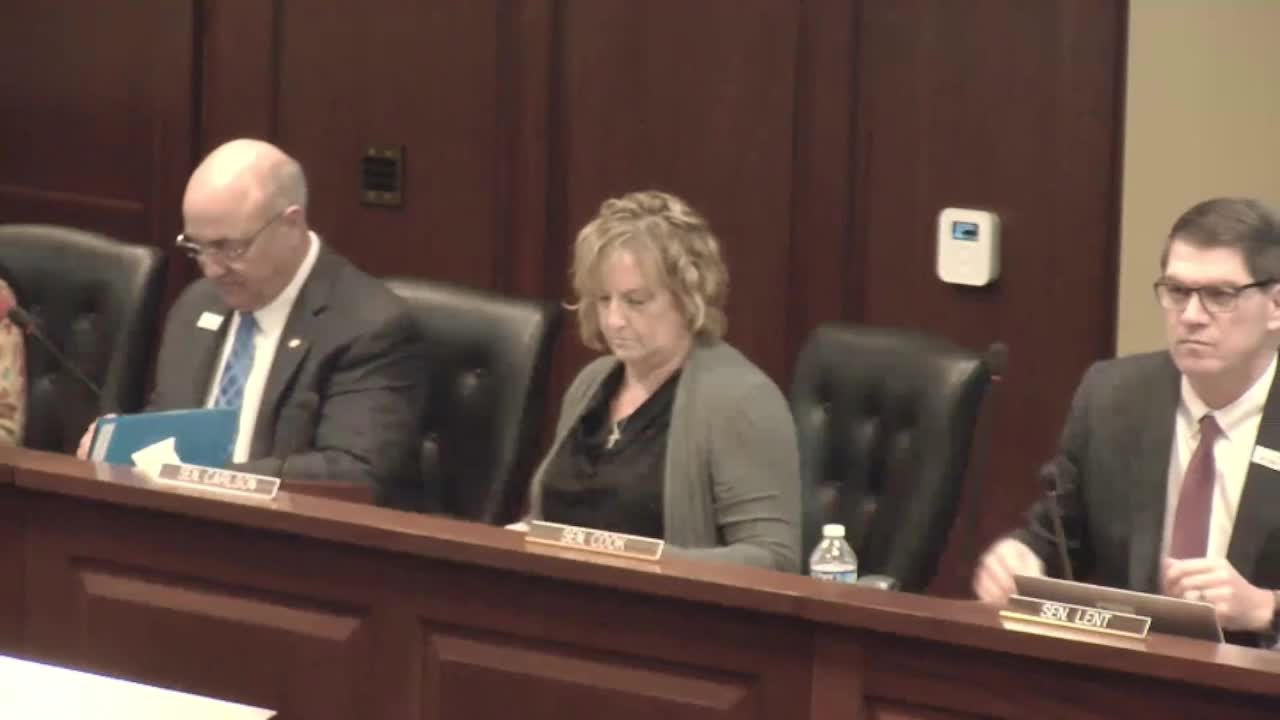
Committee action: After public comment the committee considered motions. Sen. Carl Carlson moved to hold or table the bill; that motion was not advanced. Sen. Larry Woodward moved that the committee send SB 1025 to the Senate floor with no recommendation; Sen. Burton Shaw seconded. The clerk read a roll call that recorded individual votes as follows: Senator Cook — Aye; Senator Woodward — Aye; Senator Nichols — Yes; Senator Carlson — No; Senator Burton Shaw — Aye; Senator Zito — No; Senator Ward Engelking — No; Senator Semeroth — Aye; Senator Lam — Aye. The roll call was announced in committee as yielding the motion in favor; the transcript records the clerk’s readout and the chair’s announcement that the motion passed so the bill will go to the full Senate.
Ending: The committee did not craft final amendments on the record; senators and witnesses flagged multiple legal and policy issues — including Idaho constitution questions about funding religious institutions, special education funding reliability, accreditation definitions, and how the expansion would be appropriated — that will likely be pursued during floor debate and in the appropriations process.